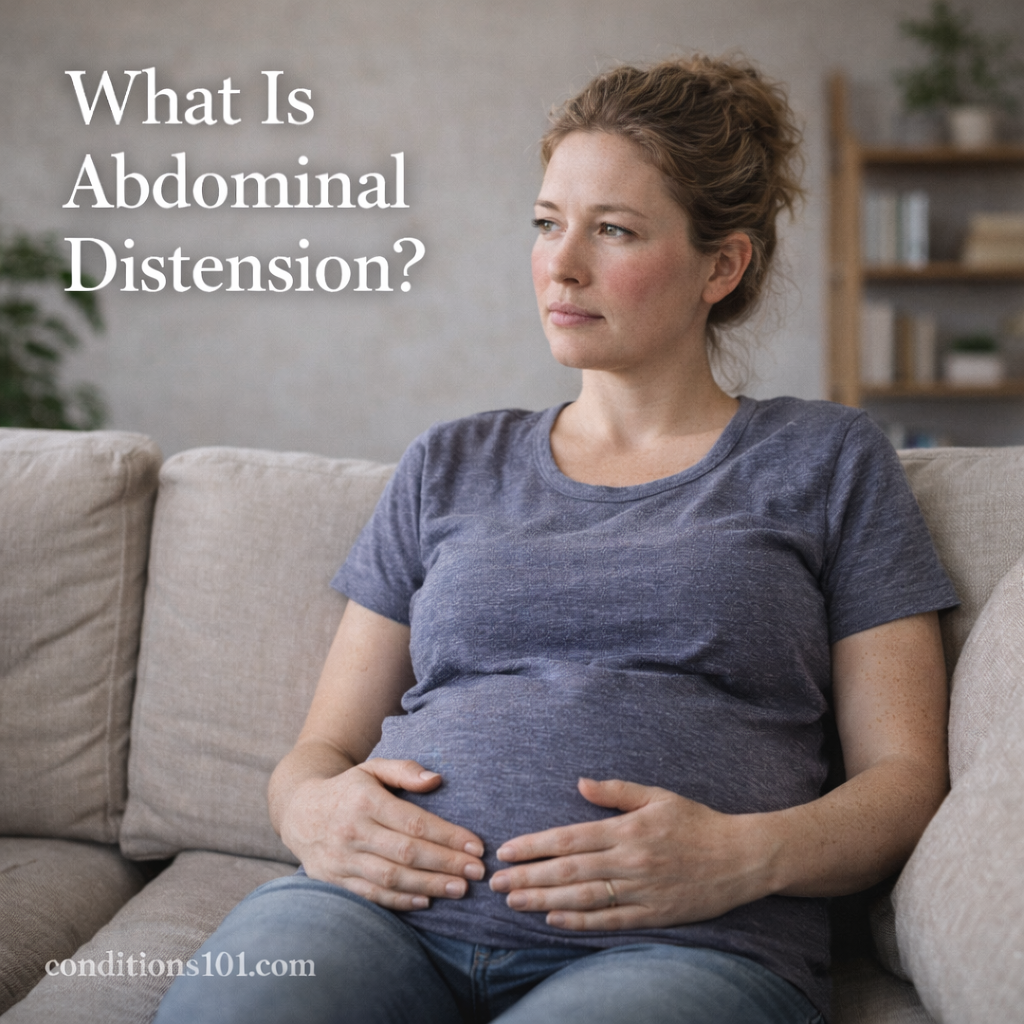
Abdominal distension refers to a noticeable increase in the size or outward appearance of the abdomen. It is often described as the belly looking swollen, enlarged, or stretched compared to usual. Abdominal distension can develop gradually or appear suddenly and may be temporary or recurrent.
Abdominal distension is a physical observation rather than a diagnosis. It describes how the abdomen looks or feels, not the underlying cause.
Understanding Abdominal Distension
Abdominal distension occurs when the abdomen expands beyond its typical size. This expansion may be visible, felt as tightness, or both. Some people notice their clothing fitting differently, while others feel pressure or fullness in the midsection.
Distension can involve:
- The entire abdomen
- The lower abdomen only
- The upper abdominal area
The degree of distension can range from mild and barely noticeable to pronounced and uncomfortable.
Abdominal Distension vs. Bloating
Abdominal distension is often confused with bloating, but the two terms are not identical.
Bloating
- Refers to a sensation of fullness or pressure
- May occur without visible enlargement
- Often described as feeling “gassy” or tight
Abdominal Distension
- Refers to visible or measurable abdominal enlargement
- Can occur with or without bloating sensations
- More clearly observed from the outside
Bloating and distension frequently occur together, but one can exist without the other.
Common Causes of Abdominal Distension
Abdominal distension can result from many everyday digestive and non-digestive factors. Causes vary widely depending on individual circumstances.
Common contributors include:
- Gas buildup in the digestive tract
- Fluid accumulation
- Changes in bowel movement patterns
- Food-related reactions
- Hormonal fluctuations
In many cases, abdominal distension is temporary and resolves on its own.
Digestive Factors That Can Contribute
The digestive system plays a major role in abdominal distension. Normal digestive processes can sometimes lead to temporary abdominal expansion.
Digestive-related contributors may include:
- Slower digestion
- Increased gas production
- Changes in gut movement
- Irregular bowel habits
These factors can affect how the abdomen looks and feels throughout the day.
Abdominal Distension and Eating Patterns
Eating habits often influence abdominal size and comfort.
People may notice distension:
- After meals
- Later in the day compared to the morning
- After consuming large portions
- Following certain types of foods
Distension related to eating does not always occur immediately and may develop hours later.
Temporary vs. Recurrent Abdominal Distension
Abdominal distension can be occasional or happen repeatedly over time.
Temporary Distension
- Appears for a short period
- Often related to meals or daily activity
- Resolves without intervention
Recurrent Distension
- Occurs frequently or predictably
- May follow certain routines or patterns
- Becomes a familiar experience
Recurrent distension does not necessarily indicate a serious issue, but it often prompts people to pay closer attention to their digestive patterns.
Abdominal Distension Without Pain
Abdominal distension does not always involve discomfort. Some people notice visible swelling without pain, tenderness, or pressure.
In these cases, distension may be described as:
- A feeling of fullness
- Tight skin across the abdomen
- A rounded or firm appearance
The absence of pain does not change the definition of abdominal distension.
Abdominal Distension With Sensations
For others, abdominal distension may be accompanied by sensations such as:
- Pressure
- Heaviness
- Tightness
- Mild discomfort
The intensity of sensation does not always match how distended the abdomen appears.
How Abdominal Distension Can Affect Daily Life

Visible abdominal changes can influence comfort and confidence during daily activities.
Potential impacts include:
- Clothing fitting differently throughout the day
- Feeling uncomfortable during prolonged sitting or standing
- Increased awareness of body posture or movement
- Self-consciousness in social situations
For many people, the unpredictability of distension can be more frustrating than the sensation itself.
Abdominal Distension Across Different Life Stages
Abdominal distension can appear at various stages of life and in different contexts.
- Children may experience distension related to digestion or activity
- Adults may notice daily or meal-related patterns
- Older adults may experience changes related to digestion over time
Life stage, routine, and overall health can all influence how distension presents.
Observing Patterns Over Time
Because abdominal distension often follows patterns, observation can help clarify when and how it occurs.
People may notice:
- Time of day when distension is most noticeable
- Activities or routines that precede it
- Whether it resolves overnight
- Changes from day to day
Pattern awareness helps distinguish occasional changes from recurring trends.
Abdominal Distension Is a Descriptive Term
Abdominal distension is used in educational and clinical settings as a descriptive term. It does not identify a cause or condition by itself.
Important points to remember:
- It describes appearance, not diagnosis
- It can have many possible explanations
- Severity cannot be determined by appearance alone
- It varies widely between individuals
Understanding the term can reduce confusion and unnecessary concern.
Key Takeaways
- Abdominal distension refers to visible or noticeable abdominal enlargement
- It differs from bloating, which describes sensation rather than appearance
- Distension can be temporary or recurrent
- It may occur with or without discomfort
- Observing patterns over time can improve understanding