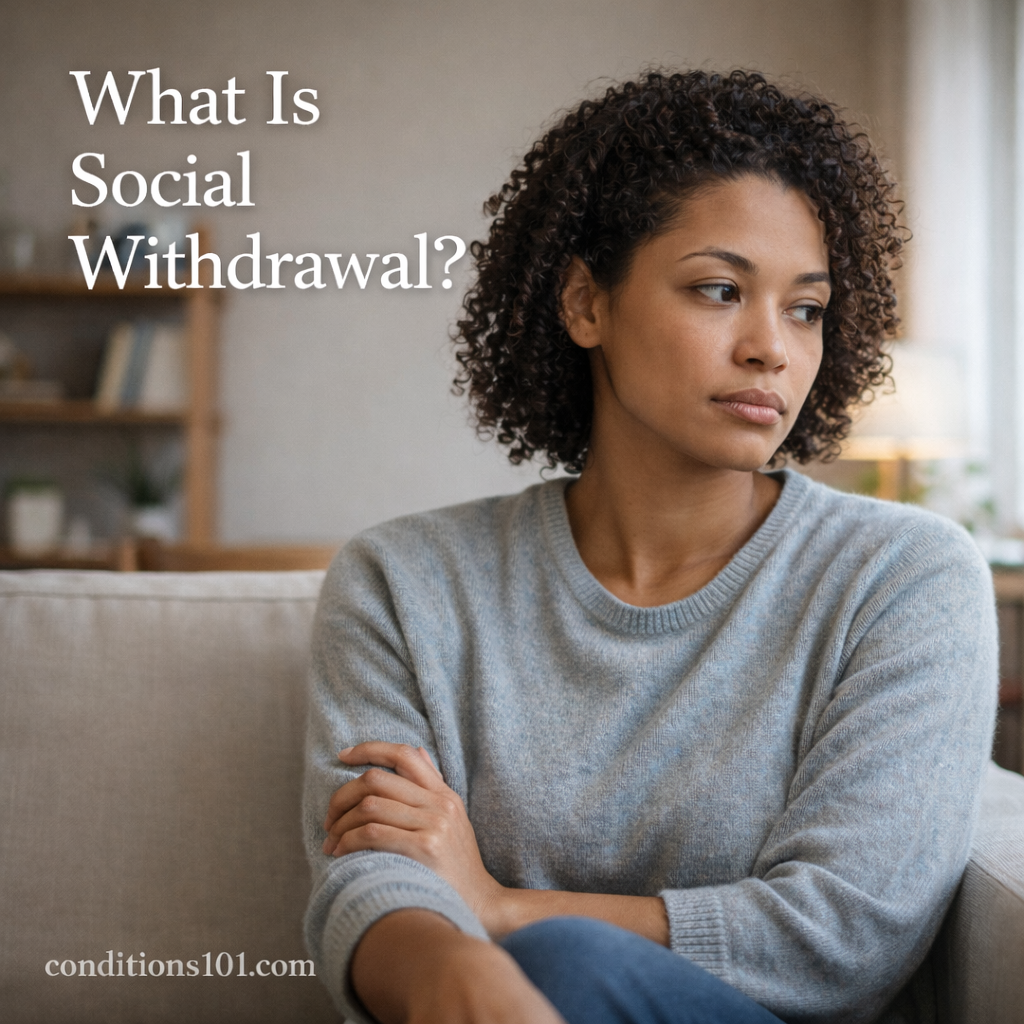
Social withdrawal refers to a pattern of reducing, limiting, or avoiding social interaction with others. It can involve pulling back from conversations, group activities, relationships, or previously enjoyed social situations. Social withdrawal is a behavioral and experiential pattern, not a diagnosis on its own.
People who experience social withdrawal may still want connection but feel unable, unmotivated, or overwhelmed by social interaction. The behavior can be temporary or long-lasting, depending on the individual and circumstances.
Understanding Social Withdrawal
Social withdrawal exists on a spectrum. At one end, it may involve occasional isolation or needing extra time alone. At the other end, it may include consistent avoidance of social contact and prolonged isolation.
Social withdrawal is typically identified by changes in behavior over time rather than a single action. For example, choosing to stay home occasionally is normal. Consistently avoiding people, communication, or social environments may signal social withdrawal.
Common Signs of Social Withdrawal
Social withdrawal can appear differently from person to person, but common patterns include:
- Spending increasing amounts of time alone
- Avoiding social gatherings or invitations
- Reducing communication, such as calls or messages
- Losing interest in shared activities or relationships
- Feeling uncomfortable or exhausted during social interactions
Not everyone who withdraws socially experiences distress, but some may feel lonely, disconnected, or conflicted about their isolation.
Social Withdrawal vs. Introversion
Social withdrawal is often confused with introversion, but they are not the same.
Introversion
- A personality trait
- Preference for quiet or low-stimulation environments
- Social interaction can be enjoyable but draining
Social Withdrawal
- A behavioral pattern or response
- Often represents a change from previous behavior
- May involve avoidance rather than preference
An introverted person may still maintain close relationships and social routines, while social withdrawal often reflects a reduction in social engagement compared to someone’s usual baseline.
Social Withdrawal vs. Social Isolation
While related, social withdrawal and social isolation are distinct concepts.
- Social withdrawal describes the act of pulling back from others
- Social isolation refers to having few or no social connections
Someone may withdraw socially even when opportunities for connection are available. Conversely, a person can feel socially isolated without actively withdrawing.
Why Social Withdrawal Can Occur
Social withdrawal does not have a single cause. It is often influenced by a combination of emotional, cognitive, environmental, and situational factors.
Common contributors include:
- Stress or emotional overload
- Fatigue or burnout
- Changes in routine or life circumstances
- Past negative social experiences
- Feelings of discomfort or self-consciousness
In some cases, withdrawal develops gradually, making it difficult to notice until social habits have significantly changed.
Temporary vs. Persistent Social Withdrawal
Social withdrawal can be short-term or long-term.
Temporary Withdrawal
- Occurs during stressful periods
- Resolves when circumstances improve
- Often intentional and restorative
Persistent Withdrawal
- Continues for extended periods
- Becomes a default response
- May reduce social skills or confidence over time
The duration and impact of withdrawal often matter more than the behavior itself.
How Social Withdrawal Affects Daily Life

Social withdrawal can influence many areas of daily functioning, especially when it becomes prolonged.
Potential effects include:
- Reduced support from others
- Difficulty maintaining relationships
- Changes in work or academic participation
- Increased feelings of disconnection
Because humans are social beings, long-term withdrawal can reshape routines, communication patterns, and self-perception.
Social Withdrawal in Different Contexts
Social withdrawal can look different depending on age, environment, and life stage.
- Children may avoid play or group activities
- Adolescents may disengage from peers or school events
- Adults may reduce socializing, networking, or family contact
- Older adults may withdraw following life changes or losses
Understanding context helps explain why withdrawal appears and how it fits into a person’s broader life experience.
Social Withdrawal and Mental & Cognitive Health
In educational and clinical discussions, social withdrawal is often described as a feature, symptom, or associated behavior rather than a standalone condition.
It may be referenced in relation to:
- Emotional health challenges
- Cognitive strain or overload
- Stress-related responses
- Adjustment to major life changes
The presence of social withdrawal alone does not define a specific condition. It is one piece of a larger behavioral and experiential picture.
Recognizing Patterns Over Time
Social withdrawal is best understood by observing trends rather than isolated moments.
Common pattern indicators include:
- Gradual reduction in social engagement
- Avoidance becoming more frequent or automatic
- Increasing discomfort around interaction
- Shrinking social circles over time
Recognizing patterns can help clarify whether withdrawal is situational, intentional, or becoming entrenched.
Social Withdrawal Is Not a Character Flaw
It is important to distinguish social withdrawal from personal weakness or lack of effort. Many people withdraw as a way to cope with overwhelming demands or internal strain.
Social withdrawal often reflects:
- A need for emotional or mental space
- Difficulty processing external stimulation
- A response to stress rather than disinterest
Understanding this can reduce stigma and promote more accurate conversations around social behavior.
Key Takeaways
- Social withdrawal involves reducing or avoiding social interaction
- It is a pattern, not a diagnosis
- Social withdrawal differs from introversion and social isolation
- It can be temporary or persistent
- Context and duration matter more than isolated behaviors