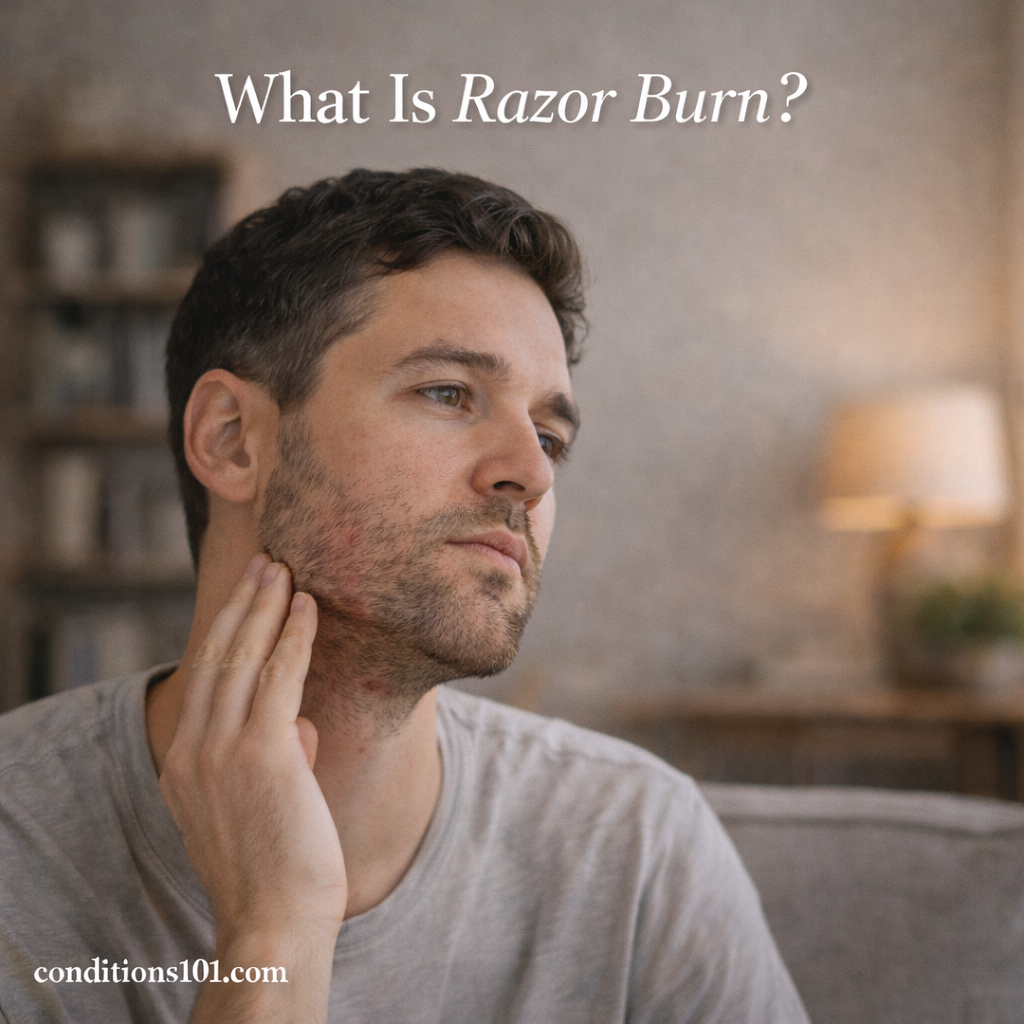
Razor burn is a common skin reaction that occurs after shaving, resulting in irritation, redness, or discomfort on the skin. It is typically caused by friction, pressure, or sensitivity during the shaving process rather than by an underlying skin disease.
Razor burn is temporary and surface-level, affecting the outer layer of the skin. It can appear anywhere shaving occurs, including the face, neck, legs, underarms, or other shaved areas.
How Razor Burn Develops
Razor burn usually happens when the skin barrier becomes irritated during shaving. This irritation can occur when:
- A razor moves repeatedly over the same area
- The blade pulls or drags on the skin
- The skin is dry or sensitive at the time of shaving
- The razor presses too firmly against the skin
The result is inflammation of the skin’s surface, which leads to visible and physical discomfort.
Common Signs of Razor Burn
Razor burn can look and feel different depending on skin type and shaving habits, but common signs include:
- Redness or blotchy skin
- A warm or stinging sensation
- Mild swelling
- Sensitivity to touch
- Itchy or tight-feeling skin
These effects usually appear shortly after shaving and often fade over time.
Razor Burn vs Razor Bumps

Razor burn is often confused with razor bumps, but they are not the same.
Razor burn
- A surface-level skin irritation
- Appears as redness or sensitivity
- Typically fades relatively quickly
Razor bumps
- Involve hair growing back into the skin
- Appear as small raised bumps
- May persist longer than razor burn
While they can occur together, they are caused by different processes.
Areas Commonly Affected by Razor Burn
Razor burn can occur anywhere hair is removed with a razor, including:
- Face and neck
- Legs
- Underarms
- Bikini or groin area
- Chest or arms
Areas with thinner skin or frequent shaving tend to be more prone to irritation.
Why Razor Burn Can Feel Uncomfortable
Shaving removes hair very close to the skin’s surface. When combined with friction or pressure, this can disrupt the skin’s natural protective barrier. Once irritated, the skin becomes more sensitive to air, clothing, or movement, which can intensify the sensation.
The discomfort is typically related to inflammation, not injury.
How Long Razor Burn Typically Lasts
Razor burn is usually short-lived. For many people, it improves within hours or a couple of days as the skin recovers. Duration can vary depending on:
- Skin sensitivity
- Shaving frequency
- Environmental factors such as heat or friction
What Razor Burn Is Not
Razor burn is often misunderstood. It is:
- Not an infection
- Not a permanent skin condition
- Not a sign of poor hygiene
- Not the same as an allergic reaction
It is a common response to skin irritation and does not usually indicate a serious issue.
Key Takeaways
- Razor burn is a temporary skin irritation caused by shaving.
- It affects the skin’s surface rather than deeper layers.
- Common signs include redness, stinging, and sensitivity.
- Razor burn differs from razor bumps, though they may occur together.
- The condition typically resolves as the skin calms.