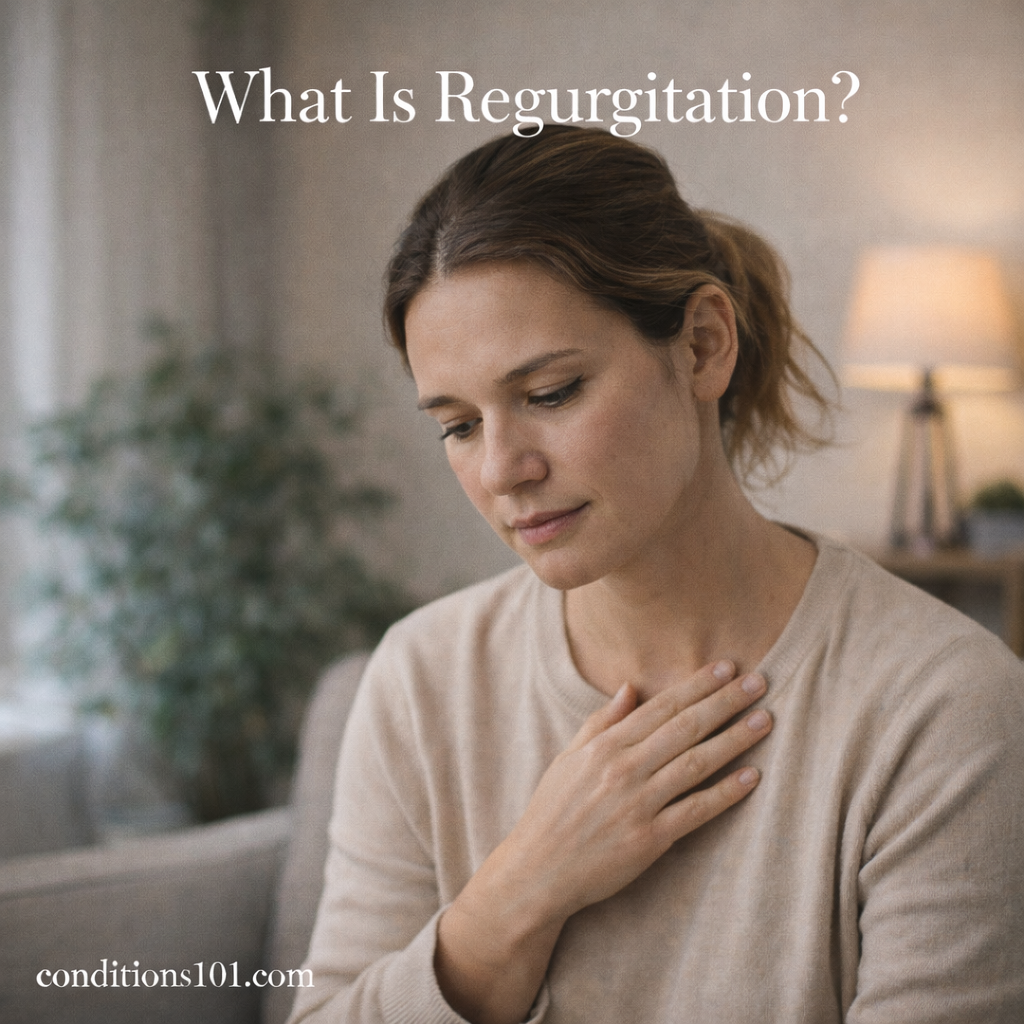
Regurgitation is the backward movement of stomach or esophageal contents into the throat or mouth without forceful vomiting. It usually happens passively and may occur shortly after eating or drinking. Regurgitation is a symptom or experience, not a disease itself.
People often describe regurgitation as food or liquid coming back up effortlessly, sometimes with a sour or bitter taste, but without nausea or retching.
How Regurgitation Happens
Regurgitation occurs when material moves upward instead of continuing through the digestive system as intended. This backward flow can happen when normal digestive movement or muscle coordination is disrupted.
Factors that may contribute include:
- Relaxation or weakness of muscles that normally keep contents moving downward
- Pressure in the stomach after eating
- Body position, such as bending over or lying down
- Slowed or altered digestive movement
Educational discussions focus on the process rather than identifying causes or conditions.
Regurgitation vs. Vomiting
Regurgitation is often confused with vomiting, but they are not the same experience.
Key Differences
Regurgitation
- Passive and effortless
- No retching or strong abdominal contractions
- Usually involves small amounts
- Often occurs soon after eating
Vomiting
- Forceful and active
- Involves nausea and abdominal muscle contraction
- Expels stomach contents suddenly
Understanding this distinction helps clarify digestive terminology without implying illness.
What Regurgitation Can Feel Like

The experience of regurgitation varies from person to person.
Common descriptions include:
- Food or liquid rising into the throat
- A sour, bitter, or acidic taste
- A sensation of fullness or pressure
- Mild throat irritation
Some people may notice regurgitation only occasionally, while others experience it more frequently.
When Regurgitation Commonly Occurs
Regurgitation may be more noticeable in certain everyday situations.
These can include:
- After large meals
- When bending forward
- While lying flat after eating
- During physical activity soon after meals
In educational contexts, regurgitation is described as an experience rather than interpreted clinically.
Is Regurgitation a Condition?
Regurgitation itself is considered a digestive symptom or experience, not a standalone disease. It may occur on its own or alongside other digestive sensations.
In health education, regurgitation is discussed as:
- A descriptive digestive event
- A physical sensation involving food movement
- A common experience for many people at some point
This approach avoids diagnostic conclusions while improving understanding.
Why Regurgitation Is Often Misunderstood
Regurgitation is frequently misunderstood because:
- It is often grouped with vomiting
- Descriptions vary widely between individuals
- It can occur without discomfort or warning
Clear explanations help distinguish regurgitation from other digestive experiences.
Regurgitation in Educational Health Content
Educational resources describe regurgitation using neutral, non-clinical language to:
- Promote digestive awareness
- Avoid medical assumptions
- Support long-term, evergreen understanding
This makes the information accessible and appropriate for general audiences.
Key Takeaways
- Regurgitation is the passive return of food or liquid into the throat or mouth.
- It occurs without forceful vomiting or nausea.
- Regurgitation is a symptom or experience, not a disease.
- It often happens after eating or with certain body positions.
- Educational explanations focus on understanding the process rather than diagnosis or treatment.