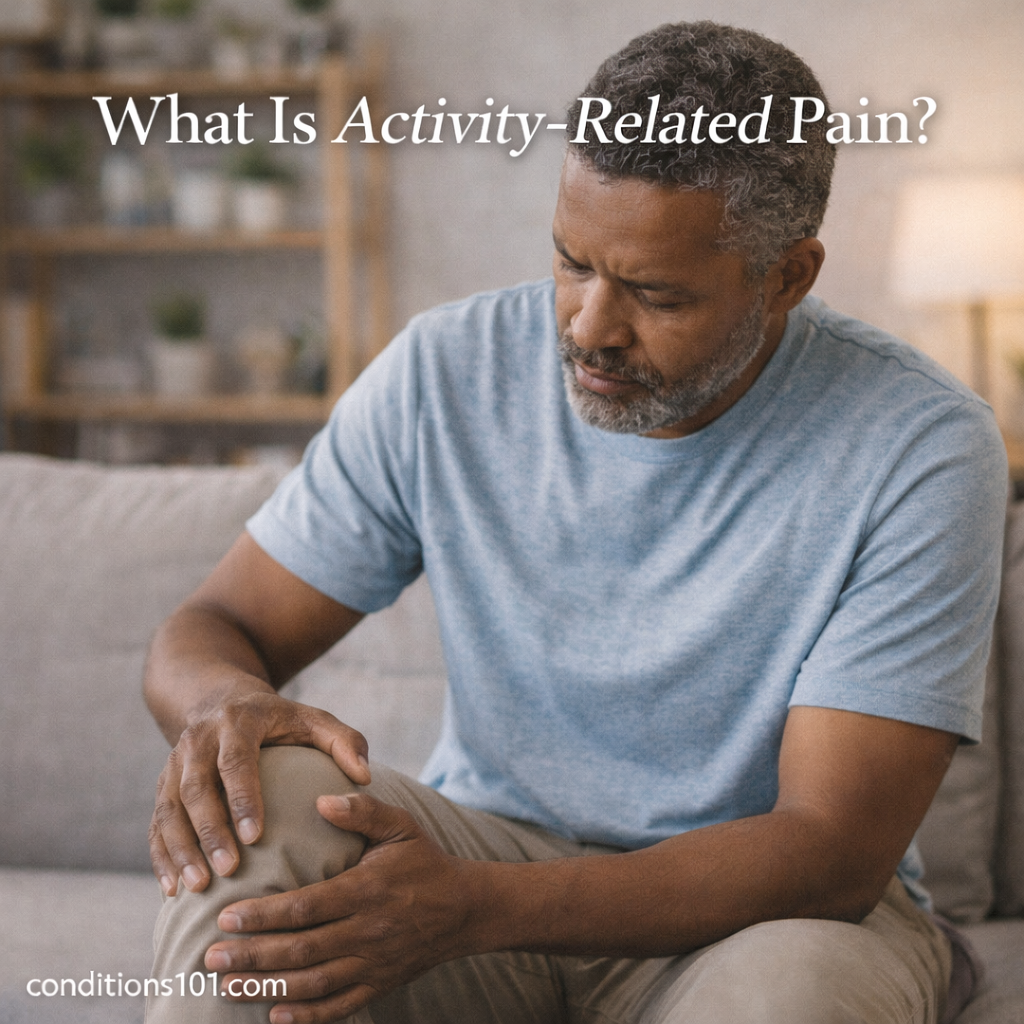
Activity-related pain refers to physical discomfort or soreness that appears during, immediately after, or following certain movements or activities. This type of pain is commonly associated with how the body responds to physical effort, repetition, posture, or strain rather than a single isolated event.
It is frequently discussed in pain and physical health education because many people experience some form of activity-related pain at different points in life, whether during work, exercise, household tasks, or daily movement.
A Simple Definition of Activity-Related Pain
Activity-related pain can be defined as:
- Pain or discomfort linked to specific movements or tasks
- Sensations that increase with physical activity and decrease with rest
- Discomfort that appears during or after exertion
The key feature is the connection between physical activity and the onset or change in pain.
Common Types of Activities Linked to Pain
Activity-related pain can occur during many everyday actions, not just intense exercise.
Common examples include pain associated with:
- Walking, standing, or climbing stairs
- Lifting, carrying, or reaching
- Repetitive motions such as typing or bending
- Exercise or sports participation
- Household or work-related tasks
The type of activity involved often influences where the pain is felt and how intense it becomes.
How Activity-Related Pain May Feel
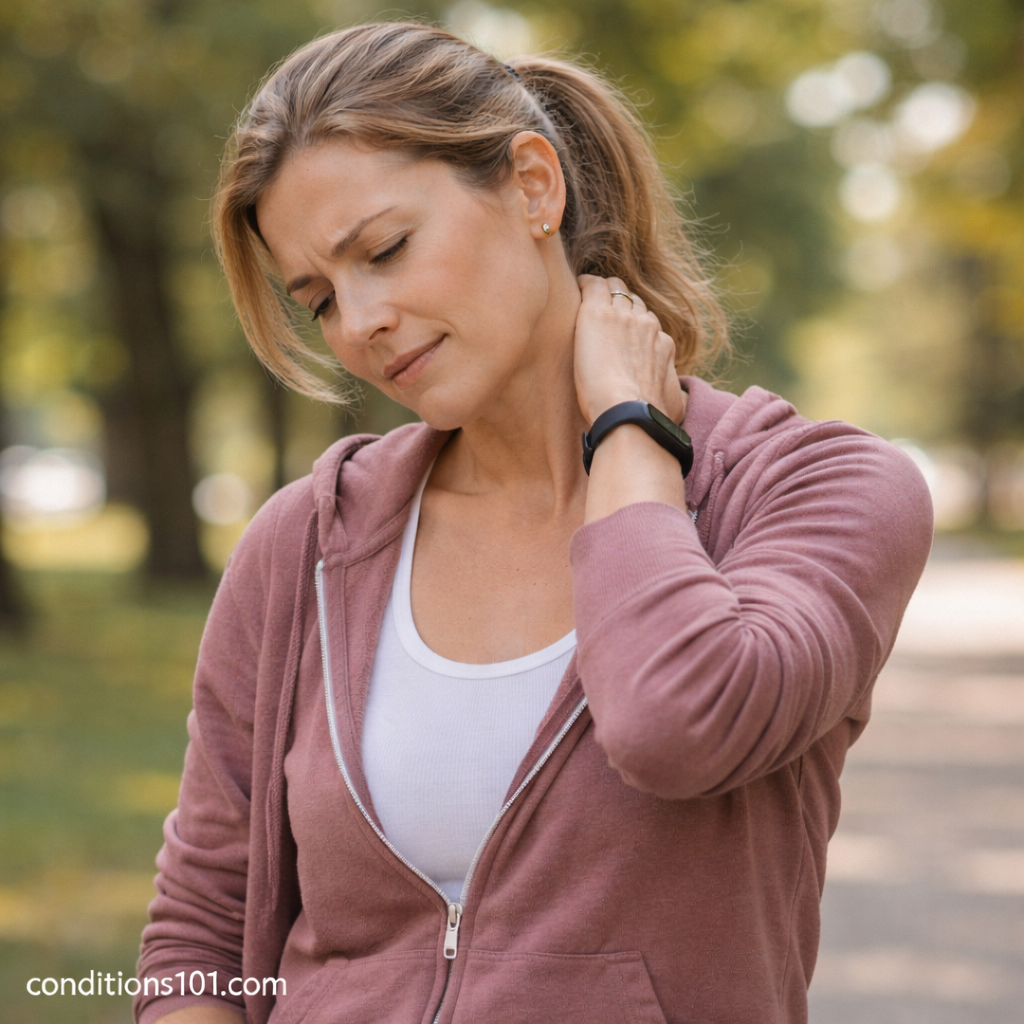
The sensation of activity-related pain can vary widely depending on the person and the activity.
People may describe it as:
- Aching or soreness
- Sharp or stabbing sensations during movement
- Tightness or stiffness
- Throbbing after activity ends
- Discomfort that eases with rest
The pain may be localized to one area or felt across a broader region of the body.
Why Activity-Related Pain Happens
Activity-related pain often results from how muscles, joints, and connective tissues respond to physical demands.
Common contributing factors include:
- Muscle fatigue or overuse
- Repetitive strain over time
- Poor posture or body mechanics
- Sudden increases in activity level
- Insufficient recovery between activities
In many cases, the pain reflects temporary stress on the body rather than structural damage.
Activity-Related Pain vs. Resting Pain
Activity-related pain is often contrasted with pain that occurs at rest.
Activity-related pain typically:
- Appears or worsens with movement
- Improves when activity stops
- Is linked to specific actions
Resting pain often:
- Persists even without movement
- May interfere with sleep or relaxation
- Is not clearly tied to activity level
This distinction helps explain why some discomfort is predictable and situation-dependent.
Areas of the Body Commonly Affected
Activity-related pain can occur in many parts of the body, depending on movement patterns.
Frequently affected areas include:
- Back and neck
- Knees and hips
- Shoulders and arms
- Feet and ankles
- Hands and wrists
The location often corresponds to areas under the most physical demand during activity.
Factors That Influence Activity-Related Pain
Several variables can affect whether activity-related pain occurs and how noticeable it feels.
These may include:
- Type and intensity of activity
- Duration and frequency of movement
- Individual fitness or conditioning level
- Previous physical strain or injury history
- Work environment or ergonomic setup
Because these factors differ between individuals, experiences with activity-related pain can vary widely.
Common Misunderstandings About Activity-Related Pain
“All Activity-Related Pain Means Injury”
Not all pain during or after activity indicates injury. Temporary discomfort can be part of how the body adapts to movement or effort.
“Pain Only Happens During Exercise”
Activity-related pain can occur during everyday tasks, not just workouts or sports.
“Avoiding All Activity Prevents Pain”
Complete avoidance of movement does not always reduce discomfort and may sometimes contribute to stiffness or weakness over time.
Why Activity-Related Pain Is Discussed in Health Education
Activity-related pain is a common topic because it helps explain:
- How the body responds to physical demands
- Why pain can fluctuate with movement and rest
- The difference between temporary discomfort and persistent pain
- How daily habits influence physical comfort
Understanding this type of pain supports clearer conversations about movement, physical health, and body awareness.
Key Takeaways
- Activity-related pain is discomfort linked to movement or physical tasks
- It often appears during or after activity and improves with rest
- Sensations vary from soreness to sharp discomfort
- Many factors influence when and how it occurs
- Learning about activity-related pain helps explain common physical experiences