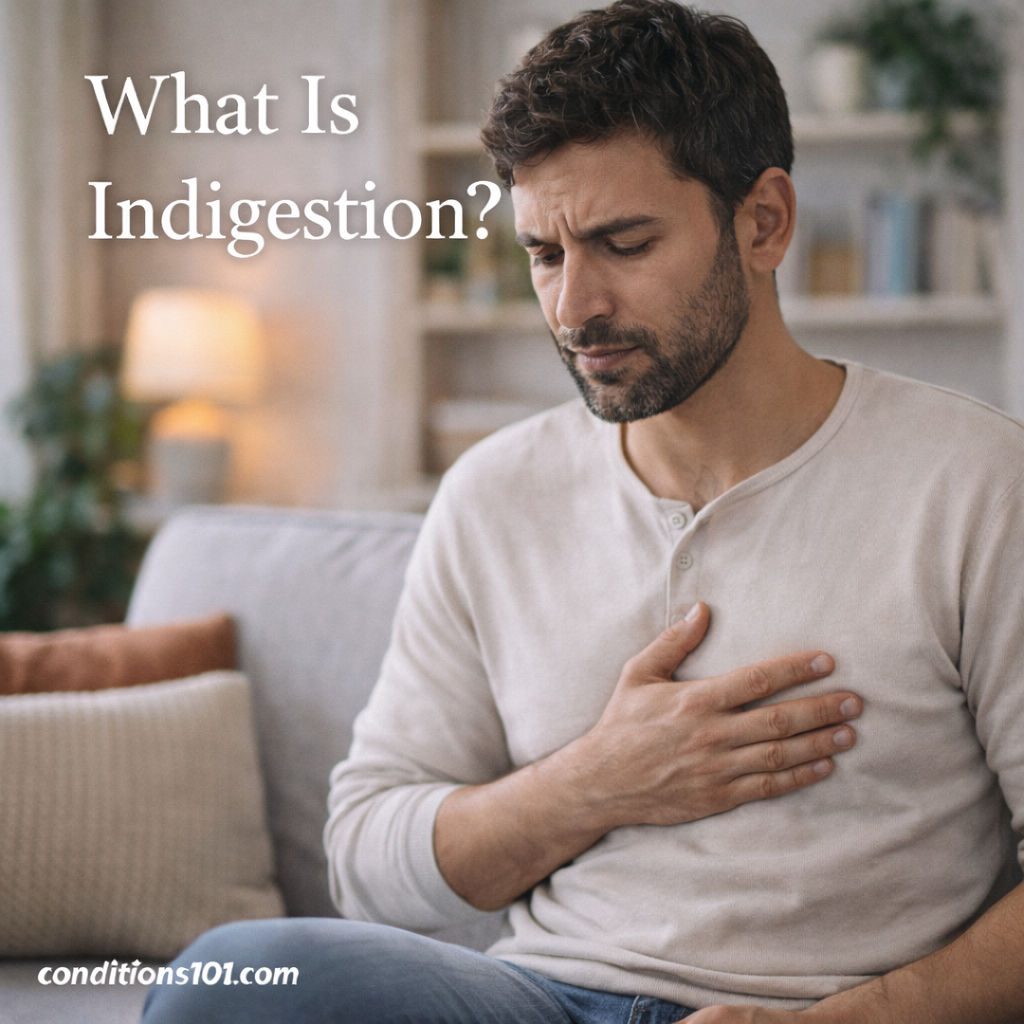
Indigestion is a general term used to describe discomfort or uneasiness in the upper digestive tract, often occurring during or after eating. It is sometimes referred to as dyspepsia. Indigestion is not a single condition but a collection of symptoms related to how the stomach and upper digestive system feel and function.
This article provides an educational overview of indigestion, including what it is, how it is commonly experienced, contributing factors, and how it may affect daily life. It is for general informational purposes only and does not provide medical advice, diagnosis, or treatment.
Understanding the Digestive Process
Digestion begins in the mouth and continues through the stomach and intestines, where food is broken down and nutrients are absorbed.
In normal digestion:
- Food enters the stomach and mixes with digestive acids
- Muscles help move food through the digestive tract
- The stomach gradually empties into the intestines
Indigestion is often discussed in relation to how comfortably this process occurs.
What Does “Indigestion” Mean?
Indigestion describes a group of upper abdominal sensations rather than a specific diagnosis. These sensations typically occur in the area between the chest and the navel.
Indigestion may involve:
- Discomfort after eating
- A feeling of fullness
- Mild pain or pressure in the upper abdomen
- Uneasy or unsettled digestion
Symptoms can vary widely in intensity and duration.
Common Symptoms Associated With Indigestion
People may describe indigestion in different ways, depending on how it feels for them.
Commonly Reported Sensations
- Upper abdominal discomfort or pressure
- Feeling overly full after meals
- Bloating
- Mild nausea
- Burping or excess gas
Symptoms may appear shortly after eating or develop gradually.
When Indigestion Is Often Noticed
Indigestion tends to follow certain patterns related to meals, posture, or daily habits.
Common situations include:
- After large or heavy meals
- After eating quickly
- When lying down soon after eating
- During periods of stress
- After consuming rich, spicy, or fatty foods
Not everyone experiences indigestion under the same circumstances.
Factors Commonly Associated With Indigestion
Indigestion does not usually have a single cause. Educational discussions often describe it as linked to a combination of digestive, lifestyle, and situational factors.
Digestive and Physical Factors
- Slower stomach emptying
- Sensitivity of the stomach lining
- Increased stomach acid
Lifestyle and Habit-Related Factors
- Overeating
- Eating too quickly
- High-fat or spicy foods
- Carbonated beverages
- Stress or tension
These factors may increase the likelihood of indigestion but do not guarantee it.
Indigestion and Daily Life

For many people, indigestion is occasional and mild. For others, it may be more frequent or disruptive.
Possible Daily Impacts
- Discomfort after meals
- Avoidance of certain foods
- Feeling uncomfortable during social meals
- Reduced enjoyment of eating
The impact on daily life varies depending on how often symptoms occur and how noticeable they feel.
Indigestion vs. Other Digestive Conditions
Indigestion shares symptoms with other digestive concerns, which is why it is often discussed as a symptom rather than a condition.
Indigestion
- Refers to upper digestive discomfort
- Often meal-related
- May come and go
Other Digestive Conditions
- May involve ongoing or more specific symptoms
- Can affect different parts of the digestive tract
- Often require professional evaluation to distinguish
Persistent or unusual symptoms are typically discussed with a healthcare professional.
Indigestion Across Different Age Groups
Indigestion can affect people of all ages, though experiences may differ.
Younger Adults
- Often linked to eating habits or stress
- May be occasional
Middle-Aged Adults
- May notice symptoms more frequently
- Digestive sensitivity may change over time
Older Adults
- Symptoms may overlap with other digestive changes
- Discomfort may be less clearly defined
This article focuses on general patterns rather than individual assessment.
Frequently Asked Questions About Indigestion
Is indigestion common?
Yes. Indigestion is widely discussed as a common digestive complaint.
Can indigestion happen without overeating?
Yes. Some people experience indigestion even after normal-sized meals.
Is indigestion always related to food?
Not always. Stress, posture, and other factors may also play a role.
Key Takeaways
- Indigestion describes discomfort in the upper digestive tract
- It is a collection of symptoms rather than a single condition
- Symptoms often occur during or after meals
- Multiple lifestyle and digestive factors are commonly associated
- Educational understanding supports informed health conversations