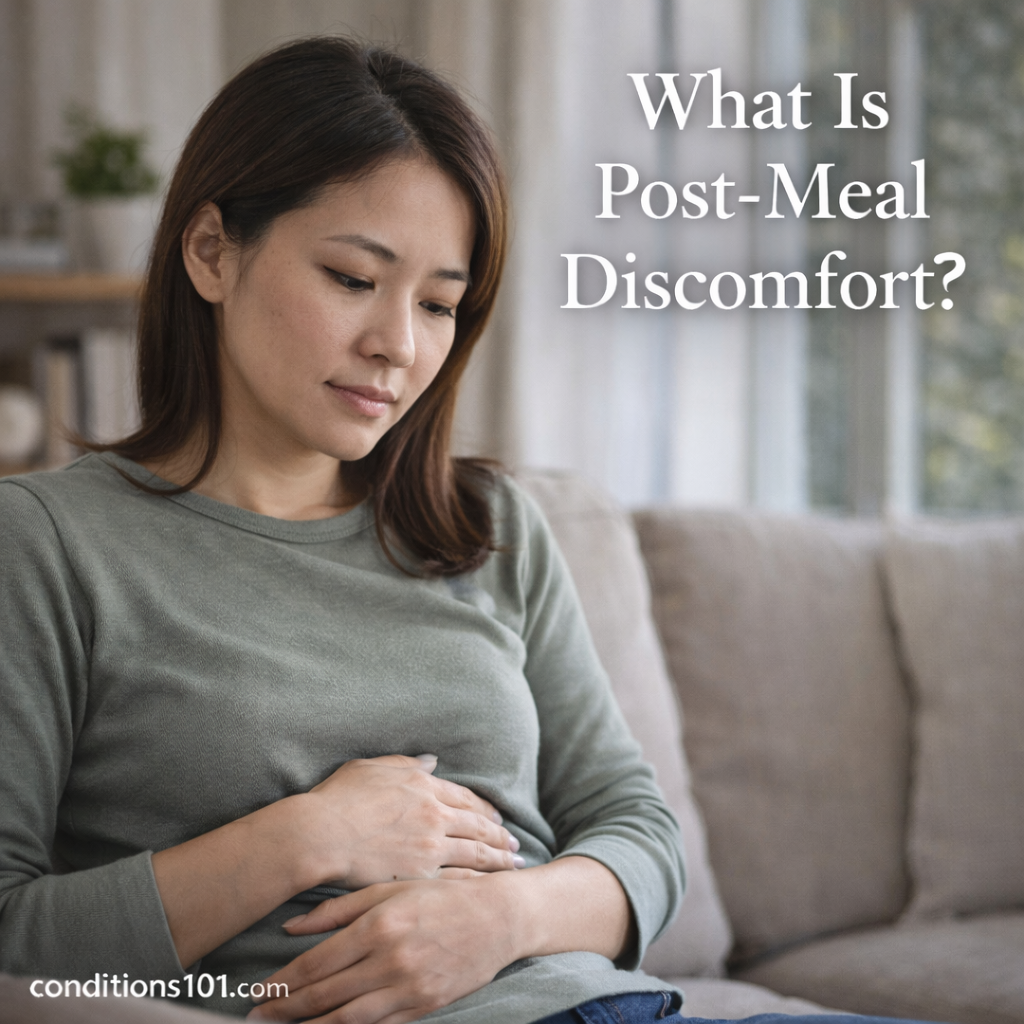
Post-meal discomfort is a general term used to describe unpleasant physical sensations that occur after eating. These sensations can range from mild and short-lived to more noticeable and lingering, depending on the individual and situation.
Post-meal discomfort is not a diagnosis. It is a descriptive experience that focuses on how the body feels after a meal rather than identifying a specific digestive condition. Many people experience post-meal discomfort occasionally as part of everyday life.
Understanding Post-Meal Discomfort
Eating triggers a complex digestive process involving the stomach, intestines, nerves, and muscles. As the body works to break down food and absorb nutrients, sensations can occur that some people perceive as uncomfortable.
Post-meal discomfort refers to how digestion feels, not necessarily whether something is medically wrong. The experience can vary widely between individuals and even from one meal to another.
Common Sensations Associated With Post-Meal Discomfort
Post-meal discomfort can present in different ways. Commonly reported sensations include:
- A feeling of fullness or heaviness
- Pressure or tightness in the abdomen
- Bloating or gassiness
- Mild cramping sensations
- General unease or restlessness after eating
These sensations may appear shortly after a meal or develop gradually as digestion continues.
Post-Meal Discomfort vs. Normal Fullness
It is normal to feel full after eating. Post-meal discomfort differs from normal fullness in that it may feel unpleasant or distracting, rather than simply satisfying.
- Normal fullness is expected after eating and typically fades smoothly.
- Post-meal discomfort may feel more noticeable, awkward, or uncomfortable.
The difference is subjective and depends on individual sensitivity, meal size, and other factors.
Situations Where Post-Meal Discomfort Commonly Occurs

Post-meal discomfort is often linked to everyday habits and circumstances rather than illness.
Meal Size and Eating Pace
- Large meals can stretch the stomach and increase pressure.
- Eating quickly may lead to swallowing air, which can contribute to discomfort.
- Skipping meals and then eating a large portion later may intensify sensations.
Food Characteristics
Certain foods are more likely to be associated with discomfort for some people, such as:
- Very rich or heavy meals
- High-fat foods
- Carbonated beverages
- Highly processed foods
Individual responses vary widely, and no single food causes discomfort for everyone.
Body Position and Activity
- Lying down immediately after eating
- Sitting in a slouched position
- Limited movement after meals
These factors may affect how digestion feels for some individuals.
Post-Meal Discomfort and Digestive Sensitivity
Some people have heightened awareness of digestive sensations. For them, normal digestive activity may feel more noticeable or uncomfortable compared to others.
Digestive sensitivity does not necessarily indicate a health problem. It reflects differences in how the body perceives and processes internal sensations.
Temporary vs. Recurrent Post-Meal Discomfort
Occasional Post-Meal Discomfort
Many people experience post-meal discomfort occasionally due to:
- Changes in routine
- Unusual meal choices
- Stress or fatigue
In these cases, the discomfort often resolves on its own.
Recurrent Post-Meal Discomfort
Some individuals notice discomfort more consistently after meals. The experience may vary in intensity and timing and can be influenced by lifestyle, eating patterns, and personal sensitivity.
How Post-Meal Discomfort Can Affect Daily Life
Post-meal discomfort can influence everyday habits and choices, including:
- Meal timing and portion size
- Food preferences
- Social eating situations
- Comfort during work or relaxation
While often mild, repeated discomfort can become a source of distraction or frustration.
Post-Meal Discomfort Across Different Age Groups
Post-meal discomfort can occur at any age.
- Younger individuals may notice discomfort during periods of rapid eating or irregular meals.
- Adults may experience it alongside busy schedules or stress.
- Older adults may notice changes in digestive comfort over time.
The experience is shaped more by habits and context than by age alone.
Why the Term Is Used in Digestive Health Discussions
The term “post-meal discomfort” is commonly used because it:
- Describes a shared experience without assigning a diagnosis
- Focuses on sensations rather than disease
- Allows people to communicate digestive comfort clearly
- Fits educational and lifestyle discussions about digestion
It provides a neutral way to talk about how eating feels without implying medical conclusions.
Key Takeaways
- Post-meal discomfort refers to unpleasant sensations after eating.
- It is a descriptive experience, not a diagnosis.
- Sensations may include fullness, pressure, bloating, or unease.
- Meal size, eating habits, and digestive sensitivity play a role.
- The experience varies widely between individuals.