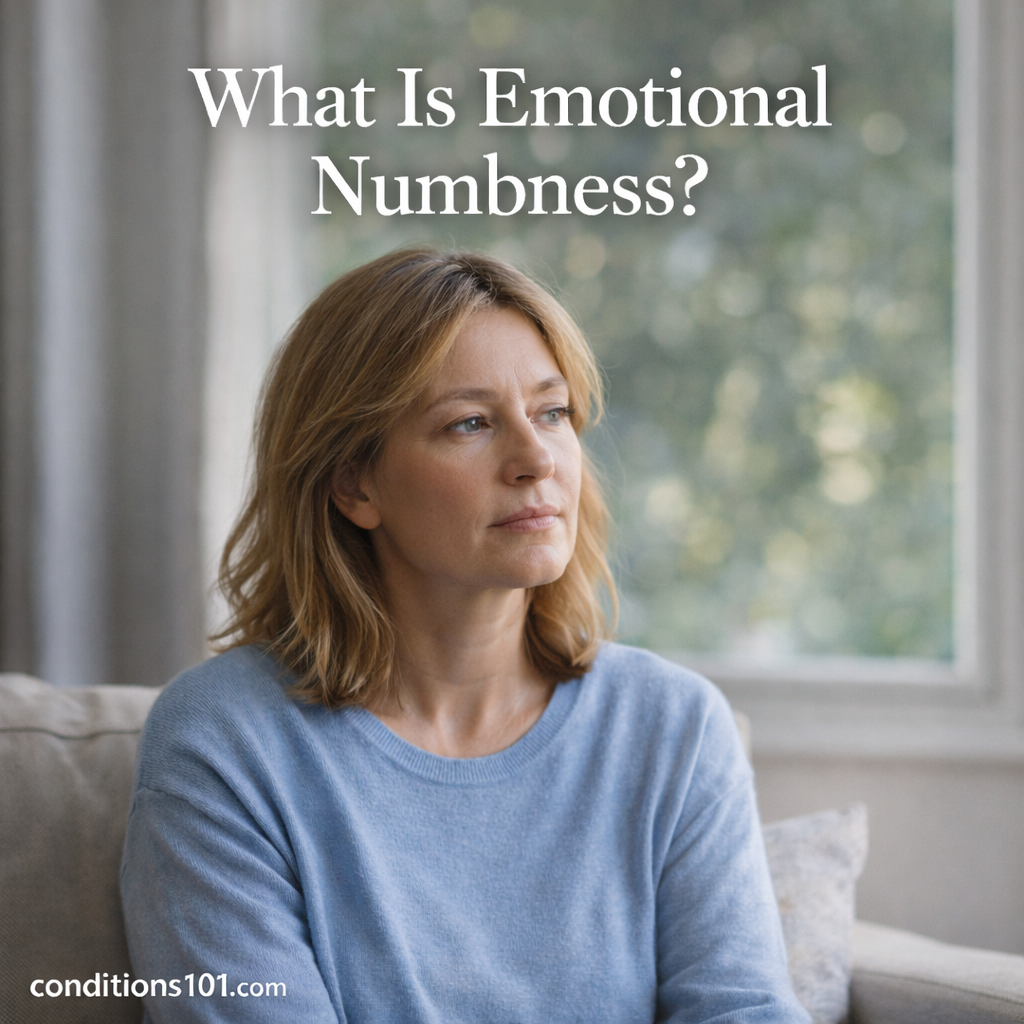
Emotional numbness is a term used to describe a reduced ability to feel or express emotions. People experiencing emotional numbness may feel disconnected from their feelings, surroundings, or even from other people. Emotions that once felt strong—such as joy, sadness, anger, or excitement—may feel muted, distant, or entirely absent.
Emotional numbness is not a diagnosis. It is a descriptive experience that can occur in many different contexts and at various points in life. The experience can be temporary or longer-lasting and may vary in intensity from person to person.
Understanding Emotional Numbness
Emotional numbness often involves a sense of emotional flatness or detachment. Rather than feeling overwhelmed by emotions, a person may feel very little at all. Some describe it as feeling “shut down,” “empty,” or “on autopilot.”
This experience exists on a spectrum. Someone may still feel emotions but notice they are weaker or harder to access. Others may feel almost completely disconnected from their emotional responses.
Emotional numbness can affect how people relate to themselves, their relationships, and their daily activities.
Common Signs of Emotional Numbness
Emotional numbness can look different for different people, but common experiences may include:
- Feeling indifferent toward events that would normally trigger emotion
- Difficulty identifying or describing feelings
- Reduced emotional reactions, both positive and negative
- Feeling disconnected from loved ones or social situations
- A sense of emptiness or emotional distance
- Loss of interest in activities that once felt meaningful
These experiences do not always occur together, and their presence alone does not indicate a specific condition.
Emotional Numbness vs. Normal Emotional Changes
It is normal for emotions to fluctuate over time. Stress, fatigue, or life changes can temporarily affect how emotions are felt or expressed.
Emotional numbness differs from typical emotional ups and downs in that it often involves a persistent reduction in emotional experience, rather than a temporary mood shift. However, even emotional numbness can be temporary and may change as circumstances evolve.
Situations Where Emotional Numbness May Occur
Emotional numbness is commonly discussed in relation to life experiences, stressors, or environmental factors.
Stress and Overload
Periods of prolonged stress can lead some people to feel emotionally blunted. When mental or emotional demands feel overwhelming, emotional responses may feel muted as a way of coping.
Emotional Exhaustion
After intense emotional experiences, people may notice a temporary sense of emotional shutdown. This can occur following grief, major life transitions, or sustained emotional effort.
Repetitive or High-Demand Environments
Workplaces or environments that require constant emotional regulation may contribute to emotional detachment over time, particularly if rest and recovery are limited.
Emotional Numbness and Mental Health Contexts
Emotional numbness is often mentioned in discussions about mental and cognitive health, but it is important to understand that it is not a diagnosis on its own.
It may be discussed alongside experiences such as:
- Emotional detachment
- Reduced emotional awareness
- Difficulty connecting emotionally
The presence of emotional numbness does not automatically indicate a mental health disorder. Context, duration, and overall impact on daily life are important factors in how the experience is understood.
How Emotional Numbness Can Affect Daily Life

Emotional numbness can influence many areas of everyday living.
Relationships
When emotions feel muted, connecting with others can become more challenging. Conversations, shared experiences, or emotional exchanges may feel distant or less meaningful.
Motivation and Enjoyment
A reduced ability to feel pleasure or interest can affect motivation. Activities that once brought satisfaction may feel neutral or unrewarding.
Self-Awareness
Emotional numbness can make it harder to recognize internal cues, such as emotional needs, boundaries, or personal preferences.
Emotional Numbness Is Not the Same for Everyone
There is no single way emotional numbness is experienced. Some people describe it as calm and quiet, while others find it distressing or confusing. Cultural background, personality, and personal coping styles all influence how emotional numbness is perceived and described.
Additionally, emotional numbness can fluctuate. A person may feel emotionally detached in certain situations but more emotionally engaged in others.
The Role of Awareness and Language
Having language to describe emotional experiences can be helpful. Understanding the term “emotional numbness” allows people to better communicate what they are experiencing without assigning a label or diagnosis.
In educational and research settings, the term is used to describe patterns of emotional experience rather than to define a medical condition.
Emotional Numbness Across the Lifespan
Emotional numbness can occur at any age.
- Younger individuals may experience it during periods of identity development or stress.
- Adults may notice it during demanding life stages or prolonged responsibilities.
- Older adults may experience emotional changes related to life transitions or shifting roles.
The experience is shaped by life context rather than age alone.
Emotional Numbness and Emotional Protection
Some researchers and educators describe emotional numbness as a form of emotional protection. In certain situations, reducing emotional intensity may help individuals function or cope temporarily.
This perspective emphasizes that emotional numbness is not a personal failure or flaw but a response that may arise under specific conditions.
Key Takeaways
- Emotional numbness refers to a reduced ability to feel or express emotions.
- It is a descriptive experience, not a diagnosis.
- Emotional numbness can affect relationships, motivation, and emotional awareness.
- The experience varies widely between individuals.
- Context and life circumstances play a significant role in how emotional numbness appears.