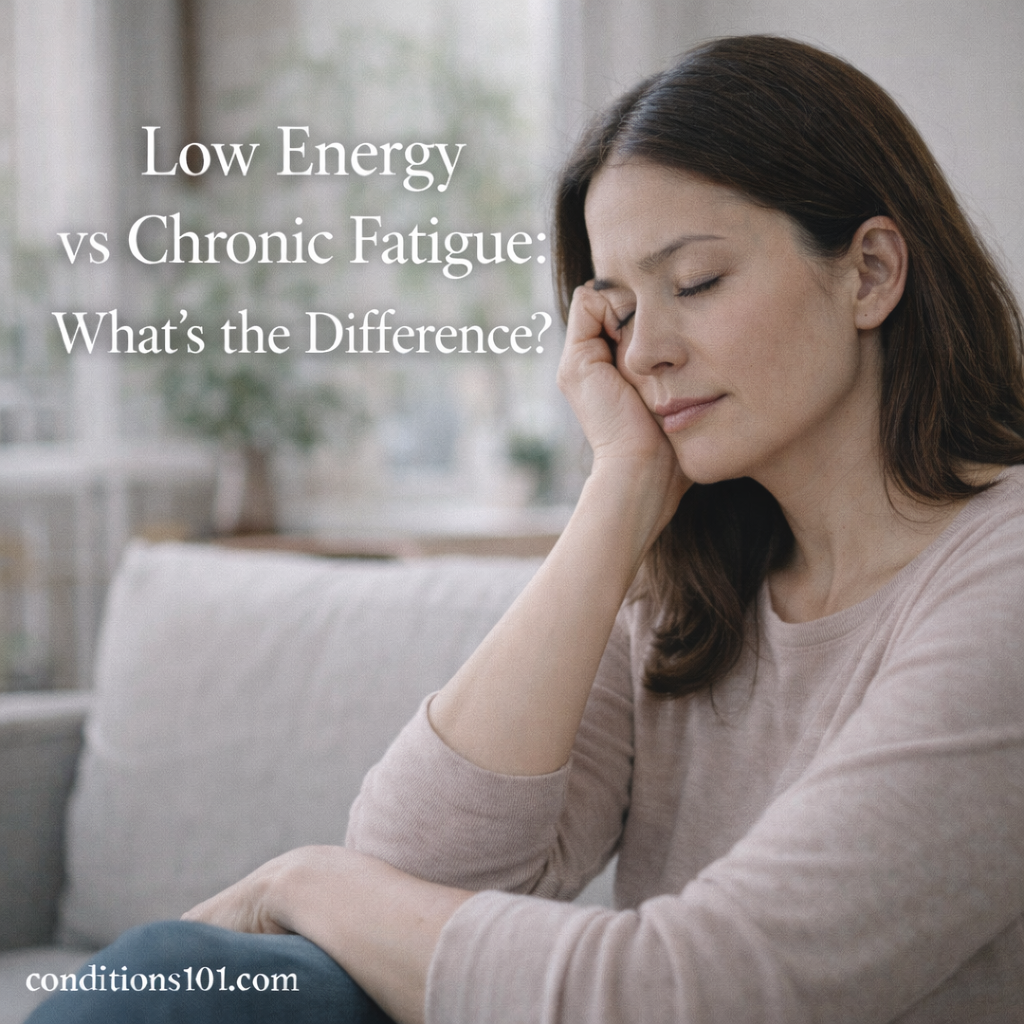
Low energy and chronic fatigue are often used interchangeably in everyday conversation, but they describe different experiences. Both relate to feelings of tiredness or reduced capacity, yet they differ in duration, intensity, and how they affect daily life.
Understanding the distinction between low energy and chronic fatigue can help people describe their experiences more clearly and set realistic expectations about recovery and daily functioning.
What Is Low Energy?
Low energy generally refers to a temporary or situational sense of tiredness, sluggishness, or reduced motivation. It is commonly experienced during busy periods, after poor sleep, or following physical or mental exertion.
Low energy is often:
- Short-term or occasional
- Linked to specific situations or days
- Variable in intensity
- Improved with rest, sleep, or reduced demands
Many people experience low energy at some point, especially during stressful or demanding times.
What Is Chronic Fatigue?
Chronic fatigue describes a more persistent and long-lasting sense of exhaustion that does not easily resolve with rest. The term “chronic” refers to duration rather than severity.
Chronic fatigue is often described as:
- Ongoing or recurring over long periods
- Disproportionate to recent activity
- Present most days
- Interfering with normal routines
Chronic fatigue is a descriptive term and does not, on its own, identify a specific condition or diagnosis.
Key Differences Between Low Energy and Chronic Fatigue
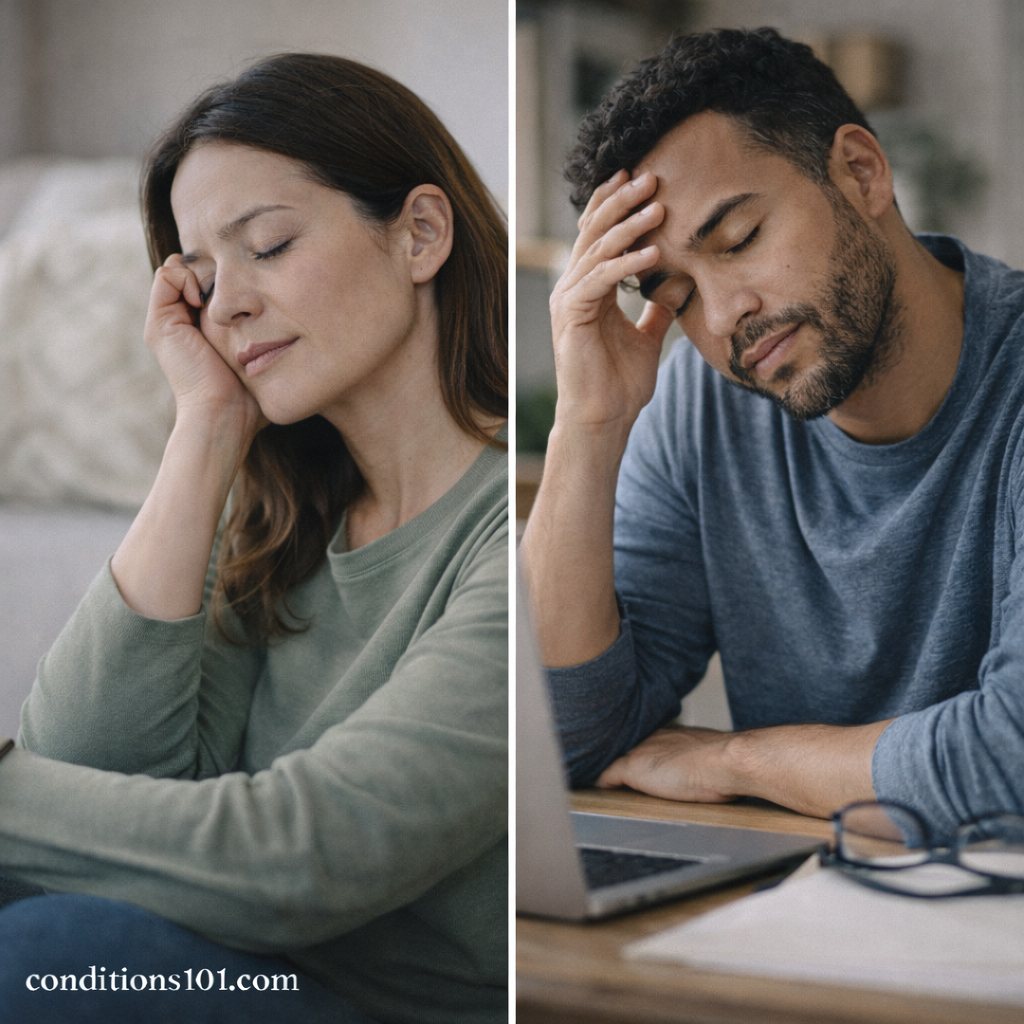
Although both involve tiredness, several characteristics help distinguish them.
Duration
- Low energy is usually temporary
- Chronic fatigue lasts for extended periods
Recovery
- Low energy often improves with rest or downtime
- Chronic fatigue may persist despite adequate rest
Impact on Daily Life
- Low energy may slow productivity but is often manageable
- Chronic fatigue can significantly limit daily activities
Predictability
- Low energy often has identifiable triggers
- Chronic fatigue may feel unpredictable or constant
How Each Feels in Daily Life
Living With Low Energy
People with low energy may notice:
- Slower confirming tasks
- Reduced motivation
- Needing extra rest on certain days
- Fluctuations based on sleep or workload
Low energy typically comes and goes.
Living With Chronic Fatigue
People describing chronic fatigue may notice:
- Ongoing exhaustion throughout the day
- Difficulty sustaining physical or mental activity
- Feeling drained even after rest
- Reduced tolerance for daily demands
The experience is often more consistent and limiting.
Situational vs Persistent Experiences
Low energy is often situational, meaning it relates to temporary circumstances such as:
- Busy schedules
- Poor sleep
- Short-term stress
- Physical exertion
Chronic fatigue is persistent, meaning it continues across weeks or months and becomes part of daily experience rather than an occasional state.
Why the Difference Matters
Understanding the difference between low energy and chronic fatigue helps with:
- Clearer self-description
- Better communication with others
- Setting realistic expectations
- Recognizing patterns over time
Using accurate language can reduce confusion and frustration when describing how tiredness affects daily life.
Low Energy and Chronic Fatigue Are Descriptions, Not Diagnoses
Both low energy and chronic fatigue describe experiences rather than medical conditions. They do not explain underlying causes or indicate specific disorders on their own.
Educational discussions focus on understanding how these experiences differ, not on diagnosing or treating conditions.
When Experiences Overlap
Low energy and chronic fatigue can sometimes overlap. For example:
- Ongoing low energy over time may begin to feel chronic
- Chronic fatigue may fluctuate in intensity
The distinction is not always absolute, but duration and impact are key differentiators.
Key Takeaways
- Low energy is usually temporary and situational
- Chronic fatigue refers to long-lasting, persistent exhaustion
- Low energy often improves with rest
- Chronic fatigue may not resolve easily with rest
- Chronic refers to duration, not severity
- Both terms describe experiences, not diagnoses