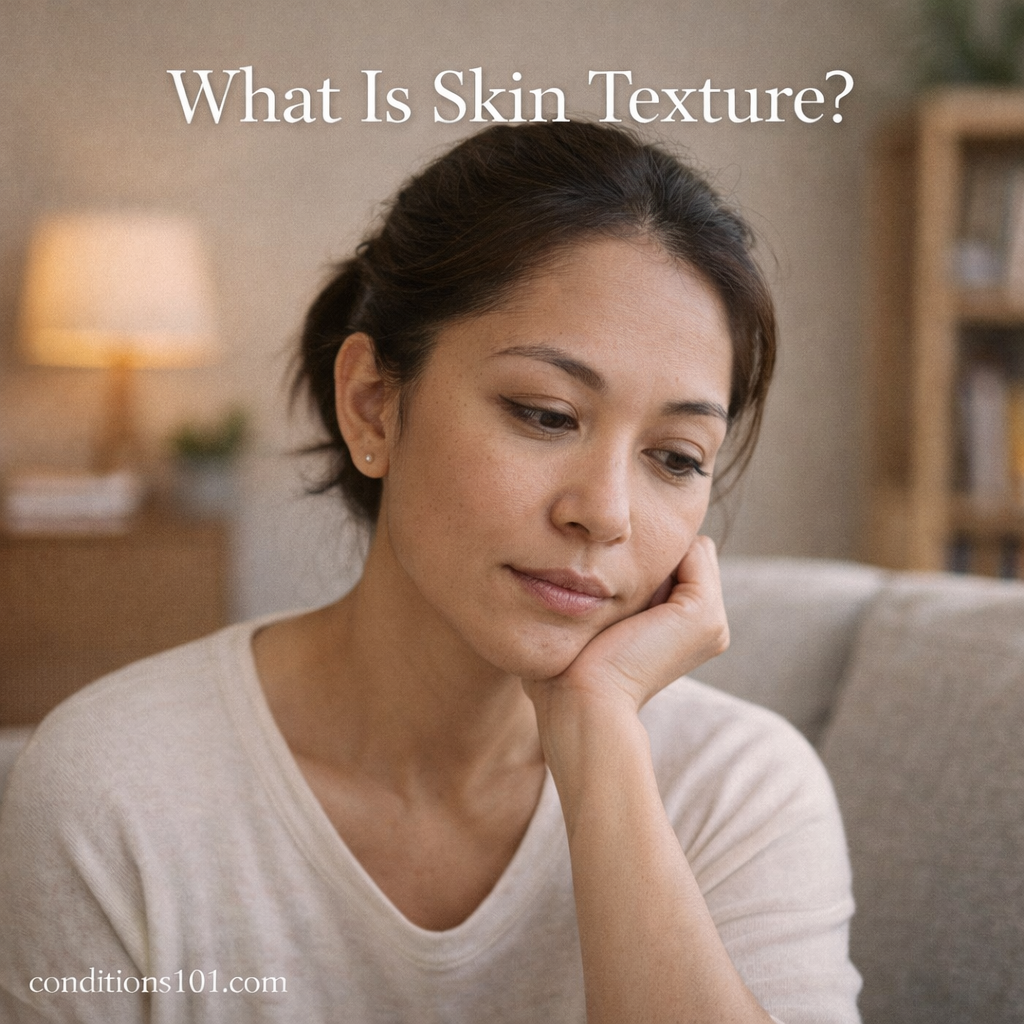
Skin texture refers to the natural surface quality and feel of the skin. It describes how smooth, rough, even, or uneven the skin appears and feels to the touch. Skin texture is a descriptive term, not a diagnosis, and it is commonly used in skincare education, dermatology discussions, and cosmetic contexts.
This article explains skin texture in a clear, education-only way, without offering medical advice, diagnosis, or treatment.
The Basic Definition of Skin Texture
Skin texture describes the physical characteristics of the skin’s surface.
It may include how the skin:
- Feels to the touch (smooth, rough, bumpy)
- Appears visually (even, uneven, dull, or radiant)
- Reflects light
- Shows natural patterns such as pores or fine lines
Everyone has a unique skin texture that can change over time due to natural and environmental factors.
Common Types of Skin Texture
Skin texture is often described using general, non-clinical terms.
Common descriptions include:
- Smooth
Skin feels even and soft, with minimal visible irregularities. - Rough
Skin may feel coarse or uneven to the touch. - Bumpy
Small raised areas may be noticeable on the skin’s surface. - Uneven
Texture varies across different areas of the skin.
These terms are descriptive and not meant to label skin as good or bad.
Skin Texture vs Skin Type
Skin texture and skin type are often confused, but they describe different characteristics.
- Skin type
Refers to oil production levels, such as oily, dry, combination, or normal skin. - Skin texture
Refers to the surface feel and appearance of the skin.
A person with any skin type can experience changes in skin texture.
Factors That Influence Skin Texture
Skin texture can be influenced by many everyday factors.
Common influences include:
- Natural aging processes
- Environmental exposure
- Hydration levels
- Lifestyle habits
- Skincare routines
- Genetics
These factors can interact, causing skin texture to change gradually or temporarily.
How Skin Texture Can Change Over Time
Skin texture is not static. It often changes throughout life.
Texture changes may occur:
- With seasonal shifts
- During periods of stress
- As part of natural aging
- Due to environmental exposure
Because of these changes, skin texture is often discussed as a dynamic characteristic rather than a fixed trait.
How Skin Texture Is Discussed in Skincare and Education
In educational and cosmetic contexts, skin texture is often used to describe:
- How skin responds to products
- Differences in appearance across facial or body areas
- General skin surface characteristics
The term helps communicate observations without implying a medical condition.
Common Misunderstandings About Skin Texture
Several misconceptions can lead to confusion.
- Uneven texture means unhealthy skin
Uneven texture can be a normal and common skin feature. - Skin texture should be perfectly smooth
All skin has natural variation and surface detail. - Skin texture never changes
Skin texture can and often does change over time.
Key Takeaways
- Skin texture refers to the surface feel and appearance of the skin
- It is a descriptive term, not a diagnosis
- Skin texture is different from skin type
- Many natural and environmental factors influence skin texture
- Texture can change over time and varies from person to person