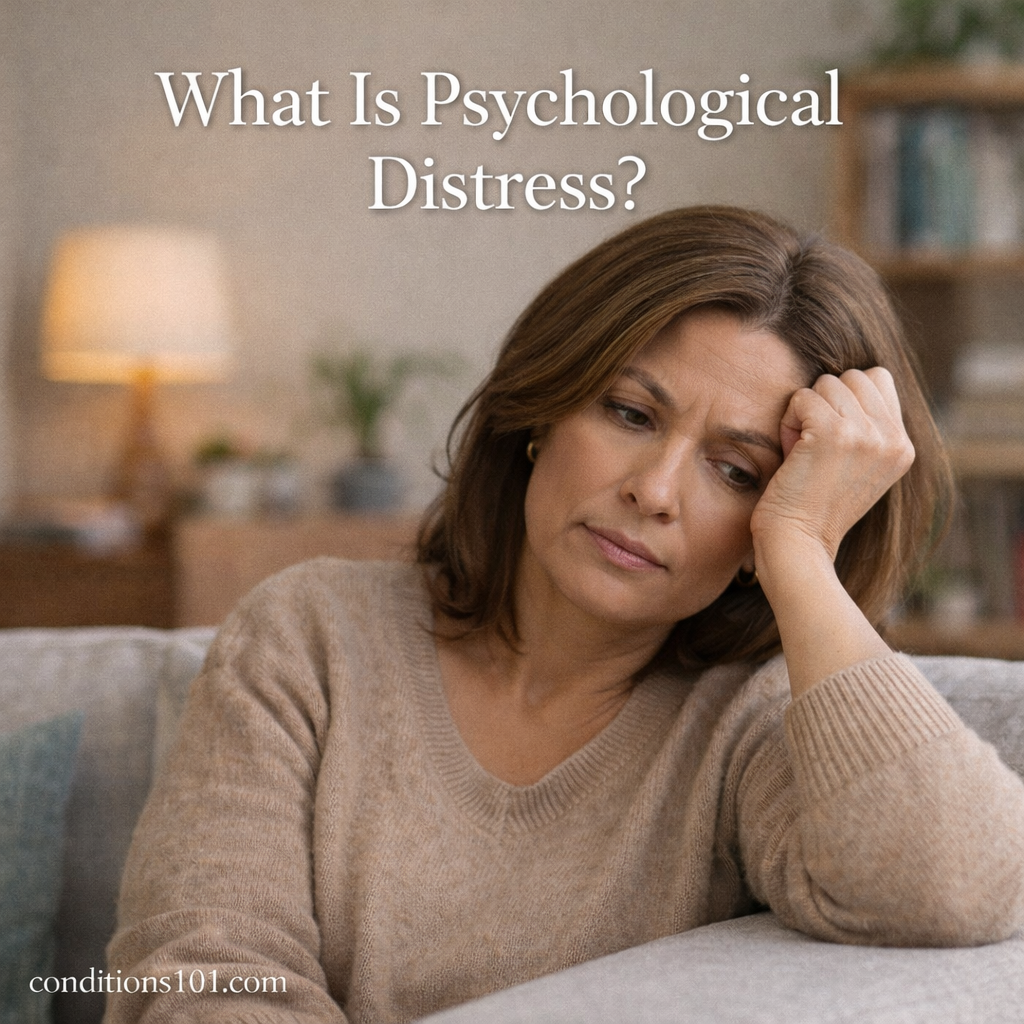
Psychological distress is a broad term used to describe a state of emotional or mental discomfort. It refers to the experience of feeling overwhelmed, unsettled, or strained by internal thoughts, emotions, or external life pressures. Psychological distress is not a diagnosis, but rather a general concept used in education, research, and public health discussions.
This article explains psychological distress in a clear, education-only way, without providing medical advice, diagnosis, or treatment.
The Basic Definition of Psychological Distress
Psychological distress generally refers to a negative emotional state that affects how a person feels, thinks, or functions.
It may involve:
- Emotional discomfort
- Cognitive strain
- Difficulty coping with everyday demands
- A sense that mental or emotional balance is disrupted
Psychological distress exists on a spectrum and can range from mild and temporary to more intense and persistent.
Common Features of Psychological Distress
Psychological distress can show up in different ways, and not everyone experiences it the same way.
Common features may include:
- Persistent worry or unease
- Feeling mentally overloaded or fatigued
- Emotional tension or irritability
- Difficulty concentrating or staying focused
- A sense of emotional pressure or strain
These features are descriptive, not diagnostic, and may overlap with many everyday human experiences.
Psychological Distress vs Mental Health Conditions
Psychological distress is often discussed alongside mental health conditions, but the terms are not the same.
Key differences include:
- Psychological distress
Describes a state of emotional or mental strain that may be temporary or situational. - Mental health conditions
Refer to clinically defined patterns of thoughts, emotions, or behaviors that meet specific criteria.
A person may experience psychological distress without having a mental health condition, and distress alone does not imply a diagnosis.
What Can Contribute to Psychological Distress?
Psychological distress is often linked to life circumstances rather than a single cause.
Common contributing factors include:
- Ongoing stress or pressure
- Major life changes or transitions
- Work, financial, or relationship challenges
- Uncertainty or lack of control
- Prolonged mental or emotional demands
Different factors may interact, making distress feel more intense or persistent.
Psychological Distress and Daily Functioning

Psychological distress can influence how a person experiences daily life, even when they continue to meet responsibilities.
It may affect:
- Focus and decision-making
- Motivation or energy levels
- Emotional responsiveness
- Perceived ability to cope with tasks
In many cases, people experiencing distress are still functioning outwardly, even if the internal experience feels demanding.
How Psychological Distress Is Used in Research and Public Health
The term psychological distress is widely used because it is broad and adaptable.
In educational and research contexts, it is often used to:
- Measure overall mental strain in populations
- Study the impact of stressors on well-being
- Capture experiences that do not fit specific diagnostic labels
- Track changes in emotional well-being over time
Because of its flexibility, the term helps describe mental strain without labeling or categorizing individuals.
Psychological Distress Over Time
Psychological distress is not always constant. It may:
- Increase during stressful periods
- Decrease when pressures ease
- Fluctuate based on circumstances and coping resources
For some people, distress is brief and situational. For others, it may persist longer, especially during prolonged periods of uncertainty or demand.
Common Misunderstandings About Psychological Distress
Several misconceptions can make the term confusing.
- Psychological distress always means mental illness
Distress can occur without any diagnosable condition. - Distress is a personal weakness
Psychological distress is a common human response to strain or pressure. - Distress looks the same for everyone
Experiences of distress vary widely in intensity and expression.
Key Takeaways
- Psychological distress refers to emotional or mental strain, not a diagnosis
- It exists on a spectrum from mild to more intense experiences
- Distress can occur without the presence of a mental health condition
- Life stressors and prolonged pressure often contribute to distress
- The term is widely used in education and research to describe mental strain