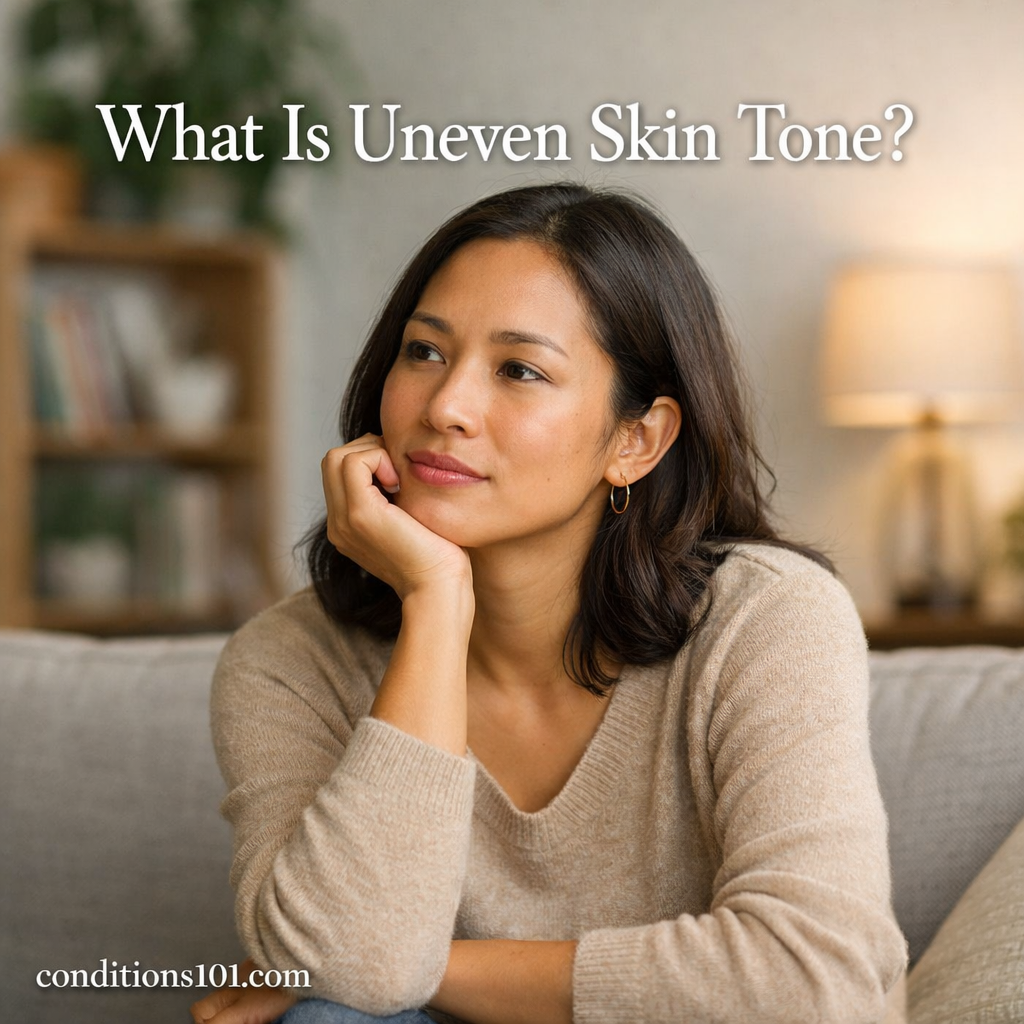
Uneven skin tone is a common appearance-related condition where the skin shows visible differences in color, brightness, or pigmentation rather than appearing uniform. These variations can include darker or lighter areas, redness, blotchiness, or patches that look dull compared to surrounding skin.
Uneven skin tone is widespread and affects people of all ages, skin types, and backgrounds. In most cases, it is harmless and related to natural skin responses rather than underlying health conditions.
Understanding Skin Tone vs. Skin Type
Skin tone and skin type describe different characteristics of the skin and are often confused.
Skin Tone
Skin tone refers to the natural color of the skin, largely influenced by melanin levels. Common categories include:
- Light
- Medium
- Tan
- Deep
Skin tone may also have undertones, such as warm, cool, or neutral.
Skin Type
Skin type describes how the skin behaves, including:
- Dry
- Oily
- Combination
- Sensitive
- Normal
Uneven skin tone can occur with any skin tone or skin type.
What Uneven Skin Tone Can Look Like
Uneven skin tone does not look the same for everyone. It may appear as:
- Darker patches or spots
- Red or flushed areas
- Yellow, gray, or shadowed areas
- Patchy or blotchy coloration
- Areas that appear dull or less vibrant
These changes may be subtle or more noticeable and can develop gradually over time.
Common Factors That Contribute to Uneven Skin Tone

Uneven skin tone typically develops due to a combination of factors rather than a single cause.
Sun Exposure
Repeated sun exposure can stimulate increased pigment production in certain areas, leading to uneven coloration over time.
Natural Aging
As skin ages, cell turnover slows, which may cause pigment to accumulate unevenly and become more visible.
Post-Inflammatory Changes
After skin irritation—such as acne, rashes, or minor injuries—the affected area may temporarily or permanently appear darker or lighter.
Hormonal Influences
Hormonal fluctuations can affect pigment production, sometimes leading to uneven patches of skin tone.
Genetics
Genetic factors play a role in how skin responds to environmental triggers and how evenly pigment is distributed.
Environmental Stressors
Exposure to pollution and other environmental stressors may contribute to changes in overall skin appearance.
Areas Commonly Affected
Uneven skin tone often appears in areas more frequently exposed to the environment, including:
- Face
- Neck and upper chest
- Hands and arms
- Shoulders and upper back
These areas may show changes more quickly due to sun exposure and daily wear.
Uneven Skin Tone vs. Uneven Skin Texture
Uneven skin tone and uneven skin texture are different concerns.
- Uneven skin tone relates to color or pigmentation differences.
- Uneven skin texture relates to physical surface changes, such as roughness or bumps.
Both can occur at the same time, but they are not the same and may have different contributing factors.
Is Uneven Skin Tone Permanent?
Uneven skin tone is not always permanent. In some cases, changes may fade naturally over time, especially when related to temporary irritation or environmental exposure.
In other cases, uneven pigmentation may persist, particularly when influenced by genetics, aging, or long-term exposure. The appearance can also fluctuate, becoming more or less noticeable depending on lifestyle and environmental factors.
How Uneven Skin Tone Can Affect Appearance
Although uneven skin tone typically does not affect physical health, it can influence cosmetic appearance. Some people notice:
- Reduced skin brightness
- Difficulty achieving a uniform complexion
- Certain areas appearing more tired or aged
These effects vary widely from person to person.
Key Takeaways
- Uneven skin tone refers to differences in skin color, brightness, or pigmentation.
- It is very common and influenced by factors such as sun exposure, aging, inflammation, and genetics.
- Uneven skin tone can be temporary or long-lasting and affects people of all skin tones and types.
- While usually harmless, it can affect overall skin appearance.