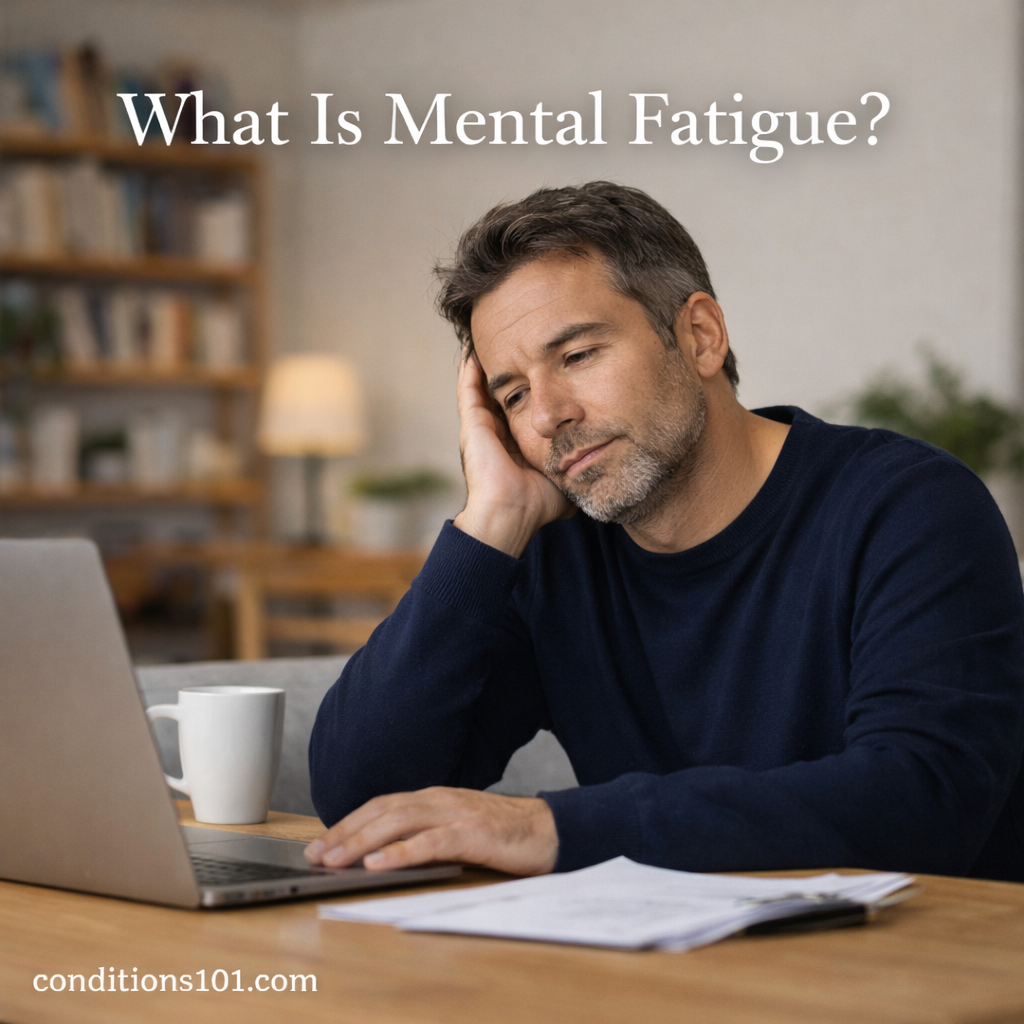
Mental fatigue is a state of reduced cognitive energy that affects how a person thinks, focuses, and processes information. It is commonly described as feeling mentally drained, foggy, or unable to concentrate after prolonged periods of cognitive effort. Mental fatigue is a widely used term in educational and everyday contexts because it explains mental exhaustion without requiring clinical definitions.
This article provides a clear, non-clinical explanation of what mental fatigue is, how it is commonly experienced, and why it can occur.
General Meaning of Mental Fatigue
Mental fatigue refers to a temporary decline in mental performance and alertness caused by sustained cognitive demand. Unlike physical tiredness, mental fatigue primarily affects thought processes rather than muscles or physical strength.
It is often associated with:
- Difficulty concentrating or staying focused
- Slower thinking or decision-making
- A feeling of mental heaviness or overload
Mental fatigue is generally considered a short-term state rather than a permanent condition.
How Mental Fatigue Is Commonly Experienced
People describe mental fatigue in different ways, but the experience often shares similar patterns.
Common descriptions include:
- Trouble maintaining attention on tasks
- Increased distractibility or forgetfulness
- Feeling overwhelmed by simple decisions
- Reduced motivation for mentally demanding activities
Mental fatigue may build gradually over time or appear suddenly after intense mental effort.
Mental Fatigue vs. Physical Fatigue
Although mental and physical fatigue can occur together, they are not the same.
- Physical fatigue mainly affects the body and movement
- Mental fatigue primarily affects thinking, focus, and mental clarity
A person may feel physically rested but still mentally fatigued, especially after long periods of problem-solving, studying, screen use, or decision-making.
Common Situations Associated With Mental Fatigue
Educational sources often link mental fatigue to everyday activities that place sustained demands on the brain. These associations help explain why mental fatigue is common, even outside of stressful situations.
Examples include:
- Extended periods of concentration or multitasking
- Long work or study sessions without mental breaks
- Continuous screen exposure or information overload
- High levels of decision-making or problem-solving
Mental fatigue can also be influenced by how mentally demanding a task feels, not just how long it lasts.
Signs That Mental Fatigue May Be Present

Mental fatigue does not look the same for everyone, but it is often associated with noticeable cognitive changes.
These may include:
- Reduced attention span
- Slower reaction or response time
- Increased mental errors
- Feeling mentally “foggy” or unfocused
These signs are typically temporary and fluctuate depending on cognitive demands and rest.
Why Mental Fatigue Can Feel Persistent
Mental fatigue may feel persistent when cognitive demands remain high with little opportunity for mental recovery. Modern environments often require continuous attention, which can make mental fatigue more noticeable.
Factors that may contribute to this feeling include:
- Constant access to digital information
- Frequent task switching
- Limited mental downtime
Because of this, mental fatigue is often discussed as a common feature of modern daily life.
Use of the Term in Mental and Cognitive Health Education
In educational contexts, mental fatigue is used as a descriptive term rather than a diagnosis. It helps explain changes in cognitive energy and performance without implying an underlying disorder or medical cause.
The term is useful because it:
- Describes a shared, relatable experience
- Avoids clinical or technical language
- Helps normalize temporary cognitive exhaustion
This makes it appropriate for general mental and cognitive health education.
Common Misunderstandings About Mental Fatigue
Several misconceptions can cause confusion around mental fatigue.
- Mental fatigue does not necessarily indicate a mental health condition
- It is not the same as a loss of intelligence or ability
- Experiencing mental fatigue does not mean long-term cognitive decline
Understanding these points helps clarify why mental fatigue is usually considered a temporary and reversible state.
Key Takeaways
- Mental fatigue is a temporary reduction in cognitive energy and focus.
- It commonly affects attention, clarity, and mental processing speed.
- Mental fatigue differs from physical fatigue and can occur independently.
- Prolonged cognitive effort and information overload are commonly associated with it.
- The term is descriptive and educational, not diagnostic.