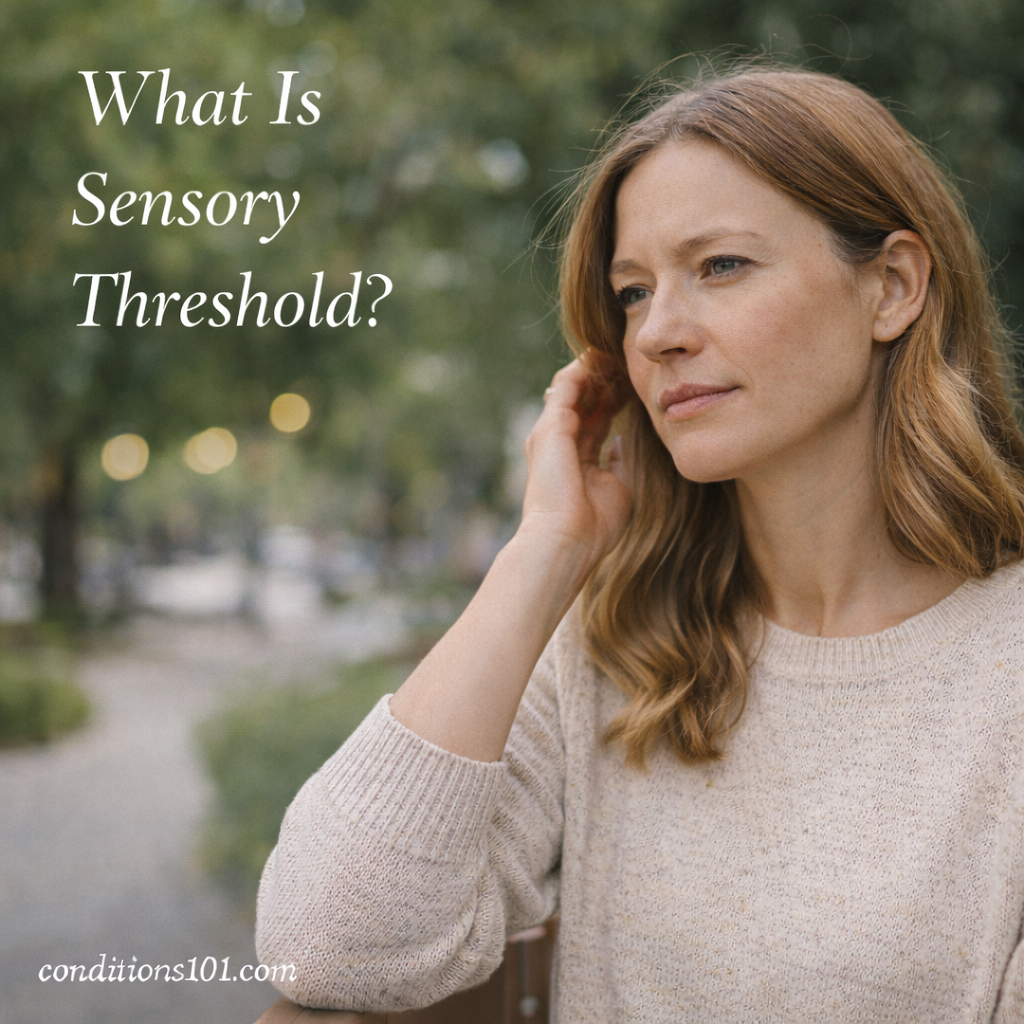
Sensory threshold is a term used to describe the minimum level of stimulation required for a person to detect a sensory input. It refers to the point at which a sensation—such as sound, light, touch, or smell—is first noticed by the nervous system.
This article explains sensory threshold in a clear, educational way. It does not provide medical advice, diagnosis, or treatment.
Understanding Sensory Threshold
The sensory threshold represents the boundary between no perception and perception. Below this level, a stimulus may be present but goes unnoticed. Once the threshold is reached, the brain becomes aware of the sensation.
For example:
- A sound may be too quiet to notice until it reaches a certain volume
- A light may be too dim to see until brightness increases
- A touch may be too gentle to feel until pressure rises
That first detectable point is the sensory threshold.
How Sensory Threshold Works
Sensory threshold is determined by how sensory information travels through the nervous system.
Sensory Processing Pathway
- Sensory receptors detect stimuli
- Signals are sent through nerves
- The brain interprets the signals
- The sensation becomes consciously noticeable
The sensory threshold marks the point where the brain recognizes incoming signals as meaningful sensory information.
Types of Sensory Thresholds
Sensory thresholds exist across different sensory systems.
Auditory Threshold
- The quietest sound a person can hear
- Varies by frequency and environment
Visual Threshold
- The lowest level of light that can be detected
- Influenced by lighting conditions and adaptation
Tactile Threshold
- The lightest touch or pressure that can be felt
- Differs across body areas
Olfactory and Gustatory Thresholds
- The faintest smell or taste that can be detected
- Influenced by concentration and exposure
Each sensory system has its own threshold range.
Sensory Threshold vs. Sensory Sensitivity
Sensory threshold is closely related to sensory sensitivity, but they are not identical.
Sensory Threshold
- Refers to the starting point of perception
- Focuses on detection
- Measures when sensation begins
Sensory Sensitivity
- Refers to how strongly sensations are experienced
- Focuses on intensity and response
- Involves emotional or behavioral reactions
A person may have a low sensory threshold (notice sensations quickly) but still tolerate them well.
Factors That Influence Sensory Threshold

Sensory threshold can vary due to multiple non-diagnostic factors.
Biological Factors
- Genetics
- Nervous system responsiveness
- Age-related changes
- Sensory receptor function
Psychological Factors
- Attention and focus
- Stress levels
- Emotional state
- Expectations
Environmental Factors
- Background noise
- Lighting conditions
- Temperature
- Familiarity with the stimulus
These influences often interact and shift sensory thresholds over time.
Individual Differences in Sensory Threshold
People naturally differ in how easily they detect sensory input.
Some individuals may notice subtle sounds or textures quickly, while others may require stronger stimulation. These differences reflect normal neurological variation, not ability or impairment.
Sensory Threshold in Everyday Life
Sensory threshold affects daily experiences such as:
- Noticing background noises
- Feeling clothing textures
- Detecting faint odors
- Responding to changes in lighting
A stimulus that feels noticeable to one person may go unnoticed by another.
Temporary Changes in Sensory Threshold
Sensory thresholds are not fixed and may change temporarily due to:
- Fatigue or lack of sleep
- Stress or mental overload
- Repeated exposure to stimuli
- Environmental adaptation
For example, eyes adjust to darkness over time, temporarily lowering the visual threshold.
Sensory Threshold in Education and Research
In neurological and sensory education, sensory threshold is used to:
- Study perception and awareness
- Understand sensory processing differences
- Explore how the brain interprets stimuli
- Compare sensory responses across individuals
It is a descriptive concept used to explain perception, not a diagnosis.
Why Understanding Sensory Threshold Matters
Understanding sensory threshold can help people:
- Better interpret sensory experiences
- Recognize normal perceptual differences
- Understand why stimuli feel noticeable or unnoticed
- Communicate sensory experiences more clearly
From an educational perspective, sensory threshold highlights how perception begins before interpretation or reaction.
Key Takeaways
- Sensory threshold is the point where a stimulus first becomes noticeable
- It applies to all sensory systems
- Thresholds vary between individuals and situations
- Biological, psychological, and environmental factors influence perception
- Temporary changes in sensory threshold are common