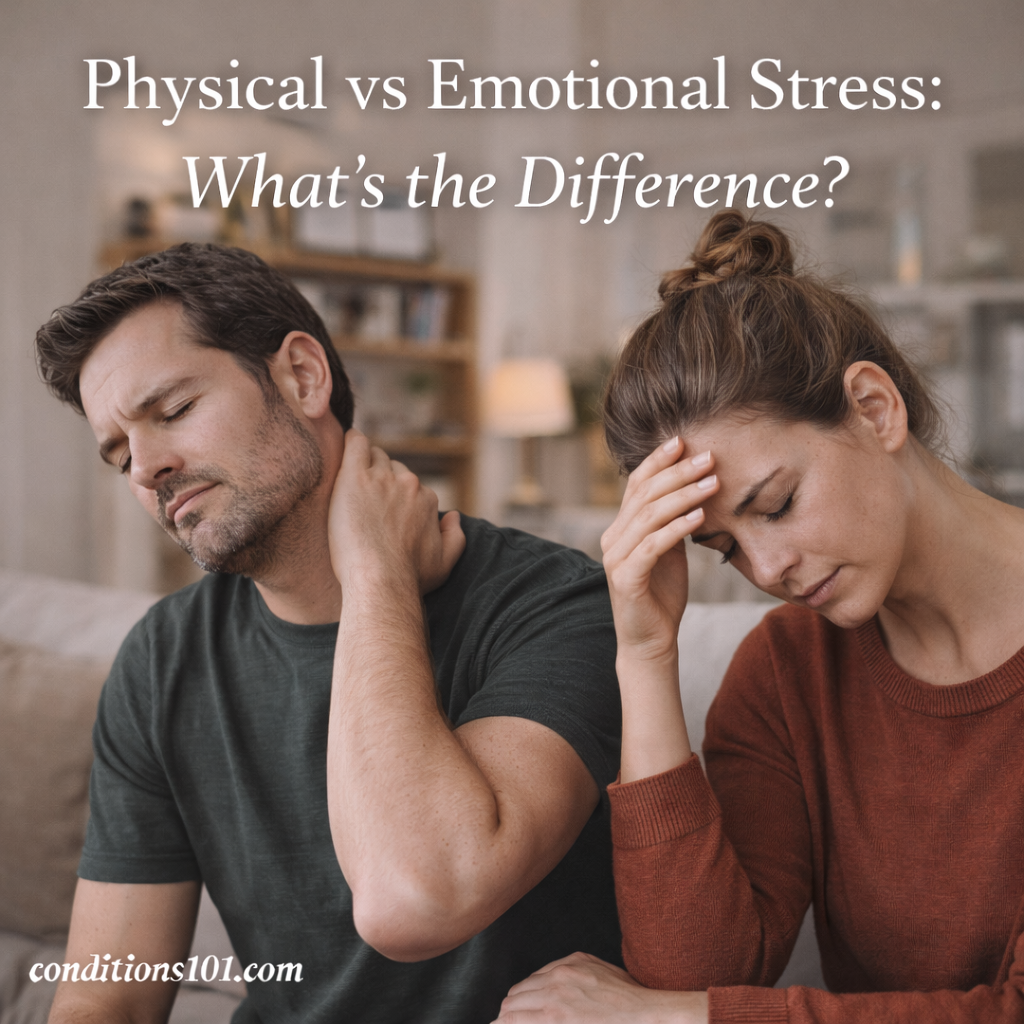
Stress is the body’s response to demands, challenges, or pressure. While the word “stress” is often used broadly, it generally falls into two overlapping categories: physical stress and emotional stress. Both affect the body and mind, but they originate from different sources and are experienced in distinct ways.
In educational and health information contexts, physical and emotional stress are discussed as response patterns, not diagnoses. This article explains the differences clearly and neutrally without providing medical advice, diagnosis, or treatment.
Understanding Stress in Simple Terms
Stress occurs when the body perceives a demand that requires adaptation. This response can be triggered by:
- Physical strain or exertion
- Emotional pressure or psychological challenges
- Environmental or situational demands
Regardless of the source, stress activates systems in the body designed to help manage challenges. The key difference lies in what triggers the response and how it is experienced.
What Is Physical Stress?
Physical stress refers to stress placed directly on the body. It typically arises from physical demands, environmental factors, or bodily strain.
Common Sources of Physical Stress
- Intense exercise or physical labor
- Lack of sleep or disrupted sleep schedules
- Injury, illness, or recovery periods
- Extreme temperatures (heat or cold)
- Poor nutrition or dehydration
Physical stress is often noticeable through bodily sensations and changes in physical performance or comfort.
Common Signs of Physical Stress
Physical stress may be associated with:
- Muscle tension or soreness
- Fatigue or low energy
- Headaches or body aches
- Changes in appetite
- Reduced physical endurance
- Slower recovery from exertion
These signs reflect how the body responds to increased physical demands.
What Is Emotional Stress?
Emotional stress refers to stress triggered by thoughts, feelings, or psychological pressures. It originates from how situations are perceived and emotionally processed.
Common Sources of Emotional Stress
- Work or academic pressure
- Relationship challenges
- Financial concerns
- Major life changes
- Uncertainty or fear about the future
- Ongoing worry or mental overload
Emotional stress is often tied to internal experiences rather than direct physical strain.
Common Signs of Emotional Stress
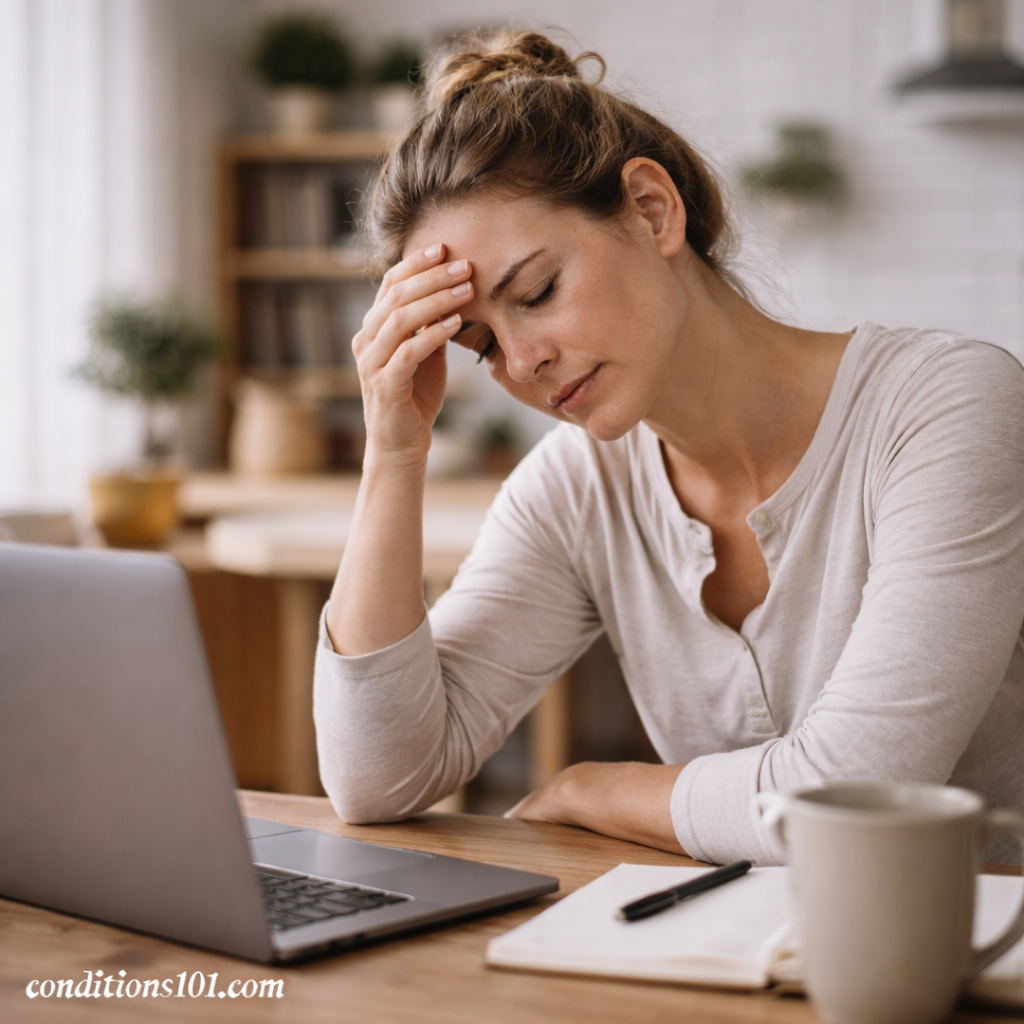
Emotional stress may be associated with:
- Feelings of anxiety, irritability, or overwhelm
- Difficulty concentrating
- Racing or repetitive thoughts
- Mood changes
- Restlessness or mental fatigue
- Difficulty relaxing
These experiences reflect how the mind and nervous system respond to perceived pressure.
Key Differences Between Physical and Emotional Stress
While physical and emotional stress often overlap, they differ in important ways.
Source
- Physical stress comes from bodily strain or environmental demands
- Emotional stress comes from psychological or emotional pressure
Primary Experience
- Physical stress is felt mainly in the body
- Emotional stress is felt mainly in thoughts and feelings
Awareness
- Physical stress is often easier to identify
- Emotional stress may build gradually and be harder to recognize
How Physical and Emotional Stress Overlap
Although they are distinct, physical and emotional stress frequently influence each other.
Examples include:
- Emotional stress contributing to muscle tension or fatigue
- Physical exhaustion affecting mood or emotional resilience
- Sleep disruption intensifying both physical and emotional stress
- Long-term stress influencing overall well-being
Because the body and mind are interconnected, stress rarely stays confined to one category.
Stress Responses in the Body
Both physical and emotional stress activate similar systems, including:
- Increased alertness
- Changes in heart rate or breathing
- Heightened muscle readiness
- Shifts in energy use
The difference lies in what initiates the response, not necessarily how the body reacts at a biological level.
Physical vs Emotional Stress in Daily Life
In everyday life, people may experience:
- Physical stress after strenuous activity
- Emotional stress during demanding conversations
- Both at the same time during busy or challenging periods
Understanding the distinction helps clarify why stress can feel different from one situation to another.
Common Misconceptions About Stress
“Stress Is Always Emotional”
Stress can be purely physical, emotional, or a combination of both.
“Physical Stress Is Healthier Than Emotional Stress”
Neither type is inherently better or worse; both place demands on the body.
“If You’re Physically Fine, You’re Not Stressed”
Emotional stress can exist even when the body feels well.
Why Understanding the Difference Matters
Learning the difference between physical and emotional stress supports:
- Better awareness of stress sources
- Clearer communication about stress experiences
- More accurate interpretation of health and wellness information
- Greater understanding of mind–body interactions
In educational contexts, stress is best understood as a multidimensional experience, not a single feeling or state.
Key Takeaways
- Physical stress comes from bodily or environmental demands
- Emotional stress comes from psychological or emotional pressure
- Both trigger stress responses in the body
- Physical and emotional stress often overlap
- Understanding the difference improves stress awareness