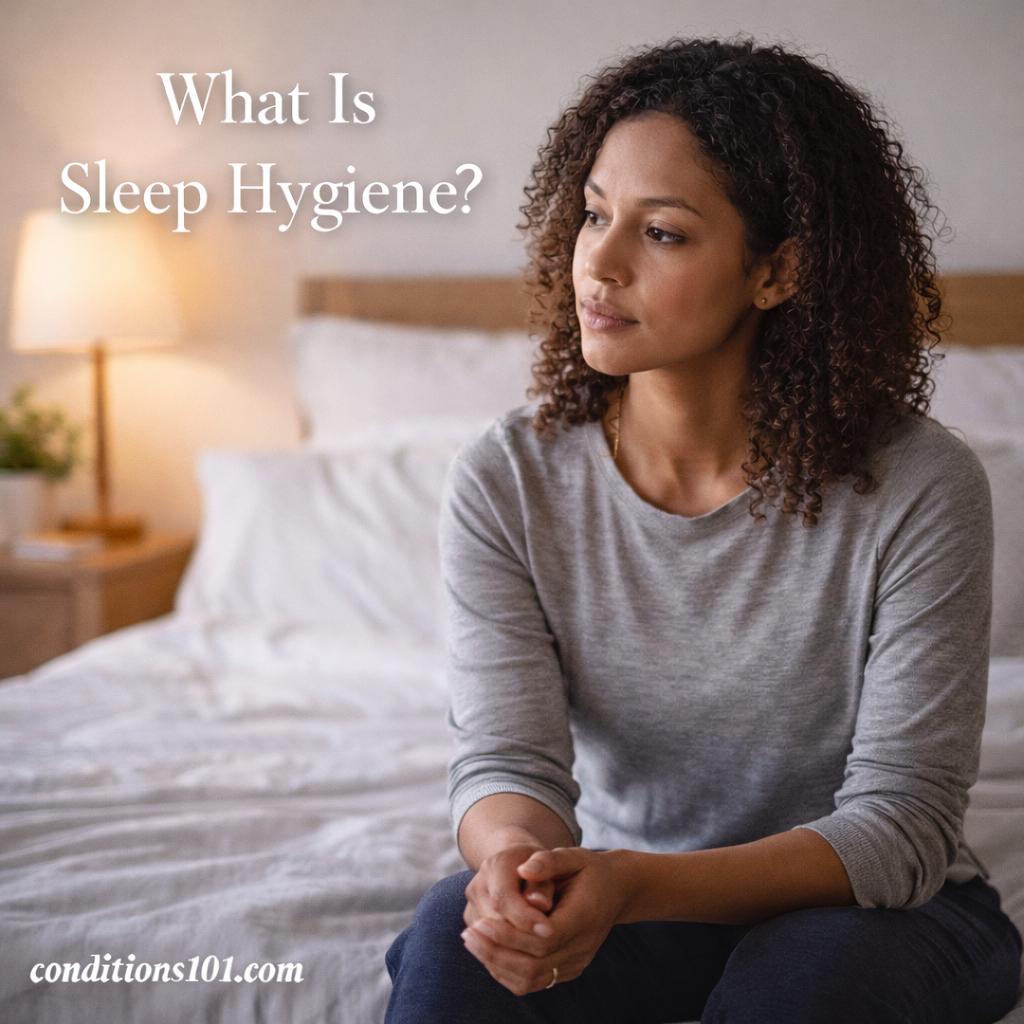
Sleep hygiene refers to a set of habits, behaviors, and environmental factors that support consistent, restful sleep. The term is commonly used in educational and health information contexts to describe everyday practices that influence sleep quality over time.
Sleep hygiene is not a medical treatment or diagnosis. Instead, it is a framework for understanding how daily routines and sleep environments affect sleep patterns. This article explains sleep hygiene clearly and neutrally for general educational purposes.
Understanding Sleep Hygiene in Simple Terms
Sleep hygiene is about how you prepare for sleep and the conditions in which you sleep.
It includes:
- Daily routines that influence sleep timing
- Evening behaviors that affect relaxation
- Bedroom environment and comfort
- Consistency of sleep and wake schedules
Good sleep hygiene supports the body’s natural sleep–wake rhythm, while poor sleep hygiene may contribute to difficulty falling asleep or staying asleep.
Why Sleep Hygiene Is Important
Sleep is influenced by more than just how tired someone feels. Habits throughout the day and evening can shape how easily sleep begins and how restorative it feels.
Educational discussions highlight sleep hygiene because it:
- Helps explain differences in sleep quality
- Provides a non-clinical way to understand sleep challenges
- Connects lifestyle patterns to sleep consistency
- Supports long-term sleep awareness
Sleep hygiene focuses on patterns over time, not isolated nights of poor sleep.
Common Elements of Sleep Hygiene

Sleep hygiene typically involves multiple areas working together.
Sleep Schedule Consistency
- Going to bed and waking up at similar times
- Avoiding large shifts in sleep timing
- Maintaining routines across weekdays and weekends
Pre-Sleep Routines
- Engaging in calming activities before bed
- Allowing time to wind down
- Reducing stimulating tasks late in the evening
Sleep Environment
- Comfortable bedding and room temperature
- Minimal noise and light
- A space primarily used for sleep and rest
Daytime Influences
- Exposure to natural light
- Physical activity levels
- Timing of meals and daily responsibilities
Each element contributes to overall sleep hygiene without acting alone.
Sleep Hygiene vs. Sleep Duration
Sleep hygiene is often confused with how many hours someone sleeps, but the two are not the same.
- Sleep duration refers to total time spent sleeping
- Sleep hygiene refers to habits and conditions surrounding sleep
Someone may sleep for many hours but still have poor sleep hygiene if routines are inconsistent or environments are disruptive.
How Sleep Hygiene Relates to Sleep Quality
Sleep quality involves how restful and uninterrupted sleep feels. Sleep hygiene helps explain why sleep quality can vary even when sleep duration stays the same.
Factors such as:
- Irregular schedules
- Late-night stimulation
- Uncomfortable environments
can affect how refreshed someone feels upon waking, even if total sleep time seems adequate.
Sleep Hygiene and Fatigue
Poor sleep hygiene is often discussed in educational materials related to fatigue.
Ongoing fatigue may be associated with:
- Irregular sleep timing
- Inconsistent bedtime routines
- Environmental disruptions
- Difficulty mentally winding down
Understanding sleep hygiene provides a broader context for why fatigue can persist over time.
Sleep Hygiene Across Different Lifestyles
Sleep hygiene can look different depending on daily responsibilities and environments.
It may vary for:
- Shift workers
- Students
- Parents or caregivers
- People working from home
- Individuals with irregular schedules
Educational discussions emphasize flexibility and patterns rather than rigid rules.
Common Misconceptions About Sleep Hygiene
“Sleep Hygiene Means Perfect Sleep Every Night”
Sleep hygiene supports better patterns over time, not flawless sleep.
“Only People With Sleep Problems Need Sleep Hygiene”
Sleep hygiene applies to anyone interested in understanding sleep quality.
“Sleep Hygiene Is the Same for Everyone”
Individual routines and environments influence what sleep hygiene looks like in practice.
Why Learning About Sleep Hygiene Matters
Understanding sleep hygiene supports:
- Better awareness of sleep-related habits
- Clearer conversations about sleep and fatigue
- More accurate interpretation of sleep research
- Long-term sleep education without medical framing
Sleep hygiene is best understood as a practical, educational concept, not a solution or diagnosis.
Key Takeaways
- Sleep hygiene refers to habits and environments that influence sleep
- It focuses on routines, consistency, and sleep conditions
- Sleep hygiene differs from sleep duration
- Poor sleep hygiene can affect sleep quality and fatigue
- It is a widely used educational framework for understanding sleep