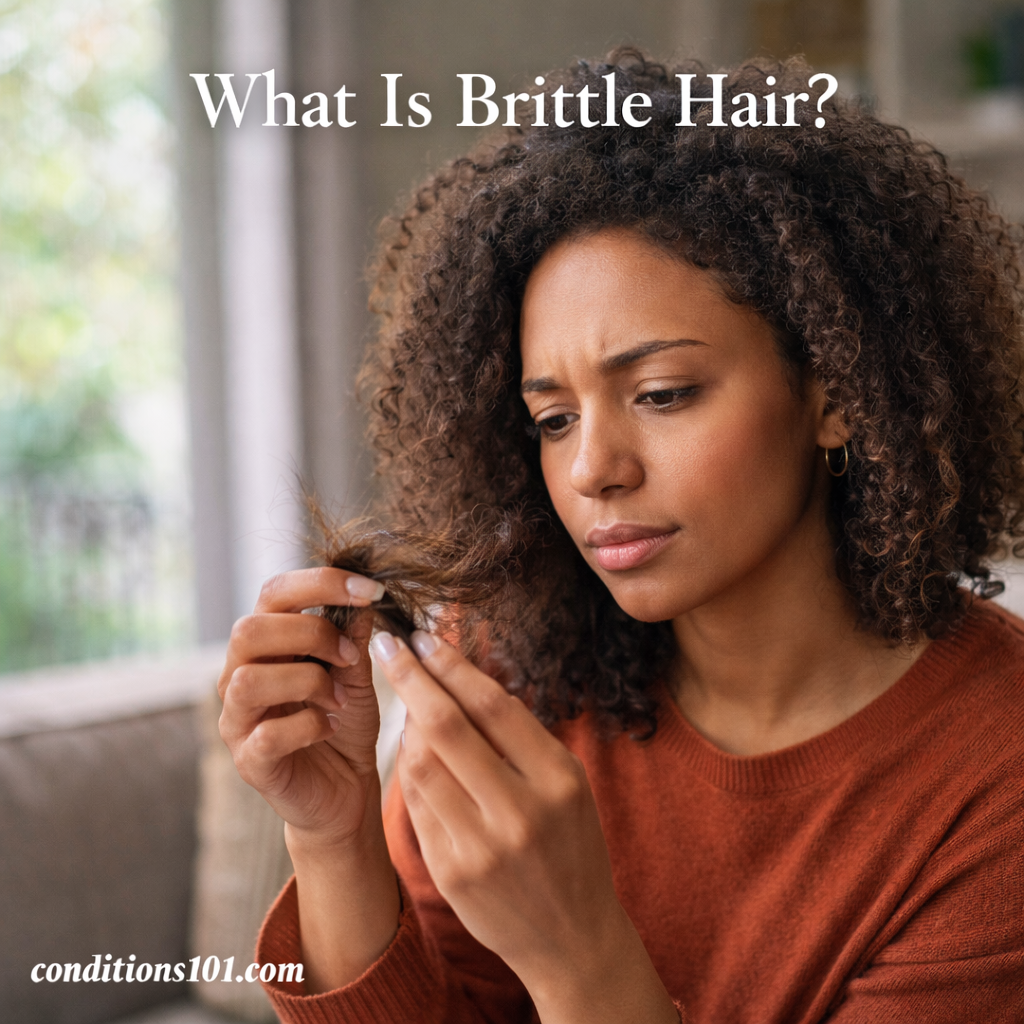
Brittle hair refers to hair that breaks easily, feels dry or fragile, and lacks flexibility. Instead of bending or stretching slightly, brittle hair is more likely to snap, split, or shed when handled, brushed, or styled.
The term is used descriptively in educational and cosmetic contexts rather than as a medical diagnosis. Brittle hair can affect people of all ages and hair types and is commonly discussed in relation to hair structure, daily habits, and environmental factors.
This article explains brittle hair in a clear, informational way, focusing on what it means, common characteristics, and contributing factors—without providing medical advice, diagnosis, or treatment.
Understanding Brittle Hair in Simple Terms
Healthy hair has a certain amount of strength and flexibility. Brittle hair lacks this balance.
When hair is brittle, it may:
- Break with minimal tension
- Feel rough or straw-like
- Appear dull rather than shiny
- Develop split ends easily
- Tangle more often
Brittleness can affect the entire strand or be more noticeable at the ends, depending on the underlying causes and hair care routines.
Common Signs of Brittle Hair
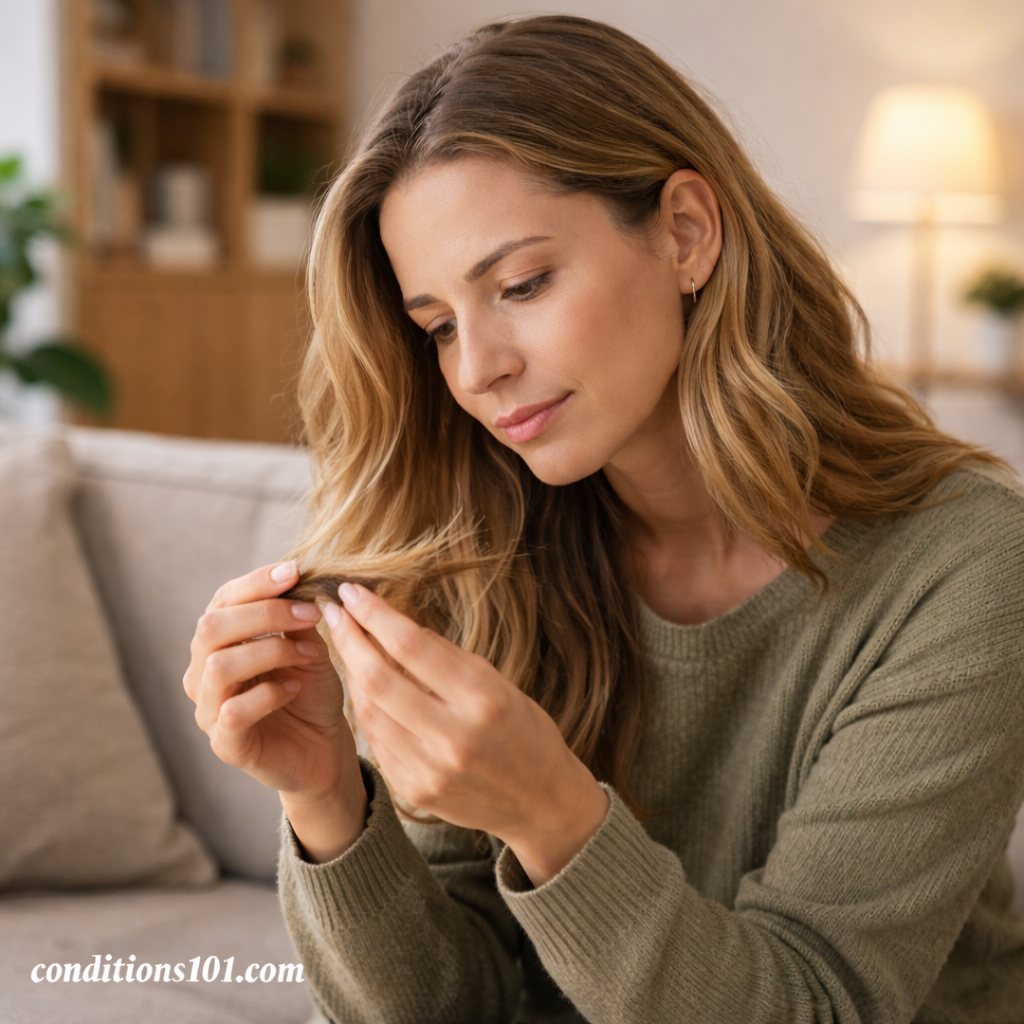
Brittle hair often shows visible and tactile changes over time.
Physical Characteristics
- Increased hair breakage
- Uneven hair length due to snapping
- Split or frayed ends
- Loss of smooth texture
Styling-Related Signs
- Difficulty retaining length
- Hair breaking during brushing or styling
- Reduced elasticity when hair is wet
These signs can appear gradually or become noticeable after changes in routine, environment, or hair care habits.
Why Hair Becomes Brittle
Hair brittleness usually develops due to loss of moisture, structural damage, or repeated stress on the hair shaft.
Moisture Loss
Hair relies on internal moisture and surface oils to stay flexible. When moisture levels drop, hair becomes stiff and prone to breakage.
Physical and Mechanical Stress
Common sources include:
- Frequent brushing or detangling
- Tight hairstyles
- Repeated friction from clothing or bedding
Chemical and Heat Exposure
- Hair coloring or bleaching
- Chemical straightening or perming
- Frequent heat styling with tools
Environmental Factors
- Sun exposure
- Dry air or low humidity
- Chlorine or saltwater
Each of these factors can weaken the hair’s outer layer, making strands more vulnerable.
Hair Structure and Brittleness
Understanding hair structure helps explain why brittleness occurs.
Hair strands are made of:
- An outer protective layer (cuticle)
- A middle layer that provides strength (cortex)
- A core that may or may not be present (medulla)
When the cuticle becomes damaged or lifted, moisture escapes more easily, leaving the inner layers exposed. This structural change increases the likelihood of breakage.
Brittle Hair vs. Other Hair Concerns
Brittle hair is sometimes confused with other hair-related terms.
Brittle Hair vs. Dry Hair
- Dry hair lacks moisture
- Brittle hair lacks both moisture and flexibility
Dry hair can become brittle over time if not addressed.
Brittle Hair vs. Hair Thinning
- Brittle hair breaks along the strand
- Thinning hair involves reduced hair density at the scalp
Brittle Hair vs. Split Ends
- Split ends are a visible result of brittleness
- Brittleness refers to the overall condition of the hair strand
These distinctions help clarify how brittle hair is described in educational discussions.
Who Can Experience Brittle Hair?
Brittle hair is not limited to a specific group. It can affect:
- People with naturally curly, coily, wavy, or straight hair
- Individuals who frequently style or treat their hair
- Those exposed to dry or harsh environments
- People experiencing routine changes in hair care practices
Hair texture, length, and daily habits all influence how brittleness appears.
Why Understanding Brittle Hair Matters
Learning about brittle hair helps support:
- Better awareness of hair structure and care
- More informed interpretation of hair-related information
- Clearer conversations about cosmetic and appearance-related concerns
In educational settings, brittle hair is discussed as a common, manageable hair condition, not a reflection of overall health or personal hygiene.
Common Misconceptions About Brittle Hair
“Brittle Hair Means Poor Hair Care”
Brittleness can occur even with regular care, especially due to environmental or structural factors.
“Only Long Hair Becomes Brittle”
Hair of any length can become brittle, though breakage may be more noticeable in longer hair.
“Brittle Hair Is Permanent”
Hair condition can change over time depending on habits and external influences.
Key Takeaways
- Brittle hair breaks easily and lacks flexibility
- It often feels dry, rough, or fragile
- Moisture loss and structural damage are common contributors
- Brittleness differs from thinning or normal dryness
- Brittle hair is a common appearance-related concern