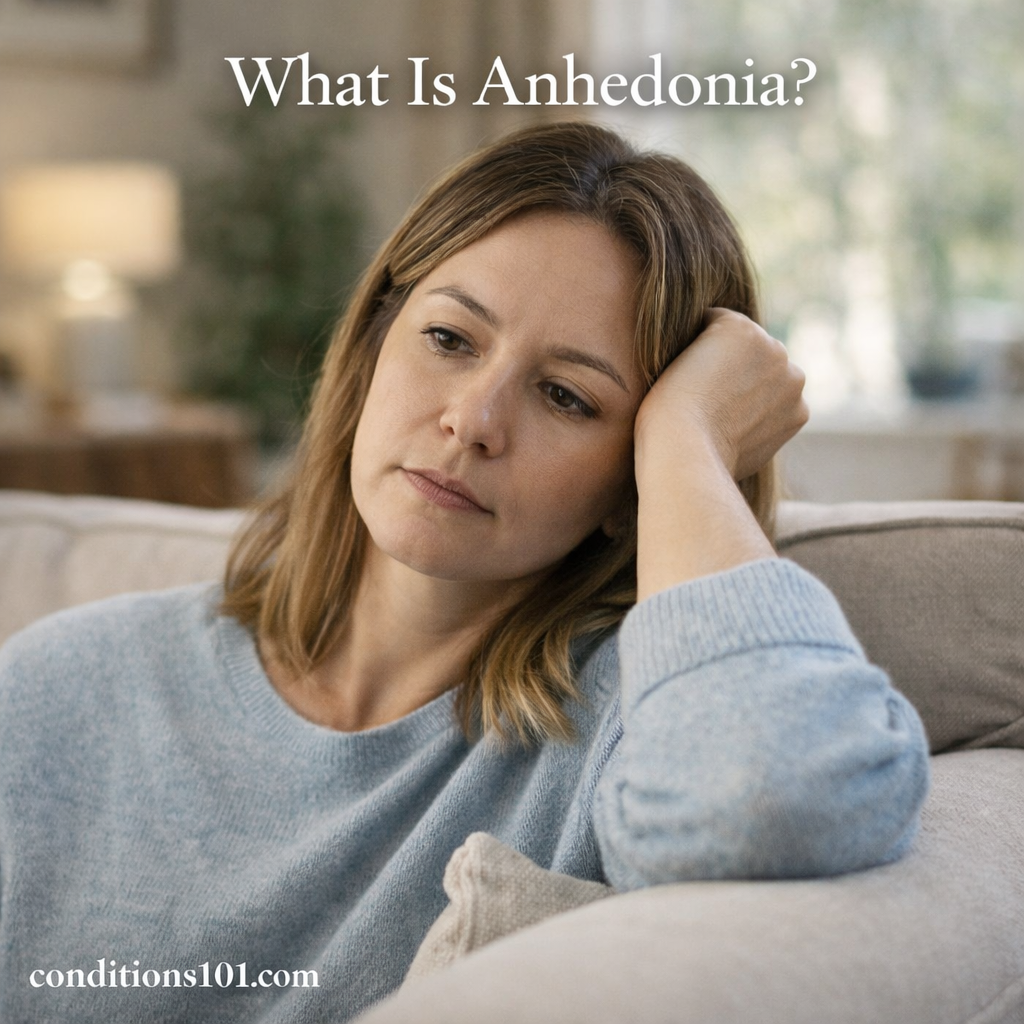
Anhedonia is a term used to describe a reduced ability to feel pleasure or enjoyment from activities that are typically found rewarding. This can include hobbies, social interactions, food, achievements, or other everyday experiences that once felt satisfying or meaningful.
Rather than meaning a complete absence of emotion, anhedonia specifically relates to diminished pleasure, not necessarily sadness or distress. A person may still feel emotions such as concern, frustration, or neutrality while noticing that enjoyment feels muted or absent.
Anhedonia is considered a symptom or experience, not a standalone diagnosis.
Core Features of Anhedonia
Anhedonia can affect people in different ways, but it commonly involves:
- Loss of interest in previously enjoyable activities
- Reduced emotional response to positive events
- Feeling emotionally “flat” or disconnected from pleasure
- Difficulty anticipating enjoyment, even when something positive is planned
These experiences may be subtle or pronounced, temporary or persistent, depending on individual circumstances.
Types of Anhedonia
Researchers and clinicians often describe anhedonia in two main forms:
Social Anhedonia
This involves reduced pleasure from social interactions, such as conversations, relationships, or group activities.
Examples may include:
- Feeling indifferent toward social gatherings
- Limited enjoyment from spending time with others
- Emotional distance in relationships
Physical Anhedonia
This refers to reduced enjoyment from sensory or physical experiences.
Examples may include:
- Less pleasure from food or taste
- Reduced enjoyment from music, touch, or nature
- Diminished response to physical comfort
Some people experience one type more strongly than the other, while others notice elements of both.
How Anhedonia Is Experienced

Anhedonia does not feel the same for everyone. Common descriptions include:
- “I know I should enjoy this, but I don’t feel it.”
- “Things feel dull or muted.”
- “Pleasure feels distant or hard to access.”
Importantly, anhedonia is not the same as boredom. Boredom often comes from a lack of stimulation, while anhedonia involves a reduced emotional response, even when stimulation is present.
Conditions Commonly Associated With Anhedonia
Anhedonia is often discussed in relation to mental and cognitive health, as it may appear alongside certain conditions or life experiences. These can include:
- Mood-related conditions
- Prolonged stress or emotional strain
- Neurological or cognitive changes
- Recovery phases following emotionally intense periods
Its presence does not automatically indicate a specific condition, as it can appear across different contexts and durations.
Anhedonia vs. Low Motivation
Although they can overlap, anhedonia and low motivation are not the same.
- Anhedonia involves reduced pleasure from activities
- Low motivation involves reduced drive to start or continue activities
A person may still complete tasks or maintain routines while experiencing little enjoyment, or they may struggle with motivation while still enjoying activities once started.
Why Anhedonia Matters
Pleasure and reward play an important role in learning, connection, and emotional balance. When these experiences are diminished, it can affect:
- Engagement with daily life
- Relationships and social participation
- Personal fulfillment and interest
Understanding anhedonia helps clarify that a lack of enjoyment is not simply a mindset or choice, but a recognized experience with psychological and cognitive dimensions.
Key Takeaways
- Anhedonia refers to a reduced ability to feel pleasure
- It affects enjoyment, not all emotions
- It can be social, physical, or a combination of both
- It is an experience or symptom, not a diagnosis
- Experiences vary widely from person to person