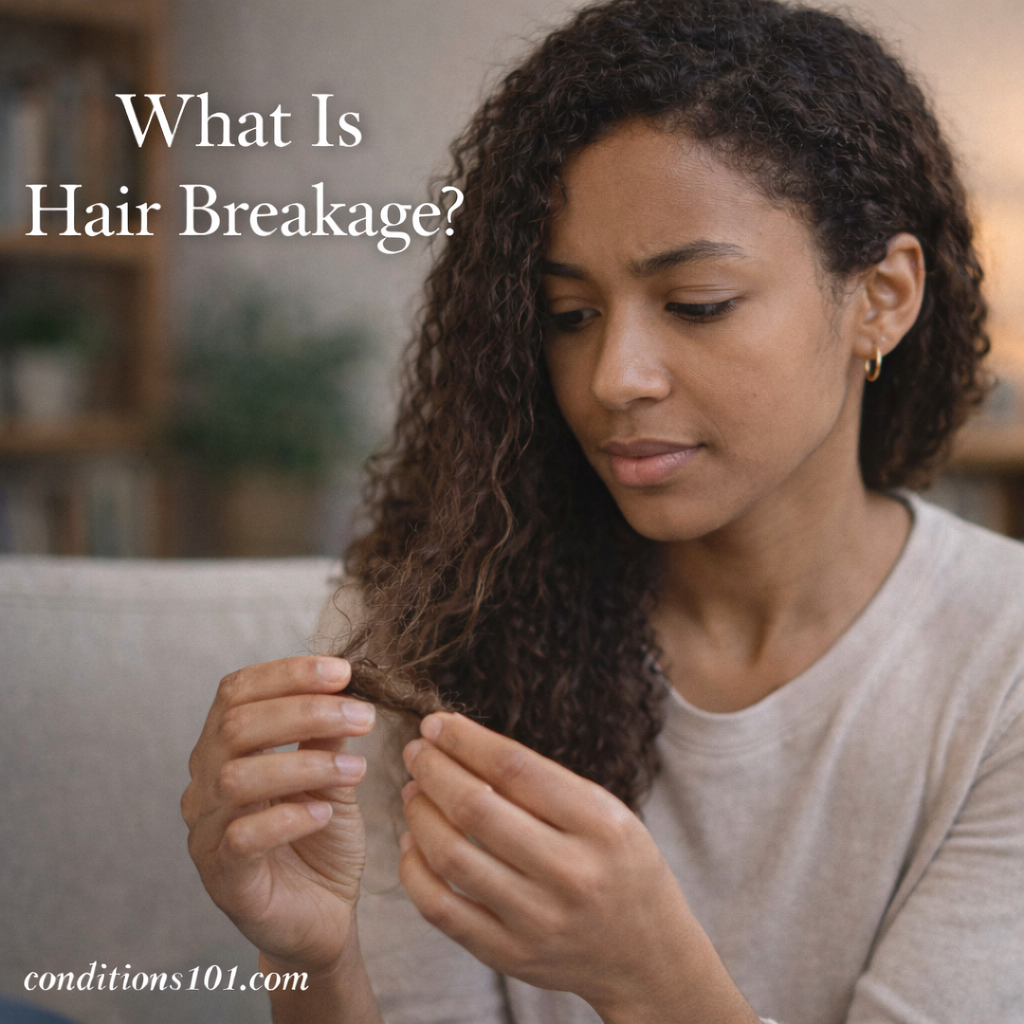
Hair breakage refers to strands of hair snapping or splitting along the shaft rather than shedding from the root. Unlike normal hair shedding, which involves full strands falling out with the root attached, hair breakage happens when the hair becomes weak and breaks at various lengths.
Hair breakage is not a medical diagnosis. It is a descriptive term commonly used in hair care, dermatology education, and everyday conversations to explain changes in hair strength, texture, and appearance.
This article is for general informational purposes only and does not provide medical advice, diagnosis, or treatment.
Understanding Hair Breakage in Simple Terms
Hair is made primarily of a protein called keratin. Each strand has a structure designed to provide flexibility and strength. When that structure is compromised, the hair becomes more prone to snapping.
Hair breakage typically occurs when:
- Hair loses moisture or flexibility
- The outer protective layer is damaged
- Strands are exposed to repeated stress or friction
Broken hair often appears shorter, uneven, or frizzy, especially around the ends or hairline.
Hair Breakage vs. Hair Shedding
Hair breakage and hair shedding are often confused, but they are different processes.
Hair Breakage
- Hair snaps along the length of the strand
- Broken pieces are usually short
- Often linked to hair care habits or physical stress
Hair Shedding
- Hair falls out from the root
- Full-length strands are visible
- Part of the normal hair growth cycle
Understanding this difference helps explain why hair may appear thinner or uneven even when shedding is normal.
What Hair Breakage Can Look Like
Hair breakage can affect different hair types and textures in various ways.
Common signs include:
- Short, uneven strands throughout the hair
- Split ends or frayed tips
- Increased frizz or rough texture
- Difficulty retaining hair length
- Hair that feels dry or brittle
Breakage may be more noticeable around areas exposed to frequent styling, friction, or environmental stress.
Common Causes of Hair Breakage

Hair breakage usually develops from a combination of factors rather than a single cause.
Physical and Mechanical Stress
- Tight hairstyles that pull on the hair
- Frequent brushing or rough handling
- Friction from pillows, hats, or clothing
Heat and Styling Practices
- Repeated use of heat styling tools
- High temperatures applied without protection
- Overstyling without recovery time
Chemical and Processing Factors
- Hair coloring or bleaching
- Chemical straightening or relaxing
- Frequent use of harsh products
Moisture Imbalance
- Dry environments
- Infrequent conditioning
- Hair that lacks elasticity
Environmental Exposure
- Sun exposure
- Wind or cold weather
- Chlorine or salt water
These factors can weaken the hair’s structure over time, making strands more likely to break.
Hair Breakage and Hair Texture
Hair texture can influence how breakage appears, but no texture is immune.
- Straight hair may show breakage as uneven ends
- Wavy hair may appear frizzier or less defined
- Curly and coily hair may experience breakage along bends or twists
Because textured hair often has natural curves, it may be more vulnerable to dryness and mechanical stress if not handled gently.
Situational vs. Ongoing Hair Breakage
Situational Hair Breakage
This type occurs temporarily, often after:
- A period of heavy styling
- Environmental exposure
- A change in hair care routine
Situational breakage may improve when stress on the hair is reduced.
Ongoing Hair Breakage
This form persists over time and may affect:
- Hair length retention
- Overall appearance and manageability
- Confidence or satisfaction with hair
Ongoing breakage often reflects repeated stress or long-term habits affecting hair strength.
Common Misconceptions About Hair Breakage
“Hair breakage means hair isn’t growing”
Hair can still grow at the root even when breakage prevents visible length retention.
“Only damaged hair breaks”
Even healthy hair can break under enough physical or environmental stress.
“Cutting hair stops breakage completely”
Trimming can remove damaged ends but does not address underlying causes.
Why Understanding Hair Breakage Matters
Learning about hair breakage can help:
- Set realistic expectations for hair appearance
- Reduce confusion between breakage and shedding
- Encourage gentle handling and awareness
- Support informed hair care choices
Education focuses on understanding how and why hair weakens, rather than assigning blame or making assumptions.
Hair Strength as a Gradual Process
Hair strength is influenced by:
- Ongoing care routines
- Environmental exposure
- Styling habits over time
Changes in hair appearance often happen gradually, and improvements may also take time.
Key Takeaways
- Hair breakage occurs when strands snap along the shaft rather than shedding from the root
- It differs from normal hair shedding
- Breakage can affect all hair types and textures
- Multiple factors often contribute to weakened hair
- Understanding breakage helps explain changes in hair length and appearance
Hair breakage is a common experience and a useful concept for understanding hair health and care.