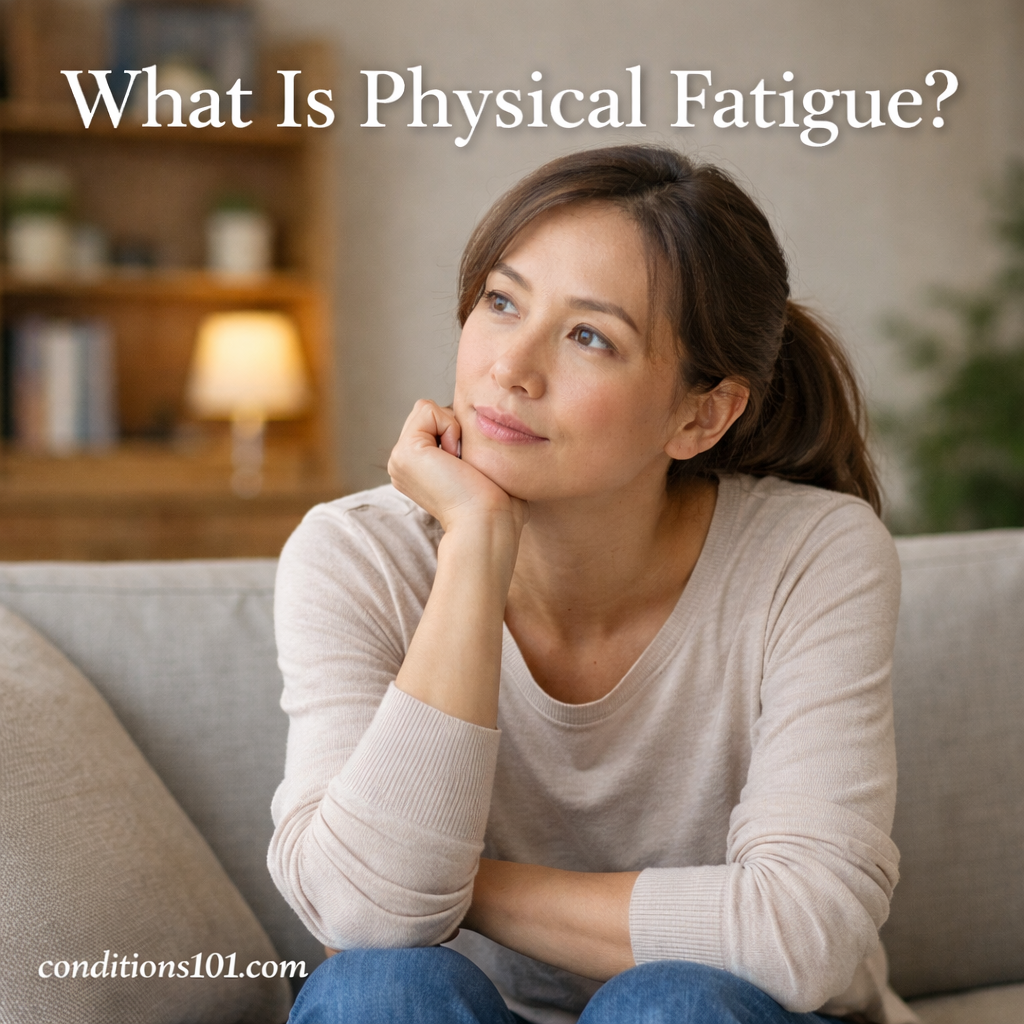
Physical fatigue refers to a state of reduced physical energy and strength that can make everyday activities feel more demanding than usual. It commonly involves feelings of tiredness, weakness, or decreased endurance after physical or mental effort.
Physical fatigue is a normal human experience and can occur temporarily after exertion or build up gradually over time. This article explains physical fatigue from an educational perspective—what it is, how it differs from related concepts, and what influences it—without providing medical advice, diagnosis, or treatment.
Understanding Physical Fatigue
Physical fatigue occurs when the body’s ability to perform physical tasks declines. This may involve muscles feeling less responsive, movements requiring more effort, or recovery taking longer than expected.
It is important to note that physical fatigue is a general state rather than a specific condition. It can affect people differently depending on lifestyle, activity level, and environmental factors.
How Physical Fatigue Develops
Physical fatigue develops when the body uses energy faster than it can restore it. This process can involve multiple systems working together.
Energy Use in the Body
During physical activity, the body relies on stored energy sources to fuel muscles. Over time, these energy reserves decrease, contributing to a sense of physical tiredness.
Muscle Activity and Recovery
Muscles contract repeatedly during movement. As activity continues:
- Muscle fibers become less efficient
- Coordination may feel reduced
- Recovery time may increase
These changes are part of the body’s natural response to exertion.
Common Characteristics of Physical Fatigue
Physical fatigue may be experienced in various ways. Common characteristics include:
- Reduced strength or endurance
- Heavier or slower movements
- Increased effort required for routine tasks
- A general feeling of bodily tiredness
These sensations often improve with rest and recovery.
Physical Fatigue vs. Mental Fatigue
Although they often overlap, physical fatigue and mental fatigue are not the same.
Physical Fatigue
- Affects muscles and physical performance
- Often linked to movement or exertion
- May improve with physical rest
Mental Fatigue
- Affects concentration and alertness
- Often linked to prolonged cognitive effort
- May improve with mental breaks or reduced stimulation
Both types of fatigue can occur together, especially during demanding routines.
Factors That Influence Physical Fatigue

Many everyday factors can affect how physical fatigue develops and resolves.
Activity Level
- Sudden increases in physical activity may lead to temporary fatigue
- Repetitive or prolonged movement can increase physical demands
Daily Routines
Irregular schedules, long periods of activity without breaks, or limited recovery time can contribute to ongoing tiredness.
Sleep Patterns
Sleep supports physical recovery. Changes in sleep duration or quality may influence how rested the body feels.
Environmental and Lifestyle Influences
External conditions can also affect physical fatigue levels.
Physical Environment
- Temperature extremes may increase physical strain
- Physically demanding environments can require more energy
Nutrition and Hydration
Energy availability and fluid balance support physical function. Variations in eating or drinking patterns may influence endurance and recovery.
Stress Levels
Physical and emotional stress can interact with the body’s energy systems, sometimes increasing feelings of fatigue.
Physical Fatigue During Daily Life
Physical fatigue is often noticed during routine activities, such as:
- Climbing stairs
- Carrying groceries
- Standing or walking for extended periods
- Completing repetitive tasks
These experiences can vary from day to day and are influenced by overall activity balance.
Short-Term vs. Ongoing Physical Fatigue
Physical fatigue can be described based on how long it lasts.
Short-Term Fatigue
- Often follows physical exertion
- Improves with rest
- Common after unfamiliar or intense activity
Ongoing Fatigue
- May persist across days or weeks
- Can fluctuate in intensity
- Often influenced by multiple overlapping factors
Understanding duration can help distinguish temporary tiredness from longer-lasting fatigue patterns.
Physical Fatigue Across Life Stages
Physical energy levels may naturally change over time.
Younger Adults
- Typically recover more quickly from physical exertion
- May experience fatigue after intense or prolonged activity
Middle Adulthood
- Recovery time may gradually increase
- Daily demands can influence overall energy balance
Older Adults
- Physical endurance may change with age
- Awareness of rest and pacing often becomes more important
These shifts vary widely between individuals.
Common Terms Related to Physical Fatigue
Several terms are often used alongside physical fatigue.
- Endurance: The ability to sustain physical activity
- Recovery: The process of restoring energy after exertion
- Exertion: Physical effort or activity
- Energy levels: A general term describing physical readiness
Understanding these terms can help clarify discussions about fatigue.
Physical Fatigue as a Normal Bodily Response
Physical fatigue is part of how the body signals the need for rest and balance. It helps regulate activity levels and supports long-term physical functioning.
Experiencing physical fatigue does not automatically indicate a health issue. In many cases, it reflects normal variations in energy use, recovery, and daily demands.
Key Takeaways
- Physical fatigue refers to reduced physical energy and endurance
- It develops when energy use exceeds recovery
- It differs from mental fatigue but may occur alongside it
- Activity, sleep, environment, and routines all influence fatigue
- Physical fatigue is a common and natural bodily response
Understanding physical fatigue can support awareness of how the body responds to everyday physical demands.