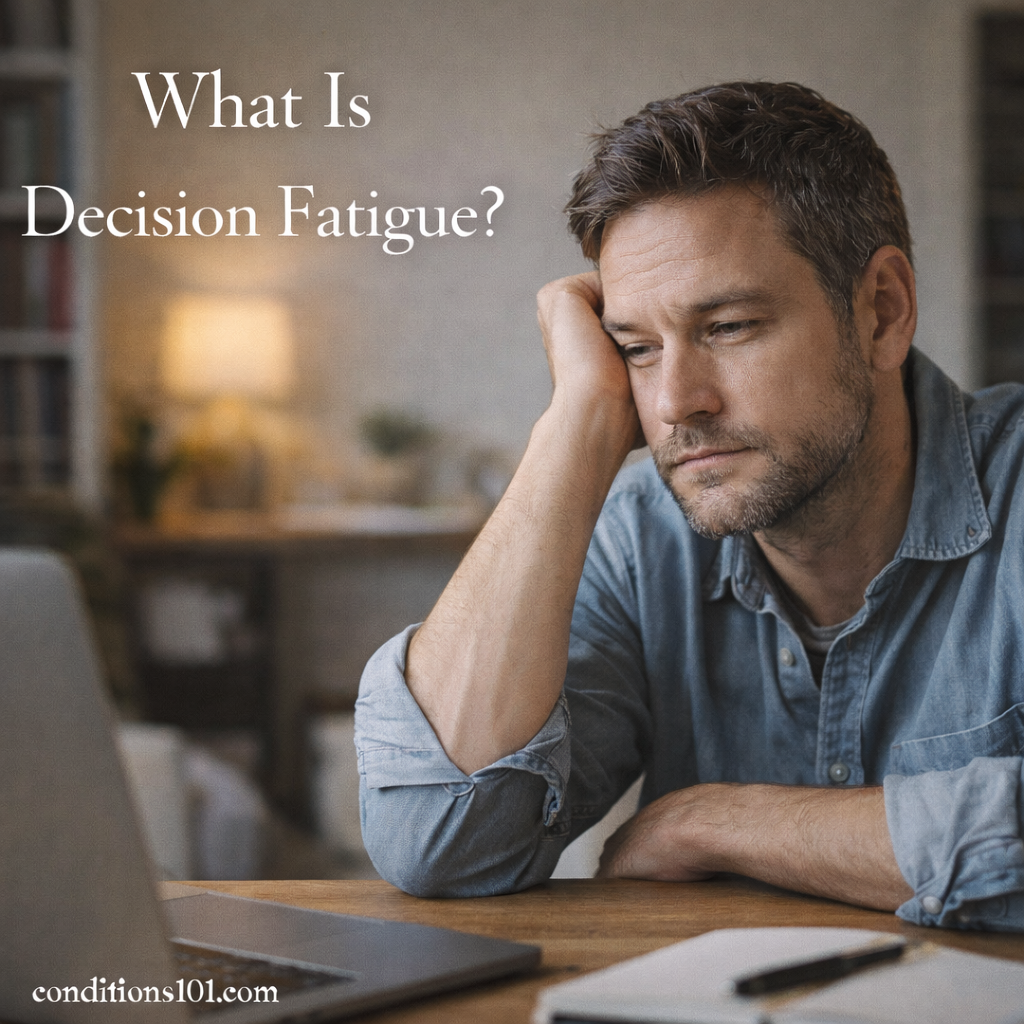
Decision fatigue is a mental state that occurs when a person becomes mentally exhausted from making too many decisions over a period of time. As decision-making demands accumulate, the brain’s ability to think clearly, weigh options, and make thoughtful choices can gradually decline.
Decision fatigue is not a medical diagnosis. It is a commonly used term that describes a temporary cognitive experience related to mental overload and reduced decision-making capacity.
How Decision Fatigue Develops
Decision fatigue develops as the brain repeatedly evaluates choices without sufficient mental recovery. Every decision—big or small—requires cognitive effort.
Over time, this effort can add up, especially when decisions are frequent, complex, or emotionally charged.
Common contributors include:
- Making many decisions in a short period
- Constant multitasking
- High-stakes or emotionally demanding choices
- Limited breaks or mental rest
- Ongoing responsibility without relief
The more decisions required, the more mental energy is consumed.
Why Decision-Making Requires Energy
Decision-making relies on cognitive processes such as attention, memory, impulse control, and reasoning. These mental resources are finite.
As mental energy is depleted, the brain may look for shortcuts, avoid choices altogether, or default to easier options. This is a natural response to cognitive strain rather than a lack of willpower.
Common Signs of Decision Fatigue

Decision fatigue can show up in subtle ways that affect daily life.
Common experiences include:
- Difficulty making simple choices
- Feeling overwhelmed by options
- Procrastinating decisions
- Choosing convenience over quality
- Reduced patience or increased irritability
- Mental tiredness after thinking tasks
These effects are often temporary and improve when mental demands decrease.
Decision Fatigue vs. Mental Fatigue
Decision fatigue is closely related to mental fatigue but is more specific.
Mental fatigue
Refers to overall cognitive exhaustion affecting focus, memory, and thinking.
Decision fatigue
Specifically affects the ability to make choices and evaluate options.
Someone may feel mentally tired without needing to make decisions, or experience decision fatigue even when physically rested.
Situations Where Decision Fatigue Is Common
Decision fatigue can occur in many everyday situations, particularly those involving ongoing responsibility.
Examples include:
- Work environments with frequent choices
- Caregiving or parenting roles
- Managing schedules, finances, or planning
- Academic or learning settings
- High-information digital environments
The experience is influenced by both the number and complexity of decisions involved.
Decision Fatigue and Daily Behavior
As decision fatigue increases, behavior may change in noticeable ways.
People may:
- Delay decisions
- Rely on habits or routines
- Avoid new choices
- Accept default options without much thought
These behaviors are often adaptive responses to mental overload.
Is Decision Fatigue Permanent?
No. Decision fatigue is generally temporary. It tends to improve when decision-making demands are reduced or when mental rest is restored.
Decision-making capacity can fluctuate throughout the day depending on workload, stress, and recovery time.
Common Misconceptions About Decision Fatigue
There are several misunderstandings about decision fatigue.
- It is not a sign of laziness
- It does not mean someone is poor at decision-making
- It can affect anyone, regardless of experience
- It is influenced by context, not character
Understanding these points helps normalize the experience.
Why Decision Fatigue Is Discussed
Decision fatigue is discussed because modern life often requires constant decision-making, from small daily choices to complex responsibilities. Recognizing decision fatigue helps explain why decision quality and motivation can change over time.
Educational awareness encourages realistic expectations around mental energy and decision-making limits.
Key Takeaways
- Decision fatigue occurs when mental energy for making choices becomes depleted
- It is a descriptive term, not a medical diagnosis
- Decision-making requires cognitive effort
- Signs include indecision, avoidance, and mental exhaustion
- Decision fatigue is usually temporary and situational