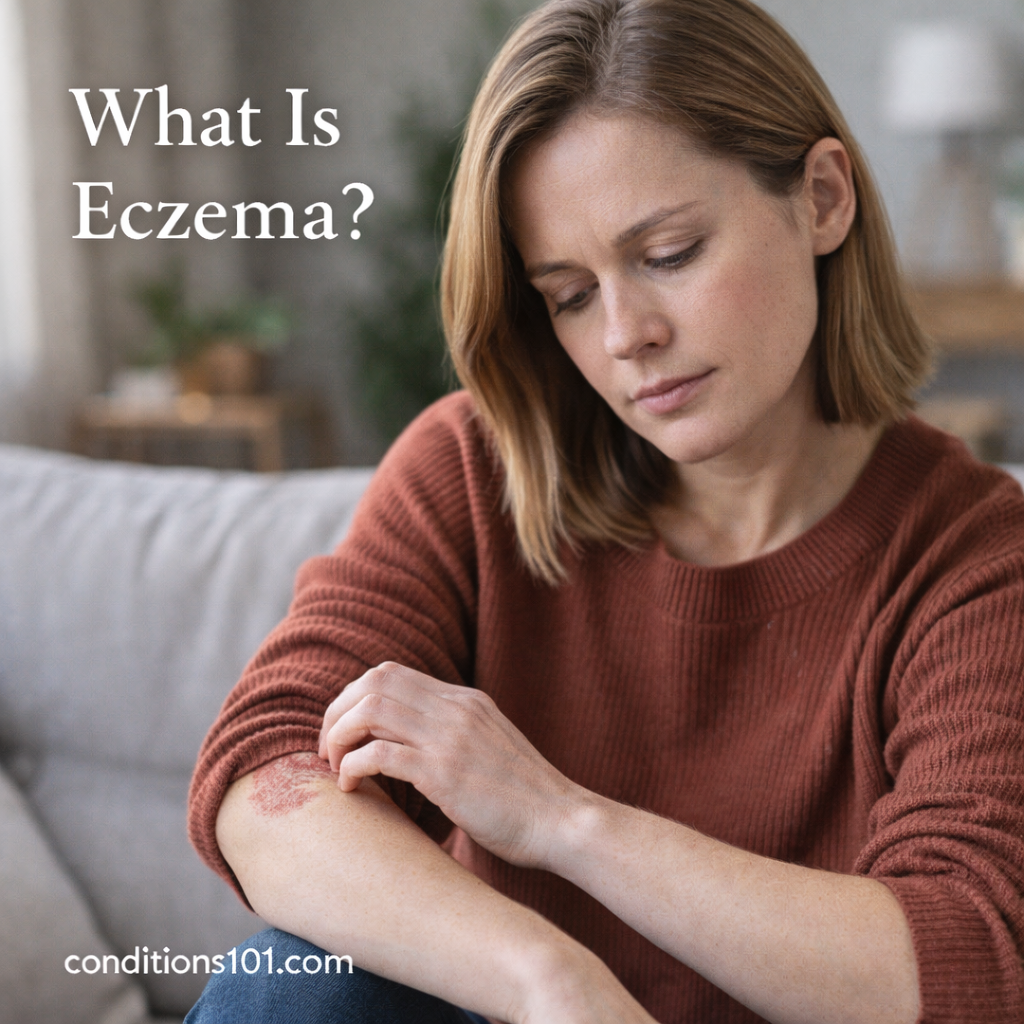
Eczema is a common skin condition that affects the skin’s ability to protect itself from irritation and moisture loss. It is often associated with dry, sensitive skin and periods of itching, redness, or inflammation. Eczema is not a single condition but a general term used to describe several related skin conditions that share similar features.
Eczema can appear at any age and may come and go over time. Some people experience mild, occasional symptoms, while others notice more persistent skin changes. This article provides an educational overview of eczema for general informational purposes only.
Understanding the Skin’s Protective Barrier
The skin acts as a protective barrier between the body and the environment. It helps retain moisture, block irritants, and defend against external elements.
Healthy skin typically:
- Retains moisture effectively
- Acts as a barrier against irritants and allergens
- Repairs itself efficiently after minor damage
In eczema, this barrier does not function as effectively, making the skin more prone to dryness and irritation.
What Happens in Eczema?
In eczema, the skin barrier becomes weaker than usual. This allows moisture to escape more easily and makes the skin more sensitive to environmental factors.
As a result, the skin may:
- Become dry or rough
- React strongly to irritants
- Develop areas of inflammation
- Feel itchy or uncomfortable
Scratching irritated skin can further damage the skin barrier, which may worsen symptoms over time.
Common Signs and Symptoms of Eczema
Symptoms of eczema can vary depending on the type and severity, but several features are commonly reported.
Common symptoms include:
- Dry, flaky, or rough skin
- Red or darker patches of irritated skin
- Itching that may range from mild to intense
- Thickened or scaly skin over time
Symptoms may flare up and then improve, creating cycles of discomfort and relief.
Types of Eczema
Eczema includes several related conditions, each with its own characteristics.
Atopic Dermatitis
Atopic dermatitis is the most commonly discussed form of eczema. It often begins early in life and may be associated with sensitive or reactive skin.
Contact Dermatitis
Contact dermatitis occurs when the skin reacts to certain substances it comes into contact with, such as soaps or materials.
Dyshidrotic Eczema
This type often affects the hands or feet and may involve small, itchy blisters.
Other Forms of Eczema
Additional types may affect different areas of the body or appear under specific conditions, but they share similar skin barrier issues.
Where Eczema Commonly Appears
Eczema can affect many parts of the body, and its location may change over time.
Common areas include:
- Hands and wrists
- Inner elbows and behind the knees
- Face and neck
- Feet and ankles
Some people experience eczema in one area only, while others notice it in multiple locations.
Who Can Experience Eczema?
Eczema can affect people of all ages and backgrounds.
Factors often associated with eczema include:
- Family history of eczema or sensitive skin
- Exposure to environmental irritants
- Dry climates or seasonal changes
- Individual differences in skin sensitivity
Having these factors does not guarantee eczema, but they may influence skin reactions.
How Eczema Can Affect Daily Life
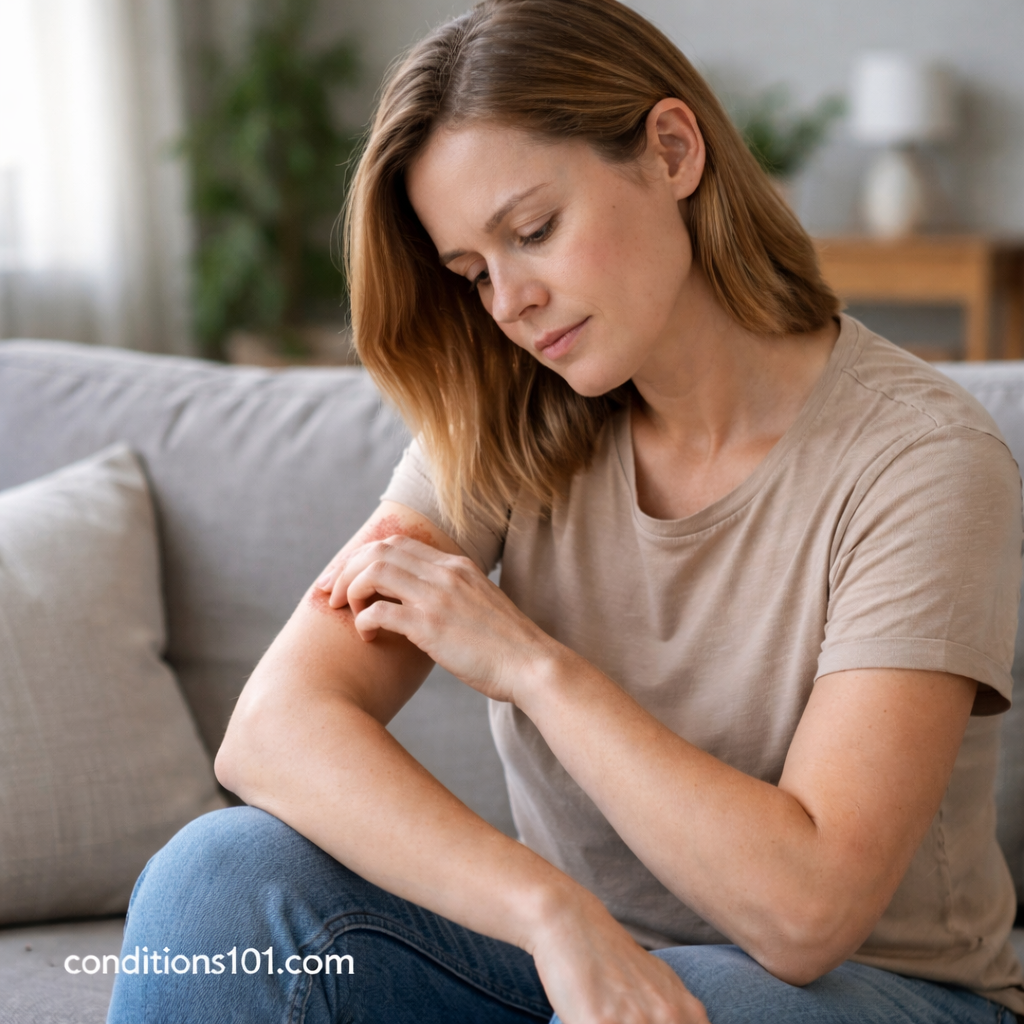
Eczema may influence comfort, appearance, and daily routines. The impact varies depending on symptom severity and frequency.
Possible effects include:
- Increased attention to skincare routines
- Discomfort from itching or dryness
- Changes in clothing choices
- Heightened awareness of skin appearance
Many people adapt their routines to manage skin comfort over time.
Eczema Over Time
Eczema often follows a pattern of flare-ups and calmer periods. Some people experience improvement as they age, while others notice recurring symptoms.
Changes over time may be influenced by:
- Environmental exposure
- Skin care habits
- Climate and seasonal changes
- Natural changes in skin function
Because experiences vary, eczema does not follow a single predictable course.
Common Misconceptions About Eczema
There are several misunderstandings surrounding eczema.
Eczema Is Contagious
Eczema cannot be spread from person to person.
Eczema Is Just Dry Skin
While dryness is common, eczema involves skin barrier and sensitivity issues.
Eczema Only Affects Children
Eczema can occur at any age, including adulthood.
Key Takeaways
- Eczema is a group of skin conditions involving irritation and dryness
- It is linked to a weakened skin barrier
- Symptoms include itching, redness, and dry skin
- Eczema can affect people of all ages
- Experiences and severity vary widely