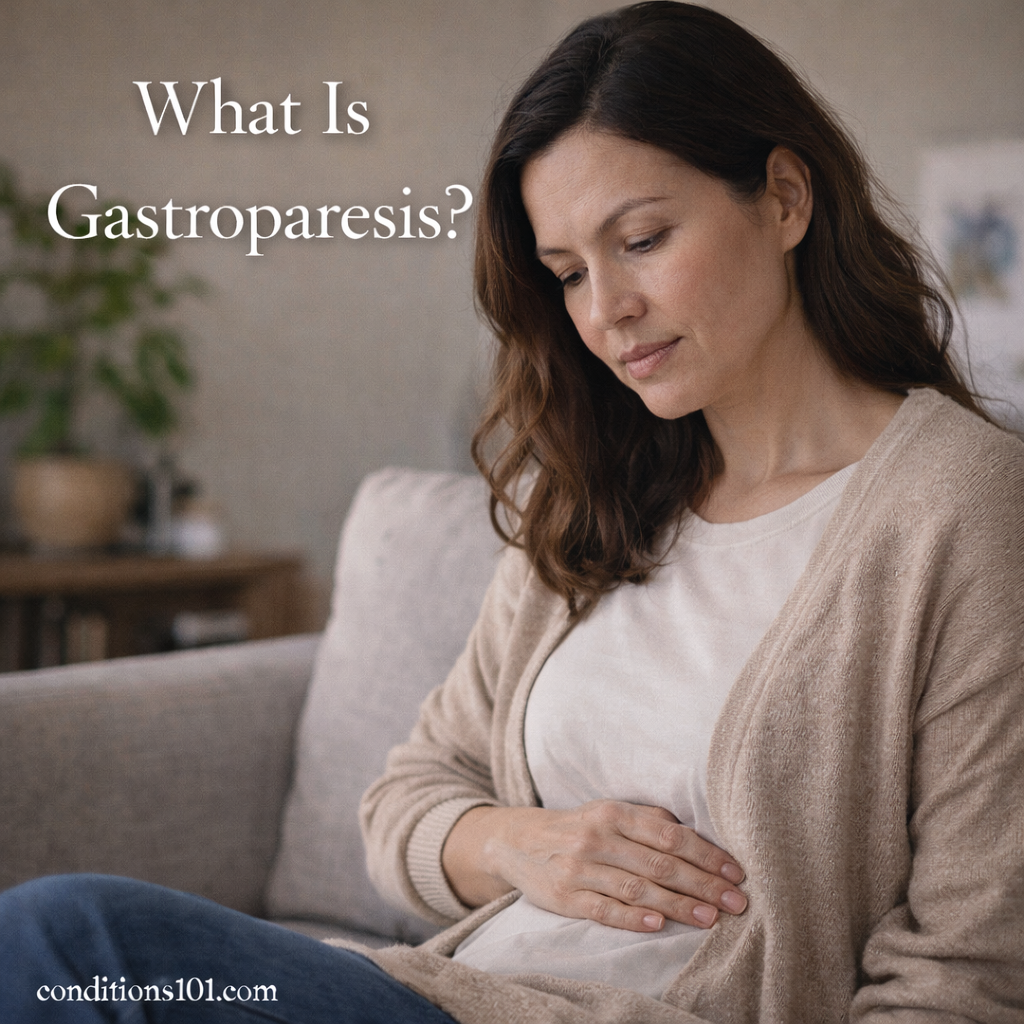
Gastroparesis is a condition in which the stomach empties food into the small intestine more slowly than usual. This delay happens without a physical blockage, meaning food movement is slowed due to changes in how the stomach muscles or nerves function.
Gastroparesis is considered a digestive motility condition. It affects how the stomach moves food along, rather than how food is digested chemically.
How Normal Stomach Emptying Works
Under typical conditions, the stomach plays an active role in digestion by grinding food and gradually releasing it into the small intestine.
In a normal digestive process:
- Food enters the stomach and is mixed with digestive fluids
- Stomach muscles contract in a coordinated pattern
- Small amounts of food move into the small intestine over time
- Nutrients are absorbed further along the digestive tract
This process helps regulate digestion and nutrient absorption.
What Happens With Gastroparesis
With gastroparesis, the stomach’s muscular contractions are slower, weaker, or less coordinated. As a result, food may remain in the stomach longer than expected.
This delayed movement can affect:
- The timing of digestion
- Feelings of fullness after meals
- Appetite and eating patterns
- How the body processes meals
The experience and severity can vary widely between individuals.
Common Signs Associated With Gastroparesis
Gastroparesis is often associated with digestive sensations rather than a single defining symptom.
Commonly reported experiences include:
- Feeling full quickly after starting a meal
- Prolonged fullness after eating
- Nausea
- Bloating or abdominal discomfort
- Changes in appetite
Not everyone experiences the same combination or intensity of signs.
Gastroparesis vs. General Digestive Slowness
Gastroparesis is different from occasional slow digestion that may happen after a large meal or during temporary digestive upset.
Occasional slow digestion
May happen from diet changes, stress, or routine disruption and often resolves on its own.
Gastroparesis
Refers to ongoing delayed stomach emptying related to stomach motility rather than temporary factors.
Factors Commonly Linked to Gastroparesis
Gastroparesis may be discussed in connection with certain underlying influences, though not all cases have a clear cause.
These may include:
- Nerve signaling changes affecting the stomach
- Conditions that impact muscle coordination
- Metabolic or neurological influences
- Effects following certain illnesses or procedures
In some cases, no specific underlying factor is identified.
Why Gastroparesis Is Considered Rare
Gastroparesis is classified as a rare or lesser-known condition because it affects a relatively small portion of the population compared to more common digestive issues.
It may also be underrecognized, as symptoms can overlap with other digestive conditions and vary significantly between individuals.
How Gastroparesis Can Affect Daily Life

Delayed stomach emptying can influence eating habits and daily routines.
People may notice:
- Needing smaller or more frequent meals
- Changes in hunger or fullness cues
- Increased attention to how meals feel afterward
- Adjustments to daily schedules around eating
The impact differs depending on severity and individual circumstances.
Common Misconceptions About Gastroparesis
There are several misunderstandings surrounding gastroparesis.
- It is not caused by a physical blockage
- It is not the same as general indigestion
- Symptoms can vary widely
- Not all cases are severe
Understanding these points helps clarify how gastroparesis differs from more common digestive complaints.
Why Gastroparesis Is Discussed
Gastroparesis is discussed to help explain why some people experience persistent digestive slowing without obvious obstruction. Educational information helps increase awareness of how stomach motility affects digestion and overall comfort.
Clear explanations can make lesser-known digestive terms easier to understand.
Key Takeaways
- Gastroparesis involves delayed stomach emptying
- It is a motility condition, not a blockage
- Symptoms often relate to fullness and digestion timing
- Severity and experience vary widely
- Gastroparesis is considered a rare digestive condition