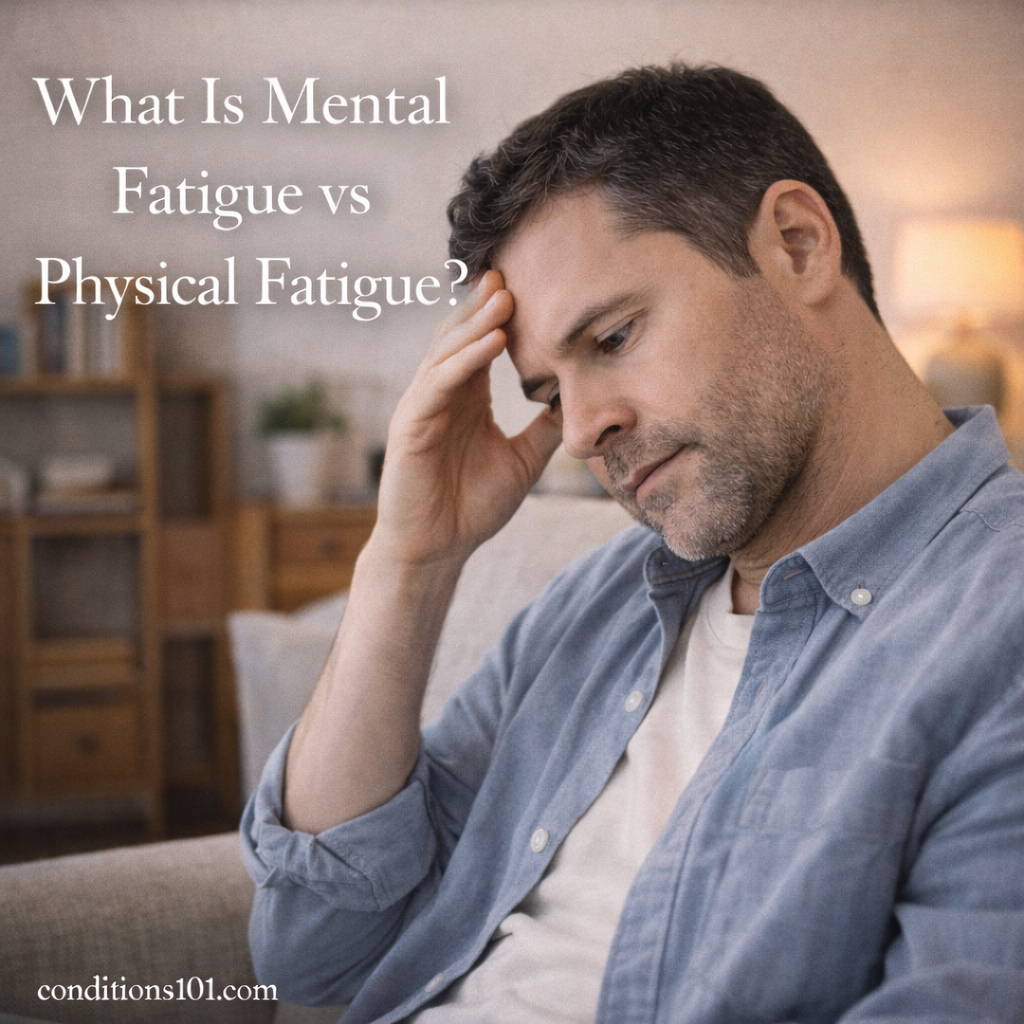
Mental fatigue and physical fatigue are two different types of tiredness that affect the body and mind in distinct ways. While both involve a feeling of exhaustion, they stem from different sources and influence daily functioning differently.
Understanding the difference between mental fatigue and physical fatigue can help explain why rest that helps one type of fatigue may not always relieve the other.
What Is Mental Fatigue?
Mental fatigue refers to a state of cognitive exhaustion that occurs after prolonged periods of thinking, concentration, or emotional effort. It affects how the brain processes information rather than how the muscles perform.
Mental fatigue often develops when the mind is continuously engaged without sufficient mental breaks.
Common Experiences Associated With Mental Fatigue
- Difficulty concentrating or staying focused
- Slower thinking or mental “fog”
- Forgetfulness
- Reduced motivation for mentally demanding tasks
- Feeling overwhelmed by simple decisions
Mental fatigue can occur even without physical exertion.
What Is Physical Fatigue?
Physical fatigue refers to tiredness in the body that affects muscles, strength, or endurance. It usually follows physical activity, prolonged movement, or physical strain.
Physical fatigue is often more noticeable in the body than in thought processes.
Common Experiences Associated With Physical Fatigue
- Muscle tiredness or heaviness
- Reduced strength or endurance
- Slower physical movements
- General bodily exhaustion
- Need for physical rest
Physical fatigue is typically linked to how much physical effort the body has used.
Key Differences Between Mental and Physical Fatigue
Although they can occur together, mental fatigue and physical fatigue affect different systems.
Mental fatigue
Primarily affects thinking, focus, memory, and decision-making.
Physical fatigue
Primarily affects muscles, movement, and physical stamina.
Someone may feel mentally exhausted but physically capable, or physically tired but mentally alert.
How Mental and Physical Fatigue Can Overlap

Mental and physical fatigue are not completely separate. In some situations, one can contribute to the other.
Examples include:
- Physical exhaustion making it harder to concentrate
- Prolonged mental stress contributing to bodily tension
- Long days involving both physical and mental demands
When both types occur together, overall fatigue may feel more intense.
Common Causes of Mental Fatigue
Mental fatigue is often linked to sustained cognitive or emotional demands.
Examples include:
- Extended periods of focused work or study
- Multitasking or information overload
- Emotional stress or worry
- Lack of mental breaks
- Poor sleep quality
These factors place continuous demands on attention and processing capacity.
Common Causes of Physical Fatigue
Physical fatigue is typically influenced by bodily exertion or strain.
Examples include:
- Prolonged physical activity
- Repetitive movements
- Physically demanding work
- Lack of physical rest
- Changes in routine or activity level
Physical fatigue can vary based on fitness, conditioning, and daily habits.
Mental Fatigue vs. Physical Fatigue and Sleep
Sleep plays a role in both types of fatigue, but the experience can differ.
Mental fatigue
May persist even after physical rest if cognitive demands remain high.
Physical fatigue
Often improves with physical rest, sleep, or reduced activity.
This is why sleep alone may not always resolve feelings of mental exhaustion.
Why It’s Important to Understand the Difference
Recognizing whether fatigue is primarily mental or physical can help explain why certain activities feel harder at times. It also helps clarify why different forms of rest—such as quiet time versus physical relaxation—can feel more or less effective depending on the type of fatigue involved.
Understanding fatigue as a broad experience rather than a single sensation can reduce frustration when energy levels fluctuate.
Common Misconceptions About Fatigue
There are several misunderstandings about mental and physical fatigue.
- Fatigue does not always mean poor physical health
- Mental fatigue is not the same as laziness
- Physical tiredness does not always involve soreness
- Fatigue can change from day to day
Recognizing these points can help put everyday tiredness into perspective.
Key Takeaways
- Mental fatigue affects thinking, focus, and cognitive performance
- Physical fatigue affects muscles, movement, and endurance
- The two types of fatigue have different causes
- Mental and physical fatigue can occur separately or together
- Different types of rest may be needed for different types of fatigue