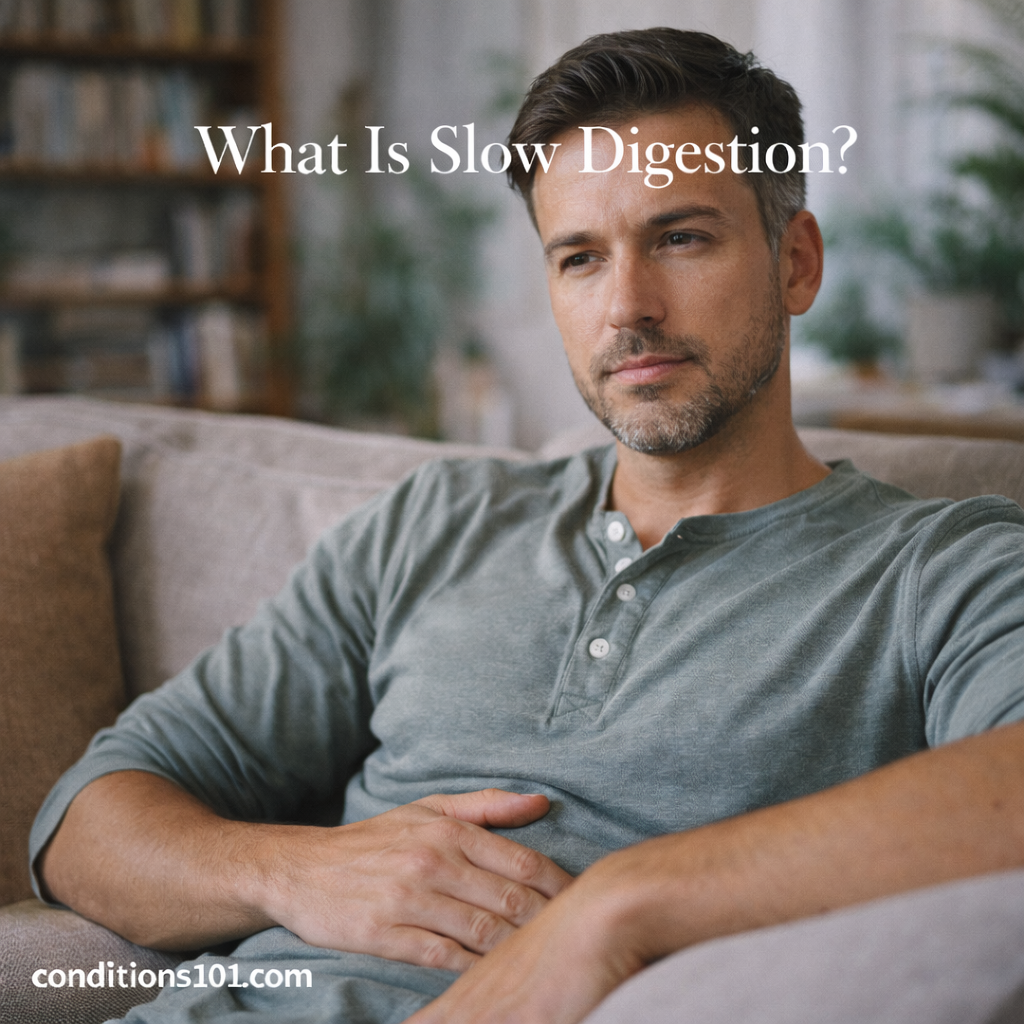
Slow digestion refers to a digestive pattern in which food moves through the digestive tract more slowly than usual. This can affect how long it takes for the stomach and intestines to process meals and may influence how a person feels after eating.
Slow digestion is not a diagnosis. It is a descriptive term often used in general health discussions to explain digestive timing and function. This article provides an educational overview only and does not offer medical advice, diagnosis, or treatment.
Understanding the Digestive Process
Digestion is the process by which the body breaks down food into nutrients and energy. It involves multiple steps and organs working together, including:
- The stomach, which begins breaking down food
- The small intestine, where most nutrient absorption occurs
- The large intestine, which processes remaining material
The speed of digestion varies naturally between individuals and can change over time.
What Does “Slow Digestion” Mean?
Slow digestion generally means that food takes longer to move through the digestive system. This slower movement may occur at one stage of digestion or across several stages.
In everyday terms, slow digestion may be used to describe:
- A feeling that food sits in the stomach longer than expected
- Delayed digestive sensations after meals
- Slower overall gastrointestinal movement
It describes how digestion feels or functions, not a specific condition.
Slow Digestion vs. Normal Digestion
Digestive speed exists on a spectrum rather than a fixed standard.
Normal Digestion
Normal digestion typically involves:
- Predictable digestion after meals
- Comfortable processing of food
- Regular digestive patterns
Slow Digestion
Slow digestion may involve:
- Prolonged fullness after eating
- Delayed digestive activity
- Slower movement through the intestines
These descriptions are general and can differ from person to person.
Common Factors Associated With Slow Digestion
Several factors are commonly discussed in relation to slower digestive movement.
Digestive Motility
Motility refers to how muscles in the digestive tract move food forward. Slower motility can affect digestion timing.
Diet Composition
Foods that are:
- High in fat
- Very dense or heavy
- Low in fiber
may take longer to digest compared to lighter or fiber-rich foods.
Hydration Levels
Adequate fluid intake supports normal digestive movement. Lower hydration may be associated with slower digestive processes.
Lifestyle Factors
Daily habits may also influence digestion speed, including:
- Activity level
- Eating patterns
- Stress and routine changes
These factors interact differently for each individual.
How Slow Digestion Is Commonly Experienced

People who describe slow digestion may notice experiences such as:
- Feeling full for an extended time after meals
- Digestive sensations occurring later than expected
- A general sense of sluggish digestion
Not everyone experiences these sensations in the same way or with the same frequency.
Is Slow Digestion Temporary or Ongoing?
Slow digestion can be:
- Temporary, influenced by diet or routine changes
- Situational, occurring after certain meals
- Ongoing, depending on individual digestive patterns
Digestive speed can fluctuate over time rather than remaining constant.
Why Slow Digestion Is Discussed in Digestive Health
Slow digestion is commonly discussed to help explain:
- Differences in how people process food
- Variations in digestive comfort
- General patterns of gut function
It is a descriptive concept used to support clearer conversations about digestive experiences.
Key Takeaways
- Slow digestion refers to food moving more slowly through the digestive system
- It is a descriptive term, not a diagnosis
- Digestive speed varies naturally between individuals
- Diet, hydration, and lifestyle may influence digestion timing
- Digestive patterns can change over time
Understanding slow digestion helps create clearer, more informed discussions about digestive and gut health.