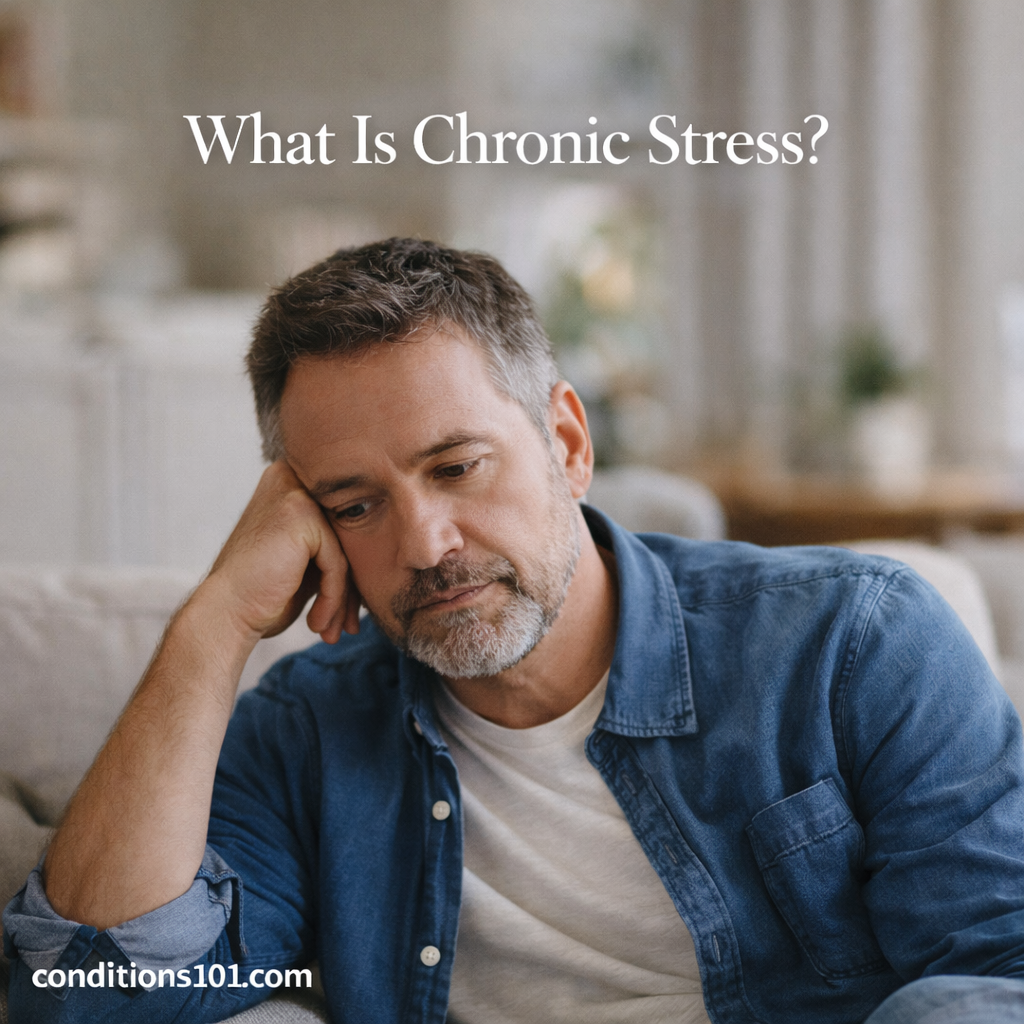
Chronic stress refers to a persistent state of stress that continues over an extended period of time, often weeks, months, or longer. Unlike short-term stress, which typically arises in response to immediate challenges and then subsides, chronic stress occurs when stressors remain constant or when the body does not fully return to a relaxed state.
This article provides an educational overview of chronic stress, how it differs from short-term stress, common sources, and how it is discussed in mental and cognitive health contexts. It does not provide medical advice, diagnosis, or treatment.
Understanding Stress as a Natural Response
Stress is a normal part of human life. It is the body’s way of responding to demands, changes, or perceived challenges.
In general terms, stress involves:
- Mental or emotional strain
- Physical responses such as increased alertness
- Behavioral changes related to coping or adaptation
Stress itself is not inherently harmful. In many situations, it can support focus, motivation, and problem-solving.
What Makes Stress “Chronic”?
Stress is described as chronic when it is ongoing and prolonged rather than temporary.
Chronic stress is typically associated with:
- Continuous exposure to stressors
- Repeated stress responses without adequate recovery time
- A sustained sense of pressure or overload
Unlike acute stress, chronic stress does not have a clear endpoint and may become part of daily life.
Chronic Stress vs. Acute Stress
Stress is often categorized based on duration and pattern.
Acute Stress
Acute stress is:
- Short-term
- Linked to specific situations or events
- Temporary and usually resolves once the situation passes
Examples include preparing for an exam or responding to a sudden deadline.
Chronic Stress
Chronic stress is:
- Long-lasting
- Related to ongoing circumstances
- More subtle but persistent
The distinction helps describe how long stress lasts, not how severe it feels.
Common Sources of Chronic Stress
Chronic stress often develops when stressors are constant or repeatedly encountered.
Common sources may include:
- Ongoing work pressure
- Long-term financial concerns
- Relationship or family challenges
- Caregiving responsibilities
- Persistent uncertainty or instability
These stressors may be external, internal, or a combination of both.
How Chronic Stress Is Experienced

The experience of chronic stress can vary widely between individuals. It may affect different aspects of daily functioning.
Mental and Cognitive Effects
People experiencing chronic stress may notice:
- Difficulty concentrating
- Persistent worry or rumination
- Feeling mentally overwhelmed
- Reduced sense of mental clarity
Emotional Experience
Chronic stress is often associated with:
- Ongoing tension
- Irritability or emotional fatigue
- Feeling constantly “on edge”
Daily Life Impact
Over time, chronic stress may influence:
- Motivation and energy levels
- Work or academic performance
- Social interactions
- Overall sense of balance
Not everyone experiences these effects in the same way.
Why Chronic Stress Is Considered a Mental and Cognitive Condition
Chronic stress is commonly discussed within mental and cognitive health contexts because of its ongoing influence on thought patterns, attention, and emotional regulation.
Rather than being a single event, it represents a long-term state that can shape how a person thinks, feels, and responds to everyday situations.
Chronic Stress Is Not the Same for Everyone
An important aspect of chronic stress is variability.
Differences may include:
- What triggers stress
- How stress is perceived
- How long stress lasts
- How it affects daily functioning
Personal circumstances, environment, and coping styles all play a role in shaping the experience.
Why Understanding Chronic Stress Matters
Understanding chronic stress helps support:
- Clearer conversations about mental and cognitive health
- Better recognition of long-term stress patterns
- More informed discussions in educational and workplace settings
The term is used to describe patterns over time, not to label or define individuals.
Key Takeaways
- Chronic stress is long-lasting, ongoing stress rather than short-term pressure
- It differs from acute stress primarily in duration
- Common sources include persistent life challenges
- Experiences of chronic stress vary widely
- The term is descriptive, not diagnostic
A clear understanding of chronic stress supports informed, respectful discussions about mental and cognitive health.