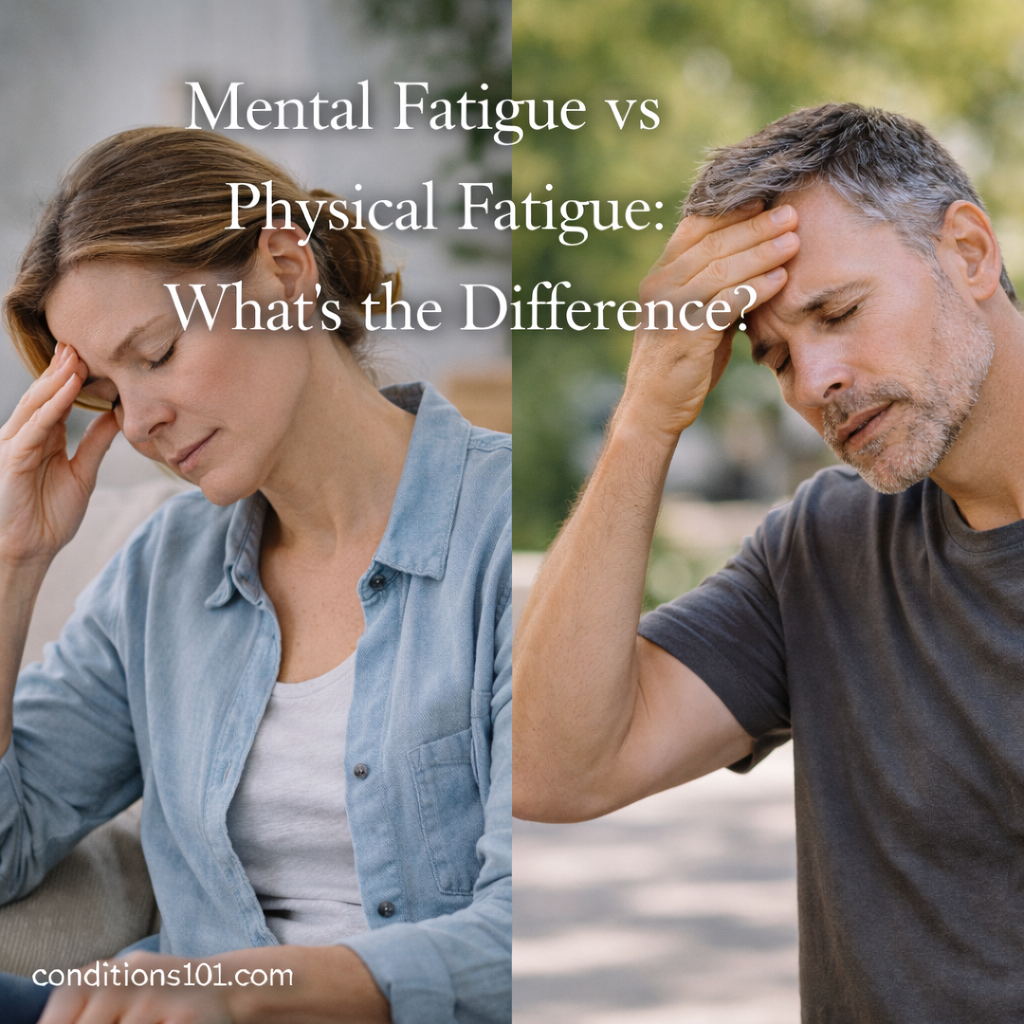
Mental fatigue and physical fatigue are two commonly discussed forms of tiredness that affect how people think, feel, and function. While they can occur together, they refer to different types of exhaustion and involve different processes in the body and brain.
This article provides an educational, non-clinical comparison of mental fatigue and physical fatigue, explaining how they differ, how they overlap, and how they are commonly described in general health information. It does not provide medical advice, diagnosis, or treatment.
Understanding Fatigue as a General Symptom
Fatigue is a broad term used to describe a state of reduced energy, motivation, or capacity to perform tasks. It can affect physical movement, cognitive function, or both.
In health education, fatigue is often categorized based on where it is felt most strongly:
- In the body (physical fatigue)
- In the mind (mental fatigue)
Distinguishing between these forms helps clarify everyday experiences of tiredness.
What Is Mental Fatigue?
Mental fatigue refers to a state of cognitive exhaustion that affects thinking, focus, and mental performance. It is often associated with prolonged periods of concentration, decision-making, or emotional effort.
Common Descriptions of Mental Fatigue
Mental fatigue is often described as:
- Difficulty concentrating or focusing
- Slower thinking or mental “fog”
- Reduced motivation for cognitive tasks
- Feeling overwhelmed by simple decisions
- Trouble processing information
Mental fatigue primarily affects how the brain handles information rather than how the body moves.
What Is Physical Fatigue?
Physical fatigue refers to reduced physical energy or muscle endurance. It often occurs after physical activity, prolonged movement, or bodily exertion.
Common Descriptions of Physical Fatigue
Physical fatigue is often described as:
- Muscle tiredness or heaviness
- Reduced strength or endurance
- Slower physical movement
- Body-wide exhaustion
- Desire for physical rest
Physical fatigue mainly affects the body’s ability to perform physical tasks.
Key Differences Between Mental and Physical Fatigue
Although both involve tiredness, mental and physical fatigue differ in where they are felt and how they affect daily functioning.
Primary Area Affected
- Mental fatigue mainly affects thinking, focus, and attention.
- Physical fatigue mainly affects muscles, movement, and physical stamina.
Type of Activities That Trigger Them
- Mental fatigue is often linked to prolonged cognitive or emotional effort.
- Physical fatigue is often linked to physical activity or exertion.
How They Feel
- Mental fatigue may feel like brain fog, distraction, or reduced clarity.
- Physical fatigue may feel like muscle weakness, heaviness, or soreness.
Type of Rest Often Sought
- Mental fatigue often leads to a desire for mental breaks or reduced stimulation.
- Physical fatigue often leads to a desire for physical rest or inactivity.
How Mental and Physical Fatigue Can Overlap

Mental and physical fatigue frequently occur together, even though they are distinct.
Examples of overlap include:
- Physical tiredness reducing mental focus
- Mental exhaustion making physical activity feel harder
- Stress contributing to both mental and physical fatigue
- Long days combining cognitive work with physical demands
This overlap can make it difficult to clearly separate one type of fatigue from the other in everyday life.
Mental Fatigue vs Physical Fatigue in Everyday Life
From an educational perspective, people may notice different fatigue patterns depending on their routines.
Mental fatigue may be more noticeable after:
- Long periods of studying or working
- Extended screen time
- Complex problem-solving
- Emotional or social demands
Physical fatigue may be more noticeable after:
- Exercise or manual labor
- Long periods of standing or walking
- Repetitive physical tasks
- Physically demanding routines
Understanding these patterns helps explain why tiredness can feel different from day to day.
Common Misconceptions About Mental and Physical Fatigue
“Fatigue Is Always Physical”
Fatigue can affect thinking and focus even when the body feels relatively rested.
“Mental Fatigue Isn’t Real Fatigue”
Mental fatigue can significantly affect daily functioning and performance.
“Physical Fatigue Only Happens After Exercise”
Physical fatigue can occur without formal exercise, depending on daily demands.
Why Understanding the Difference Matters
Understanding the difference between mental and physical fatigue helps readers:
- Describe their experiences more accurately
- Interpret health and wellness information more clearly
- Recognize different types of tiredness
- Build better general fatigue literacy
Clear distinctions support informed understanding without replacing professional evaluation.
Summary
Mental fatigue and physical fatigue are two distinct but often overlapping forms of tiredness. Mental fatigue affects cognitive processes such as focus and thinking, while physical fatigue affects muscles and physical endurance. Both can influence daily life in different ways and may occur together depending on circumstances.
Understanding how mental and physical fatigue differ helps clarify common experiences of tiredness and improves interpretation of general health information.
Key Takeaways
- Mental fatigue affects thinking, focus, and cognitive performance.
- Physical fatigue affects muscles, movement, and physical stamina.
- The two types of fatigue feel different but often overlap.
- Mental fatigue is commonly linked to cognitive or emotional effort.
- Physical fatigue is commonly linked to physical exertion.
- Both types can influence daily functioning.
- Understanding the difference improves general health literacy.