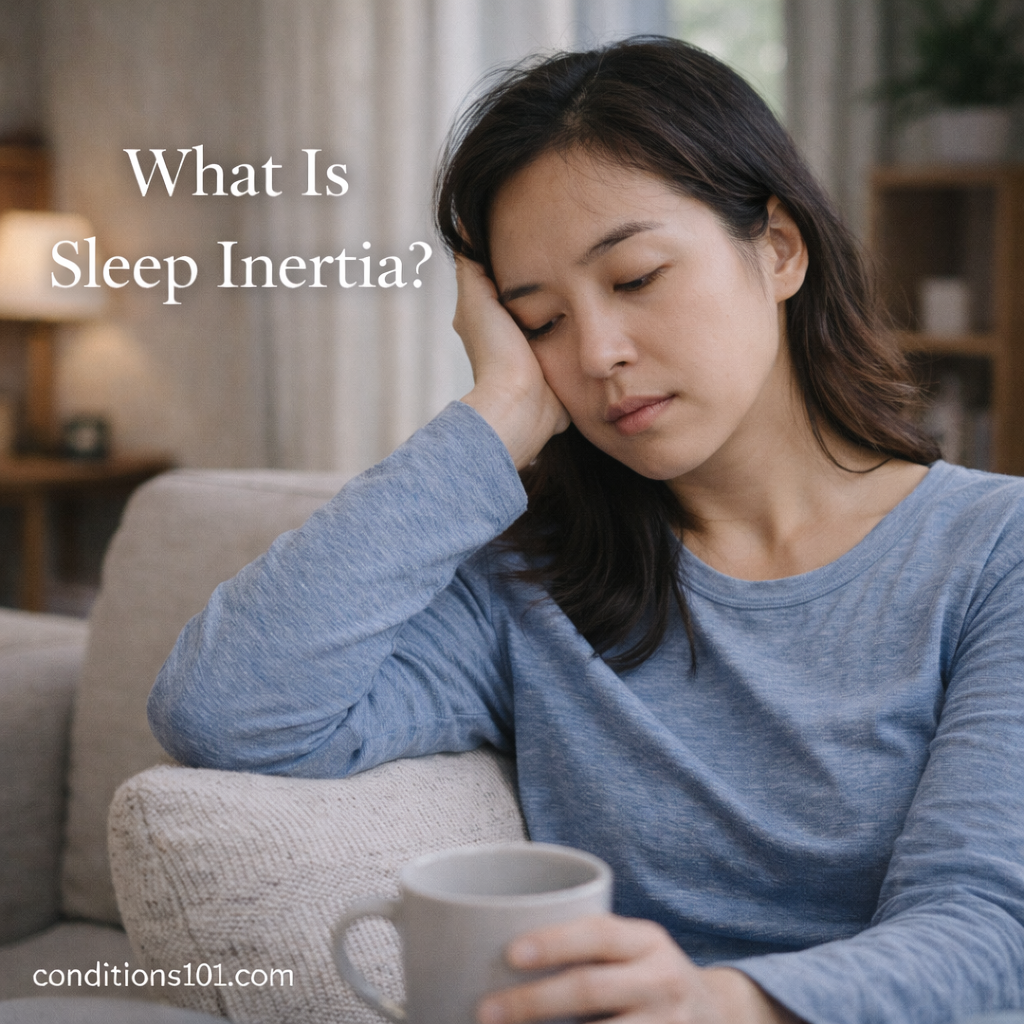
Sleep inertia is a temporary state of grogginess, reduced alertness, and impaired performance that can occur immediately after waking up. During this period, a person may feel mentally foggy, physically sluggish, or disoriented, even though they are technically awake.
This article provides an educational, non-clinical overview of what sleep inertia is, how it is commonly described, and how it fits into general sleep and fatigue education. It does not provide medical advice, diagnosis, or treatment.
Understanding the Transition From Sleep to Wakefulness
Waking up is not always an instant switch from sleep to full alertness. Instead, the brain and body often go through a gradual transition as sleep processes shut down and wakefulness processes ramp up.
Sleep inertia refers specifically to the early phase of this transition, when alertness has not yet fully returned. During this time, reaction time, attention, and decision-making may be temporarily reduced.
What Sleep Inertia Means
Sleep inertia describes the short-term effects of waking up while the brain is still adjusting from a sleep state. It does not mean a person is still asleep, but rather that their cognitive and physical systems have not fully synchronized with wakefulness.
Sleep inertia is often described as:
- Feeling groggy or mentally foggy
- Difficulty concentrating
- Slower thinking or reaction time
- Reduced motivation or coordination
- A desire to return to sleep
These sensations usually improve as wakefulness continues.
Key Characteristics of Sleep Inertia
Sleep inertia can vary in intensity and duration depending on the individual and the situation.
Temporary Duration
Sleep inertia is generally short-lived. It may last from a few minutes to longer periods, gradually fading as alertness increases.
Cognitive Effects
Mental tasks that require focus, memory, or quick decision-making may feel more difficult during sleep inertia.
Physical Sensations
Some people experience heaviness, sluggish movement, or a sense of low energy shortly after waking.
Variable Intensity
The strength of sleep inertia can differ from day to day and between individuals.
When Sleep Inertia Is More Noticeable
Educational discussions often note that sleep inertia may be more pronounced under certain conditions.
These situations may include:
- Waking suddenly from deep sleep
- Napping for longer periods
- Irregular sleep schedules
- Sleep deprivation or accumulated fatigue
- Early morning awakenings
These factors influence how abruptly the brain transitions from sleep to wakefulness.
Sleep Inertia vs. Feeling Tired
Sleep inertia and general tiredness are related but distinct concepts.
Sleep inertia typically refers to:
- Grogginess immediately after waking
- Temporary reduced alertness
- Improvement with time awake
General tiredness or fatigue often refers to:
- Ongoing low energy levels
- Feeling worn down throughout the day
- Sensations not limited to waking periods
Understanding this distinction helps clarify common sleep-related terminology.
Sleep Inertia in Everyday Life

From an informational perspective, sleep inertia is a common experience that many people encounter, especially after naps or early alarms.
General discussions often focus on:
- Difficulty starting tasks right after waking
- Feeling slow or unfocused in the morning
- Differences between individuals’ wake-up experiences
- How sleep timing affects morning alertness
These explanations aim to normalize the experience without assigning significance or cause.
Common Misconceptions About Sleep Inertia
“Sleep Inertia Means Poor Sleep Quality”
Sleep inertia can occur even after sufficient or good-quality sleep.
“Everyone Experiences Sleep Inertia the Same Way”
The intensity and duration of sleep inertia vary widely between individuals.
“Sleep Inertia Lasts All Day”
Sleep inertia is temporary and typically resolves as wakefulness continues.
Why Understanding Sleep Inertia Matters
Understanding sleep inertia helps readers:
- Interpret sleep and fatigue information more accurately
- Recognize common wake-up experiences
- Distinguish between grogginess and ongoing fatigue
- Build general sleep health literacy
Clear definitions support informed conversations without replacing professional evaluation.
Summary
Sleep inertia is a temporary period of grogginess and reduced alertness that occurs immediately after waking. It reflects the brain’s gradual transition from sleep to full wakefulness and can affect thinking, movement, and focus for a short time. Sleep inertia is a common experience and varies in intensity between individuals and situations.
Understanding how sleep inertia is defined and described helps readers navigate sleep-related information with greater clarity and confidence.
Key Takeaways
- Sleep inertia refers to temporary grogginess after waking.
- It involves reduced alertness, focus, and reaction time.
- Sleep inertia is short-term and improves with time awake.
- It may be more noticeable after deep sleep or naps.
- Sleep inertia is different from ongoing fatigue.
- The experience varies between individuals.
- Understanding the term improves sleep health literacy.