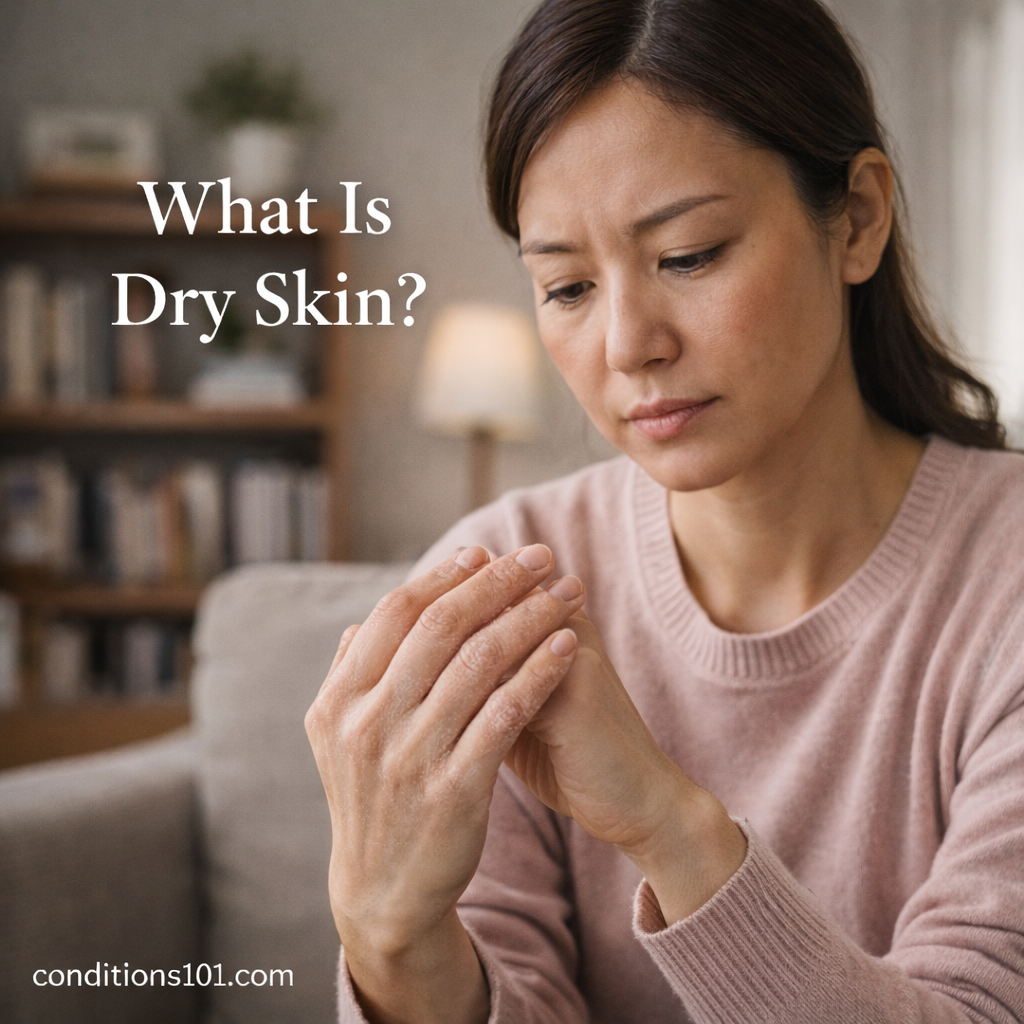
Dry skin is a common condition characterized by a lack of sufficient moisture in the outer layers of the skin. It often results in skin that feels tight, rough, flaky, or uncomfortable. Dry skin can affect people of all ages and may appear on specific areas of the body or more broadly.
This article provides an educational, non-clinical overview of what dry skin is, how it is commonly described, and why it occurs. It does not provide medical advice, diagnosis, or treatment.
Understanding How Skin Retains Moisture
Healthy skin relies on a balance of water, natural oils, and protective barriers to stay soft and resilient. The outermost layer of the skin helps retain moisture while shielding against environmental factors.
When this balance is disrupted, the skin may lose moisture more quickly than it can replace it. This can lead to dryness and changes in texture or appearance.
What Dry Skin Means
Dry skin refers to skin that does not retain enough moisture to maintain its normal softness and flexibility. It is sometimes described using terms such as xerosis in educational or clinical contexts.
Common descriptions of dry skin include:
- A tight or stretched feeling
- Rough or uneven texture
- Flaking or peeling
- Dull or ashy appearance
Dry skin can range from mild and temporary to more persistent, depending on contributing factors.
Key Characteristics of Dry Skin
Dry skin may present differently from person to person, but several features are frequently noted in general health and skincare education.
Reduced Skin Moisture
The most defining characteristic of dry skin is lower-than-normal moisture levels in the outer skin layers.
Texture Changes
Dry skin often feels rough to the touch and may appear scaly or flaky, especially in colder or drier environments.
Increased Sensitivity
Skin that lacks moisture may be more sensitive to environmental factors such as temperature changes, wind, or friction.
Visible Appearance Changes
Dry skin may look dull, pale, or uneven compared to well-hydrated skin.
Common Areas Affected by Dry Skin
Dry skin can occur anywhere on the body, but certain areas are more commonly affected due to exposure or lower oil production.
These areas often include:
- Hands and fingers
- Arms and legs
- Face
- Feet and heels
The severity and location of dryness can change based on daily activities and environmental conditions.
Why Dry Skin Occurs
Dry skin usually develops due to a combination of internal and external factors rather than a single cause.
Commonly discussed factors include:
- Low humidity or cold weather
- Frequent washing or bathing
- Use of harsh soaps or cleansers
- Natural changes in oil production with age
- Environmental exposure such as wind or sun
Dry skin does not always indicate an underlying condition and is often influenced by lifestyle or surroundings.
Dry Skin vs. Dehydrated Skin
Dry skin and dehydrated skin are sometimes used interchangeably, but they describe different concepts in educational skincare discussions.
Dry skin generally refers to:
- A skin type with lower natural oil production
- Ongoing tendency toward dryness
Dehydrated skin typically refers to:
- Temporary lack of water in the skin
- A condition that can affect any skin type
Understanding this distinction helps clarify skincare terminology without implying diagnosis.
How Dry Skin Is Described in Health and Skincare Information
In informational content, dry skin is usually discussed in neutral, descriptive terms. Common descriptors include:
- Moisture-deficient
- Rough or flaky
- Tight-feeling
- Environmentally influenced
These terms help explain how dry skin behaves without assigning cause or severity.
Dry Skin in Everyday Life

From an educational perspective, dry skin may influence comfort, appearance, and how the skin responds to daily routines.
General discussions often focus on:
- Seasonal changes in skin texture
- Differences in dryness across body areas
- How habits and environments affect skin moisture
- Why dryness may fluctuate over time
These explanations aim to increase understanding rather than suggest specific solutions.
Common Misconceptions About Dry Skin
“Dry Skin Only Happens in Cold Weather”
While cold air can contribute to dryness, dry skin can occur year-round and in many climates.
“Dry Skin and Sensitive Skin Are the Same”
Dry skin may feel sensitive, but the two terms describe different skin characteristics.
“Only Older Adults Get Dry Skin”
Dry skin can affect people of all ages, including children and young adults.
Why Understanding Dry Skin Matters
Understanding what dry skin is helps readers:
- Interpret skincare and health information more accurately
- Recognize common skin terminology
- Understand why skin texture and comfort can change
- Build general skin health literacy
Clear definitions support informed conversations without replacing professional evaluation.
Summary
Dry skin is a common condition involving reduced moisture in the outer layers of the skin. It can affect appearance, texture, and comfort and is influenced by environmental factors, daily habits, and natural skin characteristics. Dry skin varies widely in severity and presentation and is commonly discussed in general health and skincare education.
Understanding how dry skin is defined helps readers navigate skin-related information with greater clarity and confidence.
Key Takeaways
- Dry skin refers to skin with insufficient moisture in its outer layers.
- It may feel tight, rough, flaky, or appear dull.
- Dry skin can affect any age group and many areas of the body.
- Environmental and lifestyle factors often influence dryness.
- Dry skin is different from dehydrated skin in skincare terminology.
- The condition varies widely between individuals.
- Understanding dry skin supports better interpretation of skin health information.