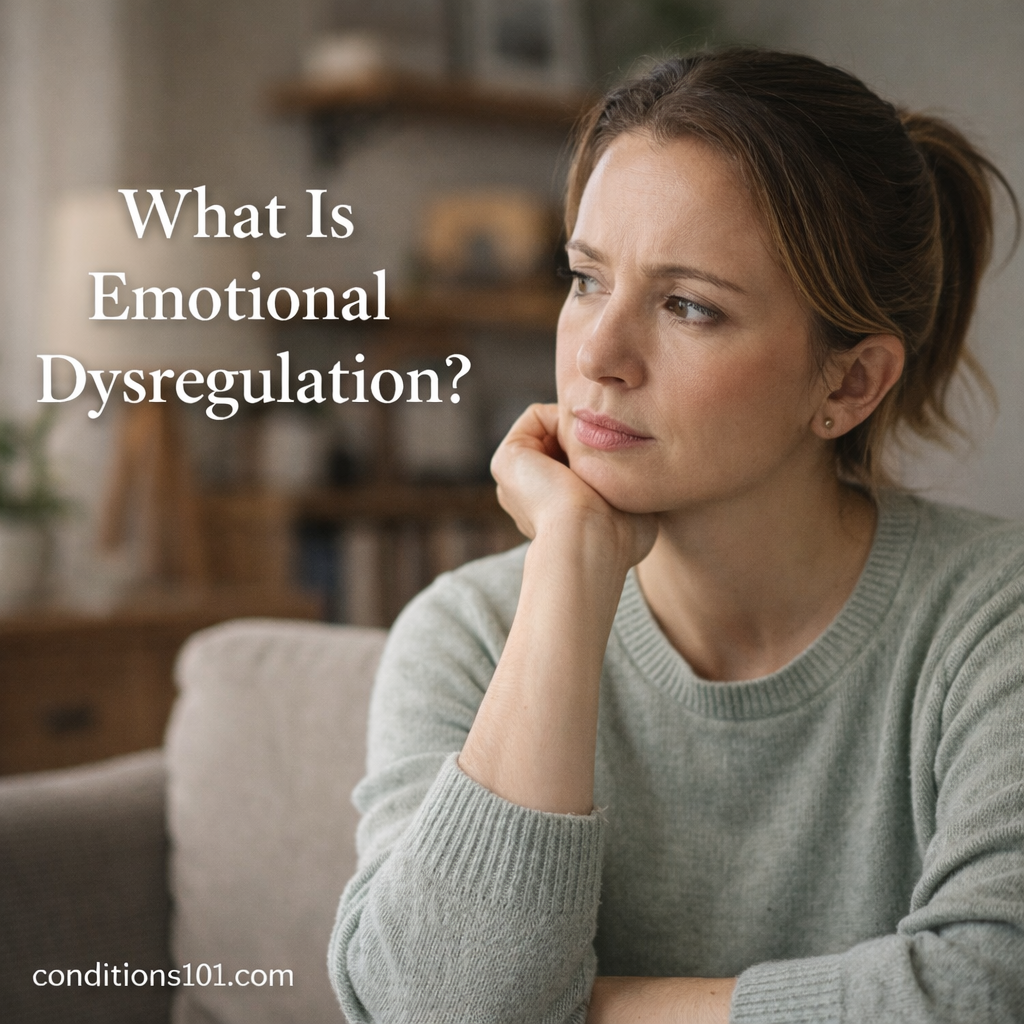
Emotional dysregulation is a term used to describe difficulty managing, responding to, or recovering from emotional experiences in a way that feels balanced or proportionate to a situation. It refers to challenges with regulating emotions rather than the presence of specific emotions themselves.
This article provides an educational, non-clinical explanation of emotional dysregulation, how it is commonly described in mental and cognitive health contexts, and how it differs from typical emotional responses. It does not provide medical advice, diagnosis, or treatment.
Understanding Emotional Regulation
Emotional regulation is the ability to recognize, experience, and respond to emotions in a flexible and manageable way. It involves adjusting emotional reactions so they align with circumstances, social expectations, and personal goals.
Emotional regulation commonly includes:
- Identifying emotions as they arise
- Modulating emotional intensity
- Expressing emotions appropriately
- Returning to a baseline emotional state after stress
Most people experience emotional ups and downs. Emotional dysregulation refers to patterns where these processes are consistently difficult or inefficient.
What Emotional Dysregulation Means
Emotional dysregulation does not mean a person feels emotions incorrectly. Instead, it describes challenges with how emotions are processed, expressed, or sustained.
Common descriptions include:
- Emotions that feel overwhelming or intense
- Emotional responses that seem disproportionate to a situation
- Difficulty calming down after emotional reactions
- Rapid shifts between emotional states
These experiences can vary in frequency and intensity and may change over time.
Key Characteristics of Emotional Dysregulation
Emotional dysregulation can look different from person to person, but educational resources often highlight shared characteristics.
Heightened Emotional Intensity
Emotions may feel stronger or more consuming than expected, even during everyday situations.
Delayed Emotional Recovery
It may take longer to return to a neutral or steady emotional state after experiencing stress, frustration, or excitement.
Emotional Reactivity
Some individuals may react quickly or strongly to emotional triggers, with less time between feeling an emotion and expressing it.
Variability Across Situations
Emotional dysregulation may be more noticeable in certain environments, such as high-stress situations, social interactions, or during periods of fatigue.
Emotional Dysregulation vs. Typical Emotional Responses
All people experience strong emotions at times. Emotional dysregulation is usually discussed when emotional responses are more frequent, prolonged, or disruptive than what is typically expected.
Typical emotional responses often involve:
- Emotional reactions that match the situation
- Ability to self-soothe or regain balance
- Gradual reduction in emotional intensity
Emotional dysregulation may involve:
- Strong reactions to minor stressors
- Difficulty adjusting emotional responses
- Ongoing emotional strain
This distinction helps clarify why emotional dysregulation is discussed as a pattern rather than a momentary experience.
Common Contexts Where Emotional Dysregulation Is Discussed
Emotional dysregulation is a descriptive concept used across psychology, neuroscience, and mental health education. It may appear in discussions related to:
- Stress and emotional coping
- Cognitive and emotional development
- Emotional processing and self-regulation
- Behavioral and emotional patterns
It is important to note that emotional dysregulation is not, by itself, a diagnosis. It is a term used to describe emotional functioning.
Factors That May Influence Emotional Dysregulation
Educational sources often describe emotional dysregulation as influenced by multiple overlapping factors rather than a single cause.
These factors may include:
- Differences in emotional processing
- Stressful or demanding environments
- Sleep disruption or fatigue
- Cognitive load or overwhelm
- Developmental and learning differences
The presence of these factors does not automatically mean emotional dysregulation will occur, but they may influence emotional regulation capacity.
Emotional Dysregulation and Daily Life

From an informational perspective, emotional dysregulation may affect everyday experiences such as communication, focus, and emotional resilience.
Educational discussions often focus on:
- How emotions influence decision-making
- The role of emotional awareness
- Differences in emotional regulation across individuals
- How emotional patterns change over time
These discussions aim to increase understanding rather than label or judge emotional experiences.
Common Misconceptions About Emotional Dysregulation
“Emotional Dysregulation Means Someone Is Overreacting”
The term does not imply intentional behavior or lack of effort. It describes how emotions are processed, not personal character.
“Only Certain People Experience Emotional Dysregulation”
Many people experience periods of emotional dysregulation, especially during stress, transitions, or fatigue.
“Emotional Dysregulation Is a Permanent State”
Emotional regulation capacity can change depending on circumstances, environment, and personal development.
Why Understanding Emotional Dysregulation Matters
Understanding emotional dysregulation helps readers:
- Build emotional awareness and vocabulary
- Interpret mental health information more clearly
- Recognize patterns without assigning blame
- Support healthier conversations about emotions
Clear definitions contribute to mental health literacy and respectful discussion.
Summary
Emotional dysregulation refers to challenges with managing emotional responses in a way that feels balanced or proportional. It describes patterns of emotional intensity, reactivity, or delayed recovery rather than specific emotions or diagnoses. Emotional dysregulation exists on a spectrum and can vary across situations and over time.
Understanding this concept supports clearer interpretation of mental and cognitive health information and promotes informed, non-judgmental discussions about emotional experiences.
Key Takeaways
- Emotional dysregulation describes difficulty managing or modulating emotional responses.
- It focuses on patterns of emotional processing, not individual emotions.
- Emotional dysregulation may involve intense emotions, reactivity, or slow emotional recovery.
- It differs from typical emotional responses in frequency, duration, or intensity.
- Emotional dysregulation is a descriptive concept, not a diagnosis.
- Many factors, including stress and cognitive load, can influence emotional regulation.
- Understanding the term supports mental health literacy and respectful communication.