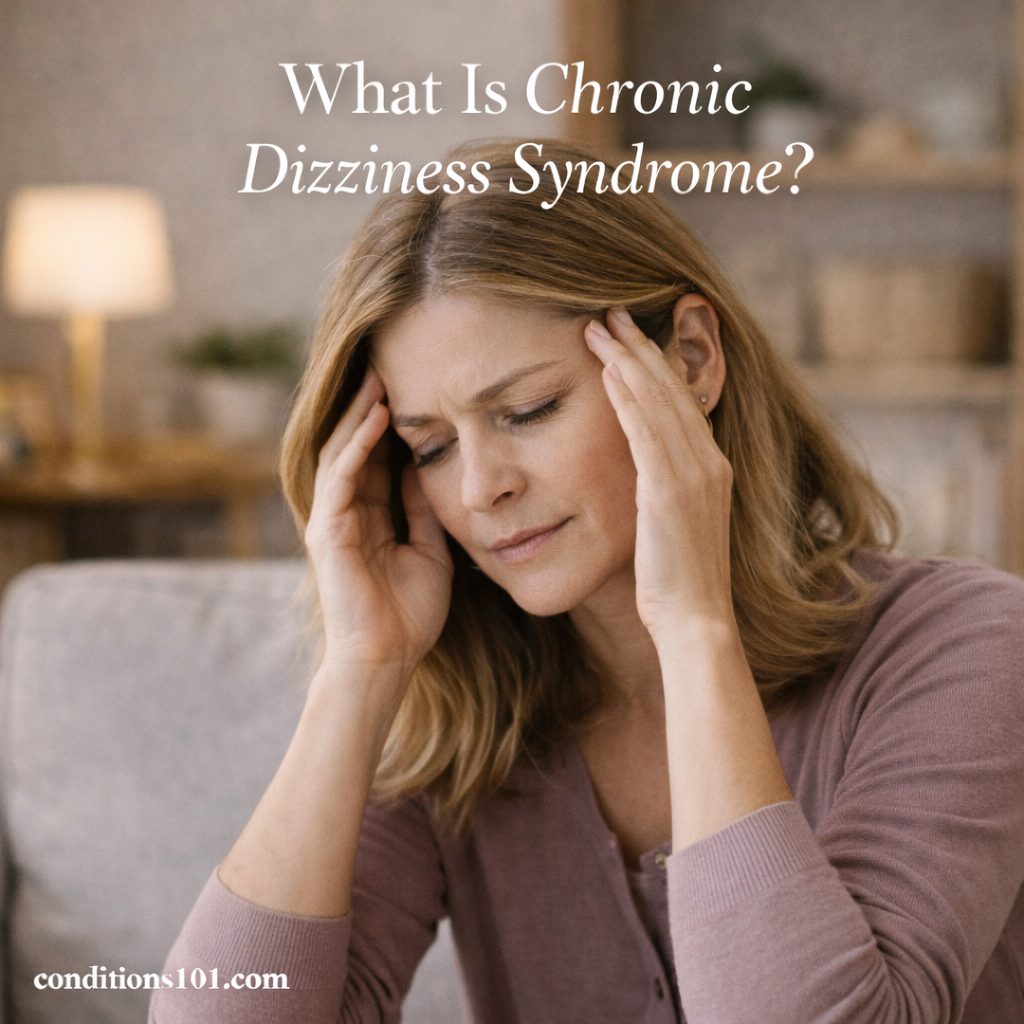
Chronic dizziness syndrome is a broad, non-specific term sometimes used to describe ongoing or frequently recurring sensations of dizziness, imbalance, or unsteadiness that persist over a long period of time. Rather than referring to a single, clearly defined medical condition, the phrase is often used descriptively to capture persistent dizziness-related experiences that do not resolve quickly.
The term focuses on duration and impact, not on a specific diagnosis or cause.
Understanding Dizziness as a Sensation
Dizziness is a subjective experience, meaning it can feel different from one person to another. It does not always mean the same thing as vertigo or fainting.
People may use the word “dizziness” to describe sensations such as:
- Feeling lightheaded
- Feeling unsteady or off-balance
- Feeling disoriented or foggy
- Feeling as though movement is slightly altered
- Feeling disconnected from surroundings
Chronic dizziness syndrome refers to when these sensations occur regularly or persist over time.
What Makes Dizziness “Chronic”
The word chronic generally describes symptoms that last for an extended period rather than resolving quickly.
In the context of chronic dizziness:
- Symptoms may last weeks, months, or longer
- Sensations may fluctuate rather than remain constant
- Episodes may come and go but never fully disappear
Chronic dizziness is defined more by persistence than by intensity.
How Chronic Dizziness Syndrome Is Commonly Described
People experiencing chronic dizziness syndrome may describe their experience in everyday language, such as:
- “I constantly feel off-balance”
- “My head never feels quite clear”
- “I feel dizzy most days, even if it’s mild”
- “It’s not spinning, just unsteady”
These descriptions reflect lived experiences rather than a single clinical explanation.
Chronic Dizziness vs. Occasional Dizziness
Occasional dizziness is a common experience that many people have at some point. Chronic dizziness differs mainly in frequency and persistence.
Key differences include:
Occasional dizziness:
- Happens infrequently
- Often linked to a clear situation
- Resolves on its own
Chronic dizziness:
- Occurs regularly or continuously
- May not have an obvious trigger
- Becomes part of daily life
This distinction is why the term “chronic” is used.
Situations Where Chronic Dizziness Syndrome Is Discussed
Chronic dizziness syndrome is sometimes mentioned in discussions involving:
- Long-term balance complaints
- Persistent sensory discomfort
- Ongoing feelings of instability
- Conditions that affect perception or orientation
Because dizziness can involve multiple body systems, the term is often used when experiences do not fit neatly into one category.
How Chronic Dizziness Can Affect Daily Life

Ongoing dizziness can influence many everyday activities, even when symptoms are mild.
People may notice effects on:
- Walking or navigating crowded spaces
- Concentration and mental clarity
- Reading or screen use
- Driving or riding in vehicles
- Confidence in movement
The impact often depends on how frequently symptoms occur and how predictable they feel.
Variability of Symptoms
One common feature of chronic dizziness syndrome is variability.
Symptoms may:
- Change in intensity throughout the day
- Worsen with fatigue or stress
- Improve temporarily and then return
- Feel different from one episode to the next
This inconsistency can make the experience confusing or difficult to describe.
Why Chronic Dizziness Syndrome Is Considered a Broad Term
Chronic dizziness syndrome is not a standardized medical diagnosis. Instead, it is a catch-all phrase that helps describe a pattern of ongoing dizziness-related symptoms when a single label is not easily applied.
Its broad nature allows:
- Description without assumption
- Communication of symptom duration
- Discussion without immediate categorization
This makes it useful in general health and educational contexts.
Chronic Dizziness Across Different Populations
Chronic dizziness can be experienced by people of different ages and backgrounds.
- Younger adults may notice dizziness related to sensory or lifestyle factors
- Middle-aged adults may experience changes related to daily demands
- Older adults may notice balance-related sensations more frequently
The term itself does not imply age, cause, or severity.
How People Cope With Chronic Dizziness Sensations
People often adapt their routines in response to persistent dizziness, such as:
- Moving more cautiously
- Allowing extra time for activities
- Avoiding environments that feel overwhelming
- Taking breaks when symptoms feel stronger
These adjustments reflect coping strategies rather than treatment approaches.
Key Takeaways
- Chronic dizziness syndrome is a descriptive, non-specific term
- It refers to long-lasting or frequently recurring dizziness sensations
- It is not a single diagnosis or condition
- Symptoms may include imbalance, lightheadedness, or disorientation
- Experiences vary widely between individuals
- The term emphasizes persistence rather than cause
Understanding chronic dizziness syndrome helps clarify how ongoing dizziness experiences are discussed and provides language for describing persistent balance-related sensations.