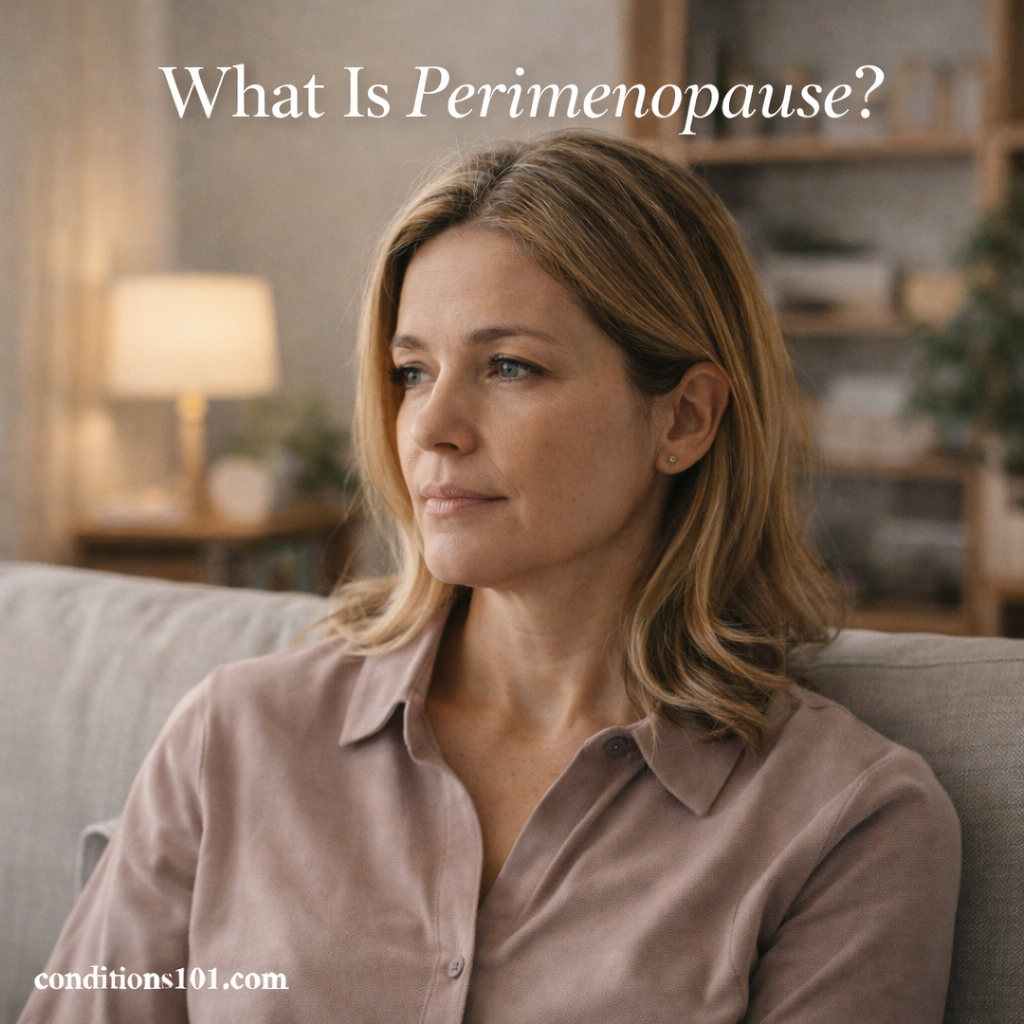
Perimenopause is the transitional phase that occurs before menopause, during which the body gradually shifts toward the end of the reproductive years. This phase is marked by natural changes in hormone levels, particularly estrogen and progesterone, which can influence menstrual patterns and various bodily systems.
Perimenopause is a biological transition, not a medical condition. It reflects the body’s gradual adjustment as it moves toward menopause.
Understanding Perimenopause
The word perimenopause means “around menopause.” It describes the time period leading up to menopause, which is defined as the point when menstrual periods have stopped for 12 consecutive months.
During perimenopause:
- Hormone levels fluctuate rather than decline steadily
- Ovulation may become less predictable
- Menstrual cycles often change in length, flow, or timing
This phase can last several years and varies widely between individuals.
When Perimenopause Typically Begins
Perimenopause usually begins in midlife, but timing differs from person to person.
Common age ranges include:
- Late 30s to early 40s for early changes
- Mid to late 40s for more noticeable shifts
The onset of perimenopause is influenced by genetics, overall health, and individual hormonal patterns.
Common Changes During Perimenopause

Hormonal fluctuations during perimenopause can affect many aspects of the body.
Common changes may include:
- Irregular menstrual cycles
- Changes in menstrual flow
- Variations in energy levels
- Shifts in sleep patterns
- Changes in mood or emotional responses
- Differences in how the body responds to stress
Not everyone experiences the same changes, and intensity can vary over time.
Perimenopause and Menstrual Changes
Menstrual changes are often one of the earliest and most noticeable signs of perimenopause.
These changes may include:
- Shorter or longer cycles
- Skipped periods
- Heavier or lighter bleeding
- Cycles that vary from month to month
Irregular cycles during this phase reflect changes in ovulation rather than a sudden stop in reproductive function.
Perimenopause vs. Menopause
Perimenopause and menopause are related but distinct stages.
Key differences include:
Perimenopause:
- Transitional phase before menopause
- Periods still occur, though irregularly
- Hormone levels fluctuate
Menopause:
- Defined after 12 months without a period
- Marks the end of menstrual cycles
- Hormone levels stabilize at lower levels
Perimenopause ends once menopause is reached.
How Long Perimenopause Lasts
The length of perimenopause varies widely.
- Some people experience it for a few years
- Others may notice changes for a decade or longer
There is no fixed timeline, and experiences may change from year to year within this phase.
Hormonal Changes Behind Perimenopause
Perimenopause is driven by changing ovarian function.
Key hormonal patterns include:
- Estrogen levels that rise and fall unpredictably
- Progesterone levels that may decrease over time
- Less consistent ovulation
These shifts explain why symptoms and menstrual changes may feel inconsistent.
Perimenopause and Daily Life
Perimenopause can influence daily routines in subtle or noticeable ways.
Some people report:
- Needing more rest or recovery
- Feeling less tolerant of stress
- Experiencing changes in concentration or focus
- Noticing shifts in physical comfort
Others may experience minimal disruption, highlighting the wide range of normal experiences.
Perimenopause Across Different Experiences
Perimenopause does not look the same for everyone.
Differences may be influenced by:
- Genetics
- Lifestyle and activity levels
- Overall health
- Stress and environmental factors
Because of this variability, comparisons between individuals are often unhelpful.
Why Perimenopause Is Often Misunderstood
Perimenopause is sometimes overlooked because:
- Periods may still be occurring
- Symptoms can appear inconsistent
- Changes may be attributed to aging or stress
Understanding perimenopause helps clarify why certain changes occur even before menopause is reached.
Key Takeaways
- Perimenopause is the transitional phase before menopause
- It involves natural hormonal fluctuations
- Menstrual cycles often become irregular during this time
- The phase can last several years
- Experiences vary widely between individuals
- Perimenopause ends once menopause begins
Understanding perimenopause supports clearer conversations about hormonal changes and helps normalize a major life transition.