
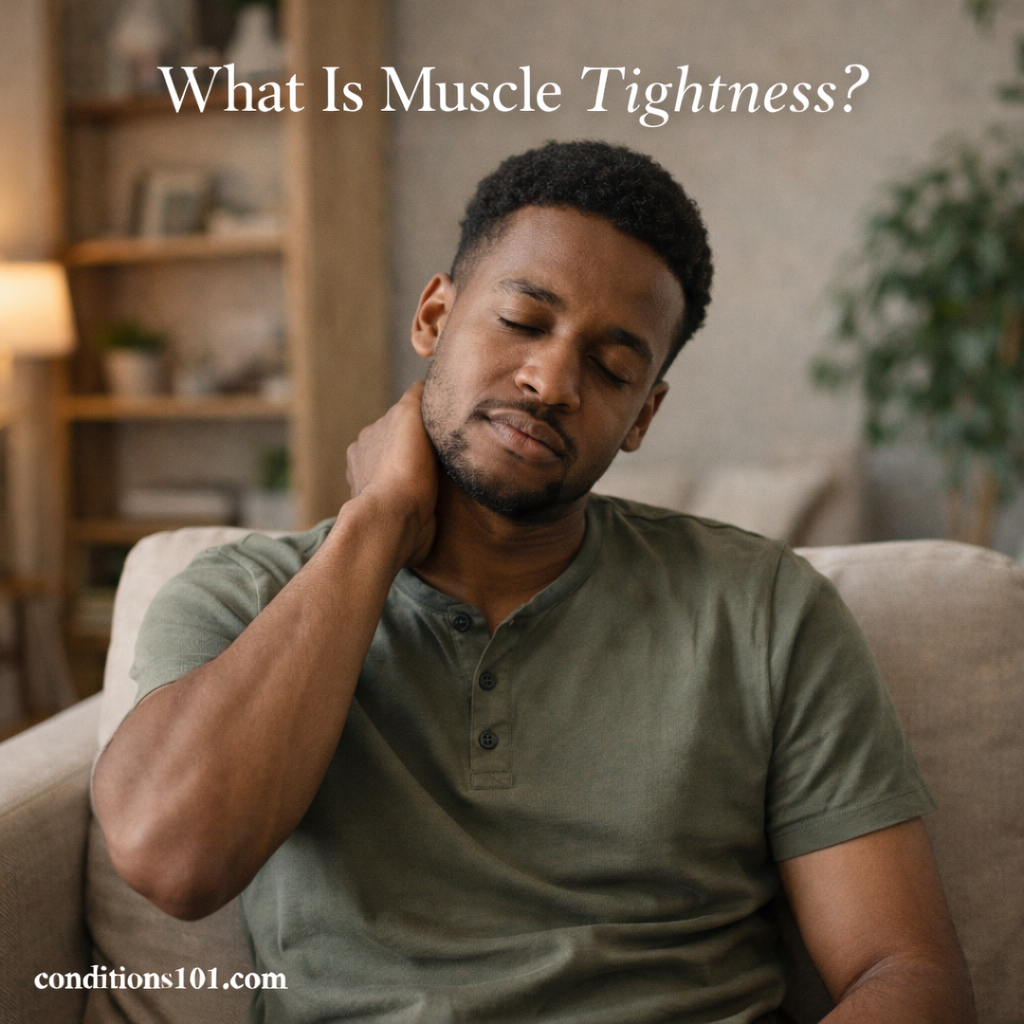
Muscle tightness refers to a sensation of stiffness, tension, or reduced flexibility in one or more muscles. It often feels like the muscle is harder to move, less relaxed, or slightly uncomfortable during movement or rest. Muscle tightness is a common physical experience and can occur in people of all ages and activity levels.
Rather than being a specific condition, muscle tightness is a descriptive term used to explain how muscles feel when they are tense, overworked, or not moving through their normal range comfortably.
Understanding Muscle Tightness
Muscles naturally contract and relax to support movement and posture. Muscle tightness occurs when a muscle remains partially contracted or feels resistant to movement.
This sensation may involve:
- Reduced flexibility
- A feeling of stiffness or tension
- Mild discomfort during movement
- A sense that the muscle is “knotted” or shortened
Muscle tightness can be temporary or more persistent, depending on contributing factors.
Common Areas Where Muscle Tightness Occurs
Muscle tightness can affect any part of the body, but some areas are more commonly involved due to posture, repetitive use, or daily habits.
Common areas include:
- Neck and shoulders
- Lower back
- Calves
- Hamstrings
- Hips
- Upper back
These areas often work continuously to support posture and movement, making them more prone to tightness.
What Muscle Tightness Feels Like
People describe muscle tightness in different ways. Common descriptions include:
- Stiff or rigid muscles
- Reduced ease of movement
- Muscles that feel sore when stretched
- A pulling or tense sensation
- Muscles that feel “locked up”
The sensation may be noticeable during movement, after activity, or even while resting.
Common Contributors to Muscle Tightness

Muscle tightness can develop for many everyday reasons. Common contributors include:
- Prolonged sitting or poor posture
- Repetitive movements
- Physical activity or overuse
- Limited movement or inactivity
- Stress or emotional tension
- Inadequate warm-up before activity
Often, multiple factors combine to create muscle tightness.
Muscle Tightness vs. Muscle Pain
Muscle tightness and muscle pain are related but not the same.
- Muscle tightness usually feels stiff or restricted
- Muscle pain is often sharper, more intense, or localized
- Tightness may limit range of motion
- Pain is more likely to interfere with normal activity
A muscle can feel tight without being painful, though the two sensations may overlap.
Muscle Tightness and Movement
Muscle tightness can influence how the body moves.
Potential effects include:
- Reduced flexibility
- Altered posture or movement patterns
- Increased effort during physical tasks
- Compensating with other muscles
Over time, restricted movement patterns may contribute to additional physical strain.
Temporary vs. Ongoing Muscle Tightness
Muscle tightness can be short-term or more persistent.
Temporary muscle tightness may occur:
- After physical activity
- Following long periods of sitting or standing
- During times of stress
More ongoing tightness may be noticed when contributing factors remain present over time.
Muscle Tightness in Everyday Life
Muscle tightness is a common experience during daily routines, such as:
- Working at a desk
- Carrying bags or equipment
- Exercising or playing sports
- Driving for long periods
These activities place repeated demands on muscles, which can affect how relaxed or flexible they feel.
Muscle Tightness Across Different Age Groups
Muscle tightness can affect people at all stages of life.
- Children may experience tightness during growth periods
- Adults often notice tightness related to work or activity habits
- Older adults may experience stiffness due to reduced movement or muscle changes
The sensation itself remains similar, though contributing factors may differ.
Why Muscle Tightness Is Common
Muscle tightness is common because muscles respond quickly to changes in activity, posture, and stress. Modern lifestyles that involve prolonged sitting or repetitive tasks can make muscle tension more noticeable.
Because muscles are constantly adapting, sensations of tightness can come and go depending on daily routines.
Key Takeaways
- Muscle tightness refers to stiffness or tension in a muscle
- It is a descriptive sensation, not a diagnosis
- Tightness can affect flexibility and ease of movement
- Common contributors include posture, activity, stress, and overuse
- Muscle tightness can be temporary or ongoing
- It is a common experience in everyday life
Understanding muscle tightness helps clarify a frequent physical sensation and supports clearer communication about how muscles feel during daily activities.