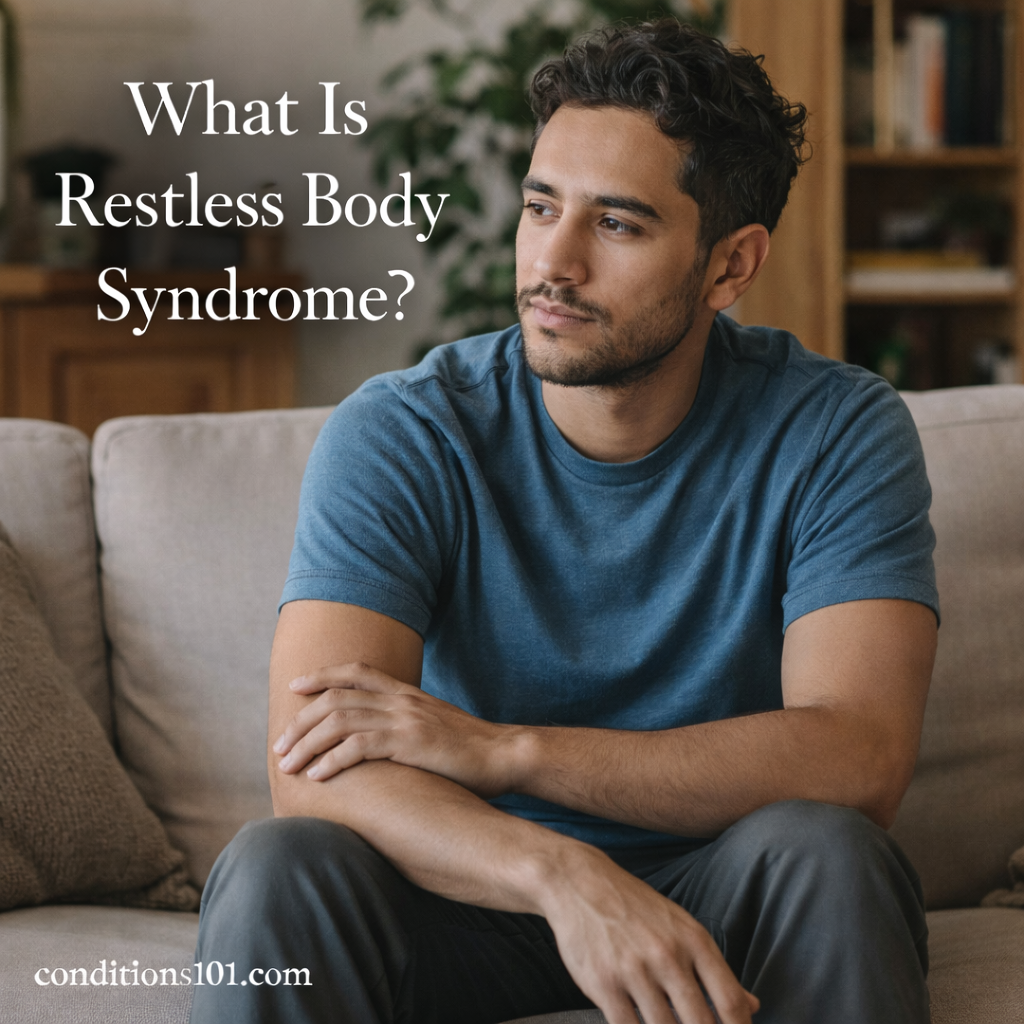
Restless Body Syndrome is a lesser-known term used to describe a pattern of persistent physical restlessness that affects the body as a whole rather than a single area. It is characterized by an ongoing urge to move, shift position, or adjust posture, often without a clear external reason. The restlessness may feel internal, subtle, or difficult to explain.
This article provides an educational, non-clinical overview of what Restless Body Syndrome refers to, how it may present, and how it can influence daily experiences. It does not provide medical advice, diagnosis, or treatment.
Understanding Physical Restlessness
Physical restlessness involves a sensation of discomfort or tension that is temporarily relieved by movement. Unlike occasional fidgeting or restlessness caused by boredom, this type of restlessness may feel persistent and harder to ignore.
People experiencing whole-body restlessness may:
- Feel an internal urge to move
- Shift positions frequently
- Struggle to remain still for extended periods
The sensation may vary in intensity and timing.
How Restless Body Syndrome Differs From Normal Restlessness
Everyone experiences restlessness at times. Restless Body Syndrome generally refers to patterns that are more consistent or intrusive.
Typical Restlessness
Typical restlessness often:
- Occurs during inactivity or boredom
- Resolves with distraction or engagement
- Is short-lived
Restless Body Patterns
Restless body patterns may:
- Persist even during rest or relaxation
- Affect multiple areas of the body at once
- Recur regularly without obvious triggers
The distinction is often related to persistence and impact rather than occasional movement.
Common Ways Restless Body Sensations May Appear
Restless Body Syndrome does not look the same for everyone. Possible experiences include:
- Frequent shifting while sitting or lying down
- Difficulty remaining still during quiet activities
- A sense of internal agitation or tension
- Temporary relief after movement or stretching
The sensations may come and go or feel more noticeable at certain times of day.
Factors That May Influence Whole-Body Restlessness
Several overlapping factors may influence feelings of physical restlessness, including:
- Stress or emotional strain
- Fatigue or disrupted sleep
- Prolonged inactivity
- Heightened body awareness
- Individual sensitivity to internal sensations
These factors can interact, making restlessness feel unpredictable.
How Restless Body Syndrome May Affect Daily Life

Persistent physical restlessness can influence everyday routines in subtle or noticeable ways.
Rest and Relaxation
Some individuals may experience:
- Difficulty sitting through meetings or activities
- Trouble relaxing during downtime
- Frequent position changes while resting
Focus and Daily Tasks
Restlessness may also affect:
- Concentration during quiet tasks
- Comfort during travel or screen time
- Participation in activities that require stillness
Restless Body Sensations Across Different Life Stages
Whole-body restlessness can be experienced at different ages.
- Younger individuals may notice it during periods of stress or fatigue
- Adults may experience it alongside busy or irregular routines
- Sensitivity to restlessness may change over time
Experiences vary widely, and not everyone is affected in the same way.
Key Takeaways
- Restless Body Syndrome refers to persistent physical restlessness affecting the body as a whole.
- It involves an ongoing urge to move or change position.
- The sensation is often internal and temporarily relieved by movement.
- Restlessness may affect comfort, focus, and relaxation.
- Understanding this term supports informed awareness of lesser-known physical experiences.