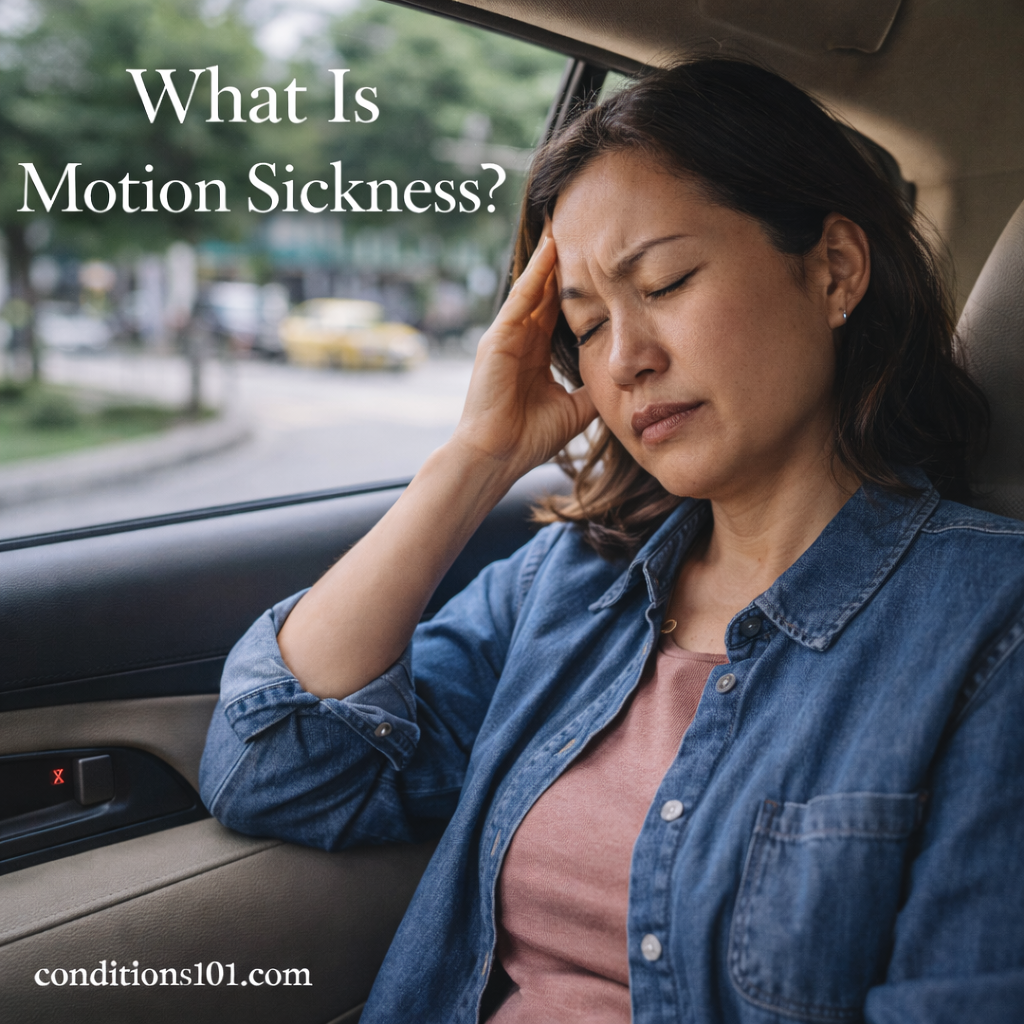
Motion sickness is a condition that occurs when the body senses movement that does not match what the brain expects. It commonly happens during travel, such as riding in a car, boat, plane, or amusement ride. The mismatch between visual input, inner ear signals, and body movement can lead to feelings of discomfort.
This article provides an educational, non-clinical overview of motion sickness, what causes it, and how it may affect daily experiences. It does not provide medical advice, diagnosis, or treatment.
How the Body Normally Processes Movement
The body relies on multiple systems to understand movement and balance, including:
- The eyes, which provide visual information
- The inner ear, which senses motion and position
- Sensory input from muscles and joints
When these systems send consistent signals, the brain can accurately interpret movement. Motion sickness may occur when these signals conflict.
Why Motion Sickness Happens
Motion sickness is often linked to sensory mismatch. For example:
- The inner ear may sense movement, while the eyes focus on a stationary object
- The eyes may perceive motion, while the body remains still
When the brain receives conflicting information, it can trigger physical symptoms associated with motion sickness.
Common Situations That Can Trigger Motion Sickness
Motion sickness can occur in many everyday settings, including:
- Riding in cars, buses, or trains
- Traveling by boat or ship
- Flying in airplanes, especially during turbulence
- Using virtual reality systems or simulators
- Experiencing spinning or fast-moving amusement rides
The likelihood and intensity can vary depending on the situation and the individual.
How Motion Sickness May Feel
People experience motion sickness differently. Common sensations may include:
- Nausea or stomach discomfort
- Dizziness or lightheadedness
- Sweating or feeling clammy
- Head discomfort or general unease
Not everyone experiences all symptoms, and severity can range from mild to more noticeable.
Factors That May Influence Motion Sickness
Several factors can affect how motion sickness appears, such as:
- Type and duration of movement
- Visual surroundings and lighting
- Body position during motion
- Individual sensitivity to sensory input
Some people are more prone to motion sickness than others, and sensitivity can change over time.
How Motion Sickness May Affect Daily Life

Motion sickness can influence daily routines and activities, particularly those involving travel.
Travel and Transportation
Some individuals may:
- Avoid certain modes of transportation
- Limit reading or screen use during travel
- Feel anxious about upcoming trips
Work and Leisure Activities
Motion-related discomfort can also affect:
- Commuting routines
- Recreational activities
- Participation in travel or outings
Motion Sickness Across Different Life Stages
Motion sickness can occur at any age.
- Children may experience motion sickness during car or bus rides
- Adults may notice it during specific travel conditions
- Sensitivity can increase or decrease over time
Experiences vary widely, and motion sickness does not affect everyone the same way.
Key Takeaways
- Motion sickness occurs when the brain receives conflicting signals about movement.
- It commonly happens during travel or motion-based activities.
- Symptoms may include nausea, dizziness, or general discomfort.
- Sensory mismatch between the eyes, inner ear, and body plays a key role.
- Understanding motion sickness supports informed awareness of neurological and sensory experiences.