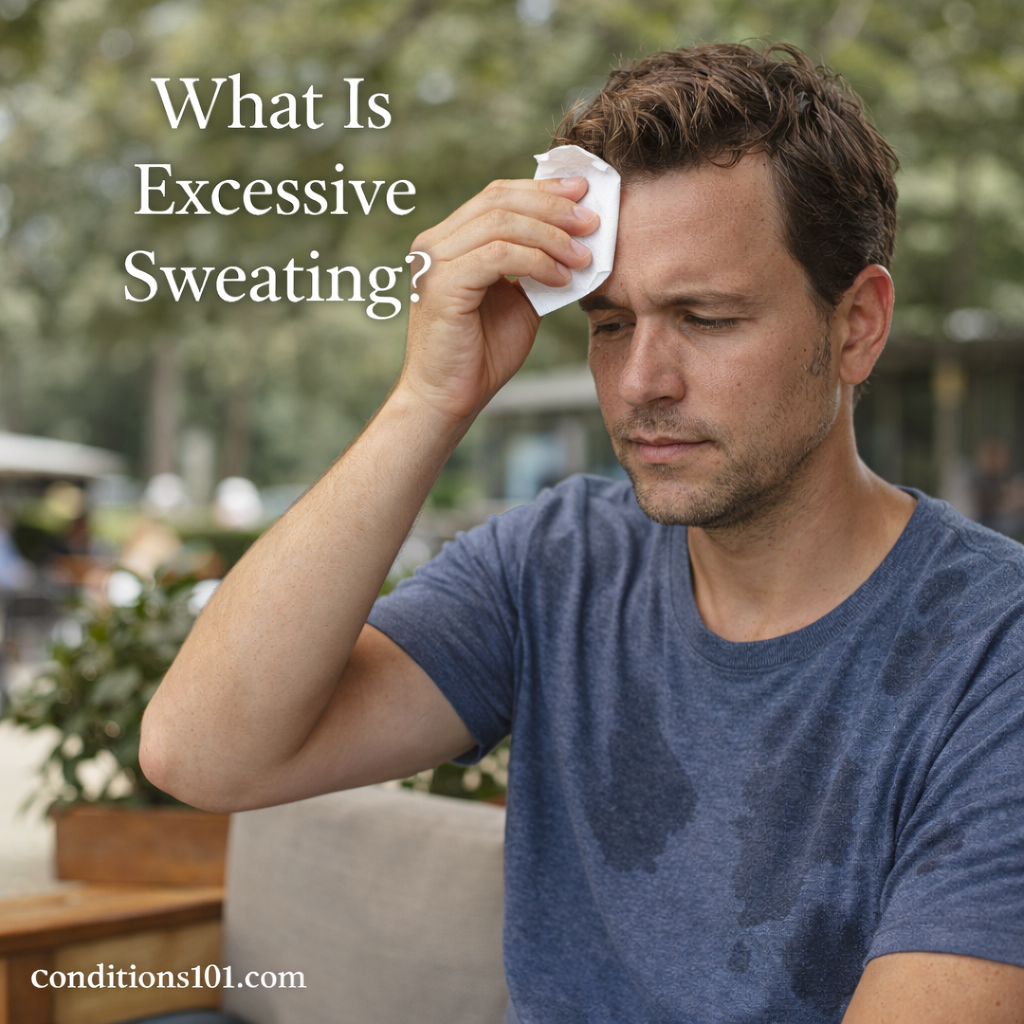
Excessive sweating refers to perspiration that goes beyond what is typically needed to regulate body temperature. While sweating is a normal and essential bodily function, excessive sweating may occur more frequently, more intensely, or in situations where cooling the body is not the primary need.
This article provides an educational overview of excessive sweating, how it differs from typical perspiration, and how it may affect daily life. It does not provide medical advice, diagnosis, or treatment.
Understanding Sweating and Its Purpose
Sweating is part of the body’s natural temperature-control system. When body temperature rises, sweat glands release moisture onto the skin, which cools the body as it evaporates.
Normal sweating can be triggered by:
- Heat or warm environments
- Physical activity
- Emotional responses such as stress or excitement
- Certain foods or beverages
Excessive sweating involves sweating that appears disproportionate to these common triggers.
How Excessive Sweating Differs From Normal Sweating
The difference between typical sweating and excessive sweating is often related to degree and frequency rather than the presence of sweat itself.
Normal Sweating
Normal sweating generally:
- Occurs in predictable situations
- Stops once the trigger is removed
- Does not significantly interfere with daily activities
Excessive Sweating
Excessive sweating may:
- Occur without obvious triggers
- Affect specific areas or the whole body
- Persist even in cool or resting conditions
- Interfere with comfort, routines, or confidence
Common Areas Affected by Excessive Sweating
Excessive sweating can occur in one area or multiple areas of the body. Commonly affected regions include:
- Underarms
- Palms of the hands
- Soles of the feet
- Face or scalp
- Back or chest
The pattern can vary widely between individuals.
Factors That Can Influence Sweating Levels
Sweating levels are influenced by a combination of internal and external factors, such as:
- Environmental temperature and humidity
- Physical activity levels
- Emotional or psychological stress
- Clothing materials and fit
- Individual differences in sweat gland activity
These factors can overlap, making sweating patterns unpredictable at times.
How Excessive Sweating May Affect Daily Life
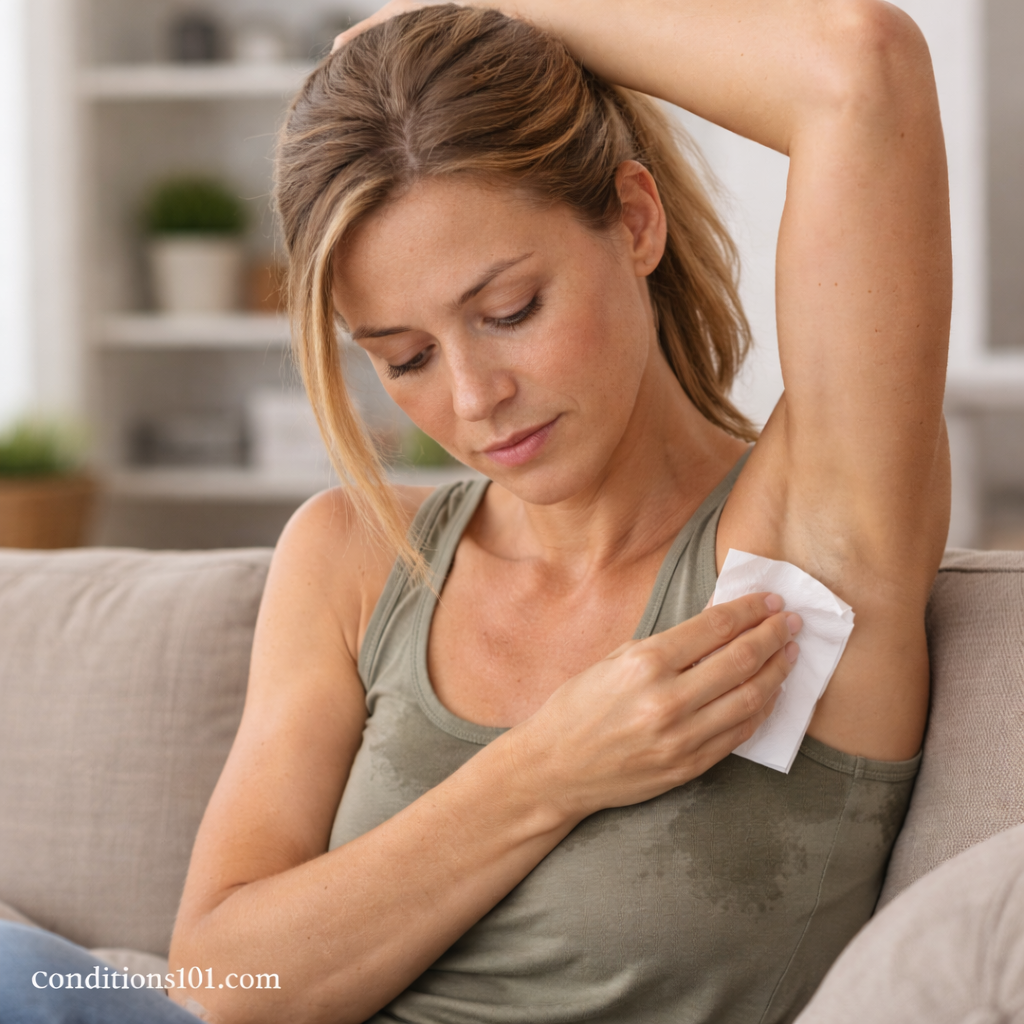
Excessive sweating can influence everyday experiences in both physical and social ways.
Physical Comfort
Some people may experience:
- Persistent dampness or skin irritation
- The need for frequent clothing changes
- Discomfort during routine activities
Social and Emotional Impact
Excessive sweating may also affect:
- Confidence in social or professional settings
- Willingness to participate in certain activities
- Emotional stress related to appearance or visibility
Excessive Sweating Across Different Life Stages
Sweating patterns can change over time.
- Adolescents may notice changes due to hormonal shifts
- Adults may experience fluctuations related to lifestyle or environment
- Older adults may notice changes in how the body regulates temperature
Experiences differ widely, and sweating levels are not the same for everyone.
Key Takeaways
- Excessive sweating refers to perspiration that goes beyond normal temperature regulation needs.
- It differs from typical sweating in frequency, intensity, or timing.
- Excessive sweating may affect specific areas or occur more broadly.
- Sweating levels are influenced by environmental, emotional, and individual factors.
- Understanding excessive sweating helps support informed awareness of skin and appearance-related experiences.